


Keven talks sails: The Ins and Outs of Headsail Furling
Dec 17, 2020
Many of my club and distance racing customers show up at the loft asking for a full-hoist, deck-tacked genoa to fit on their headsail furler, but bypass the drum to get the clew low. I always ask; “Does the furling not work?”. “No it works, but the last sail we had cut for furling didn’t point very well and the UV cover on the sail was really heavy.”
“…I think you may be interested in a more performance oriented furling sail, and no one said all furling sails must have UV covers!”
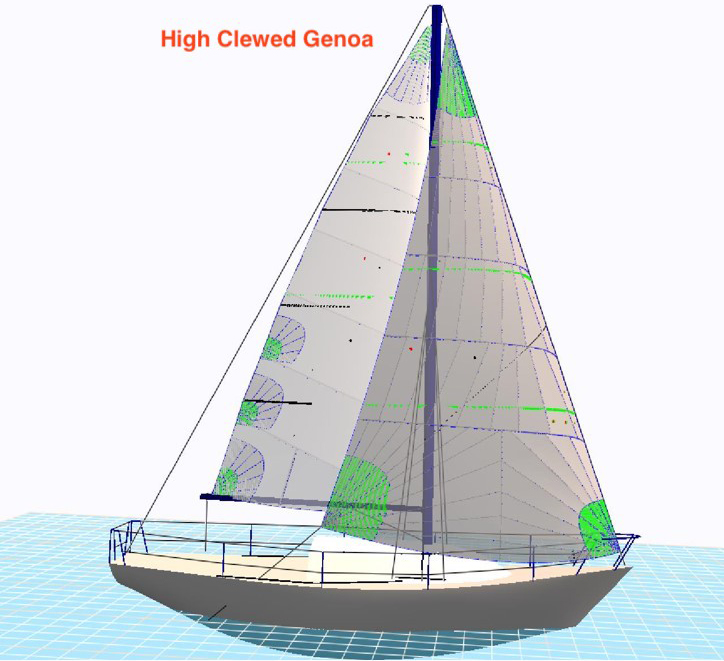 Image 1
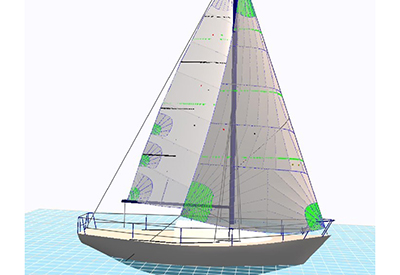
Most OEM sails or “recut to furling” sails have fairly high clews. Image 1 shows a typical high clewed genoa. This dimensioning is typical of OEM genoas or what you get when you only ask for an easy cruising sail.
The disadvantage of this type of sail is that the higher the clew, the broader the effective sheeting angle, the pointing ability suffers, and lots of pressure escapes under the foot of the sail. They are great for reefing performance as they typically roll up to a flatter flying shape, and it is easier to see where you are going.
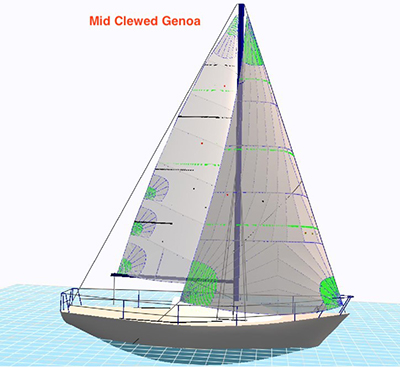
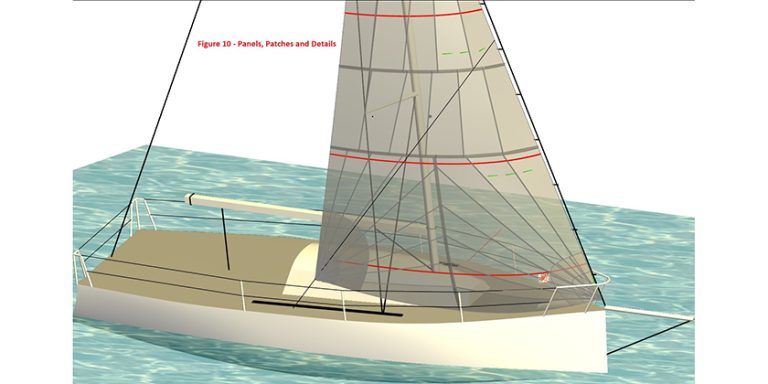
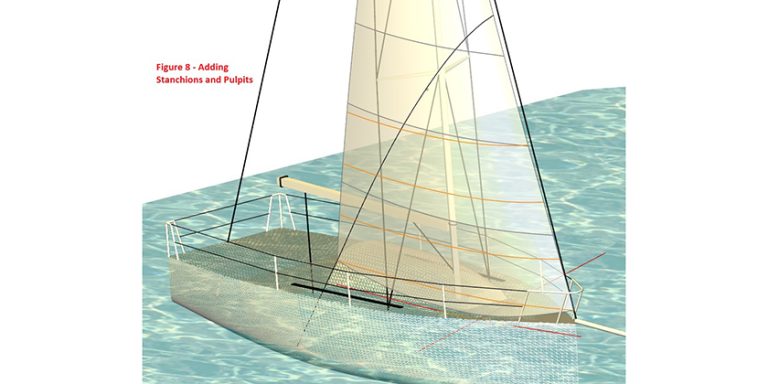
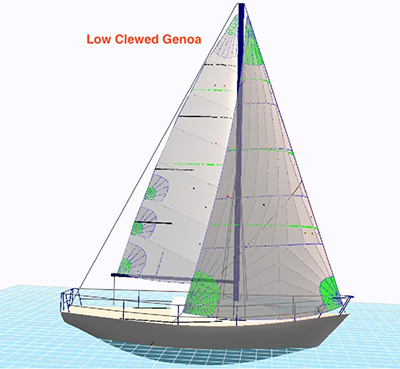
Most performance oriented furling sails will have a moderate (Image 2) or low clew (Image 3). The moderate height option is usually the easiest to live with, since you won’t have to skirt the foot over the lifelines as often. This setup usually has the clew at the top of the stanchions to allow the sail to tack easily.
Performance?
Going with the low-clewed furling headsail, there is only a very small loss of area versus a full hoist racing sail. The clew position and sheeting angle can be identical with the two racing sails, and the slight loss of area with a shorter luff is less than 1% total upwind area on most boats. If you look at Image 3, you can also see how nicely the foot seals up against the deck and cabin of the boat. The sheeting angle of the low clew (Image 4) is has a 0.4-degree advantage over the moderate height (Image 5) and a full 2 degrees improvement over the high clew (Image 6)! Everything with sail design is balancing compromises…
Image 2
Using furling to advantage
The best part of furling for racing comes in the next issue! I always get very excited about the furling enabled starting strategies and the great tricks at mark roundings both up and downwind.
Image 3
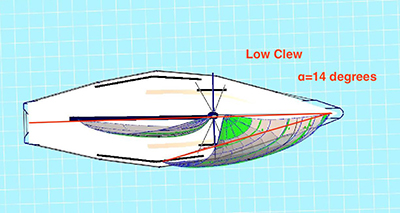
Image 4
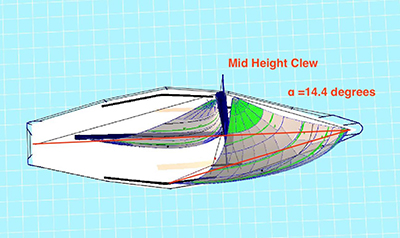
Image 5
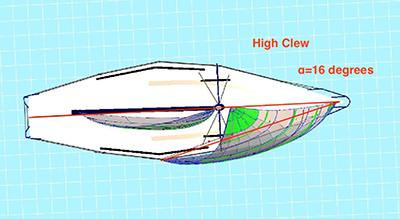
Image 6
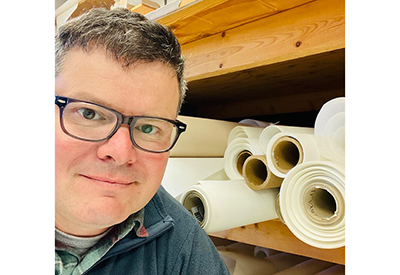
(right) Keven Piper – Sailmaker, Bay Sails, Hamilton, Ontario
Keven Piper, two-time Shark 24 World Champion, founded Hamilton, ON-based Bay Sails in 1998.