

Keven Talks Sails: Headstay Sag
May 27 2021
Every boat with a jib attached to a stay has headstay sag. If every boat has it, what does it do, and how do you control it.
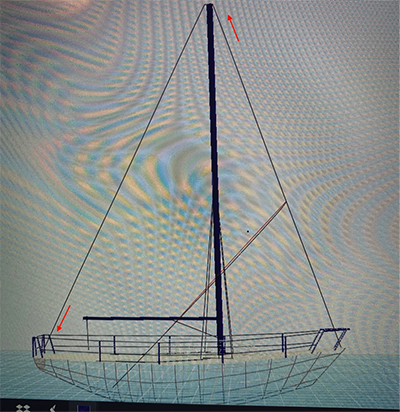
Let’s start with control. If you have a “normal” boat with a backstay, adjusting the backstay will directly change the amount of headstay sag. More tension will resist sag, and less tension will encourage sag.
Sag is one of the most important design inputs to create a good setting sail with lots of wind range from lighter wind to strong breeze. If you don’t have a good backstay adjusting system, you will not have much control over how much headstay sag you will get.
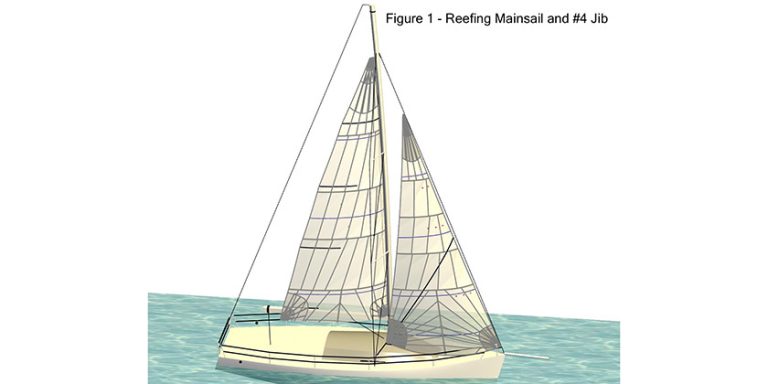
The adjuster isn’t the only way to control sag if you have a fractional rig and swept spreaders. Spreader sweep is a backwards angle of the spreader that leaves the tip further aft than the base. By manipulating the tension of the shrouds on the swept spreaders, you can increase the tension on your headstay.
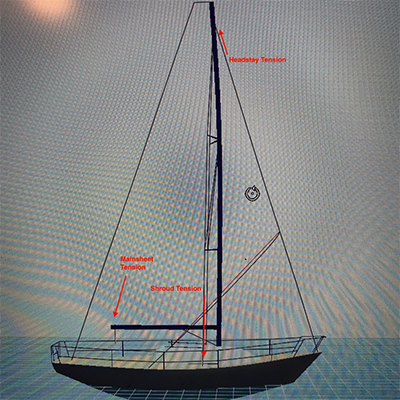 There is another important control I have highlighted, Mainsheet Tension. As you increase the tension on your mainsheet, the leech of the sail increases the backwards pull on the mast and helps decrease headstay sag as well.
So what does this headstay sag do? Check out the YouTube video below. It shows the shape of a headsail, and the moving purple lines are the camber stripes of the sail. As the forestay gets straighter, the sail gets flatter by pulling more sailcloth out of the shape of the sail. When the headstay sags away more, the sail gets fuller as cloth is allowed to add to the shape of the headsail.
{youtube}https://youtu.be/SEVHb-7IJ8k{/youtube}
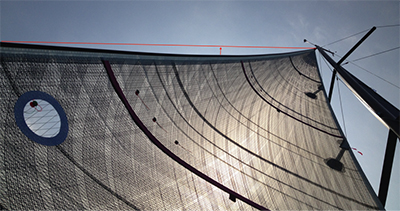
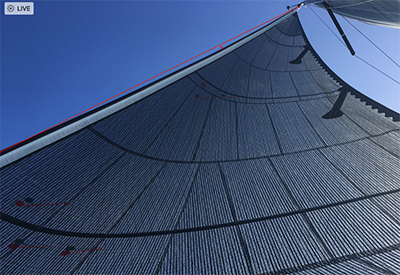 Here are some examples of two different sails with significantly different amounts of headstay sag which is outlined with the red line. This small offset from a straight line is the amount of sag currently occurring. It is a great idea to keep track of this and have your jib trimmer learn to eyeball that measurement. You may have a target of 60mm of sag in 12 knots of wind from discussions with your sailmaker. You can of course fine tune that amount for sea state or other conditions, but it is quicker to get to fast settings when you know!
TOP TIP – The width of normal lufftape on a sail is 75mm from the foil to the edge of the tape. What a great way to quantify the sag by comparing to it!
SECOND TOP TIP – Short squat (also known as low aspect ratio) headsails are less sensitive to headstay sag compare to tall and skinny (high aspect ratio) headsails.
 What shall we discuss next month? I was thinking about boat hardware that really does make sailing better.
Keven Piper – Sailmaker, Bay Sails, Hamilton, Ontario
Keven Piper, two-time Shark 24 World Champion, founded Hamilton, ON-based Bay Sails in 1998.
email: baysails@gmail.com