


Ask Andrew: Engine antifreeze technique – Part 2
Nov 21, 2024
In Part 1 last issue we learned that Two winterizing methods exist, depending on the type of engine that you have:
1) Engines without drain plugs and exposed hoses (ex Volvo, Yanmar, Universal, Atomic 4 on sailboats)
2) Engines with drain plugs and exposed hoses (Ex Mercruiser or Volvo Penta inboard gasoline on powerboats)
For the first category:
- Make sure that any water that can be drained, gets drained. Some engines (like Atomic 4’s) have brass drain plugs that can be removed to drain water from the engine block and the manifold. This doesn’t remove ALL the water, but it will remove quite a bit. Check exhaust tubes and mufflers for drains, as well.
- Make sure that you use enough antifreeze to flush the engine thoroughly, leaving the antifreeze that is trapped in the engine as undiluted as possible
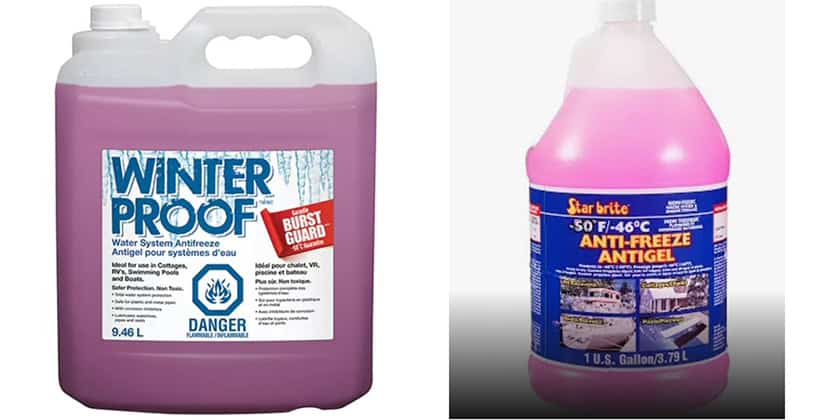
- Use as high quality an antifreeze, at as low a temperature rating as possible. A marine-rated -100-degree rated antifreeze can cost up to $20/gallon. Its tempting to pick up the antifreeze that is rated for plastic pipes at -50 degrees at $4/gallon. The protection that the marine-rated antifreeze offers is far superior. Spending $60/season on good quality antifreeze is always cheaper than replacing a $2000 engine block.
- Always test the strength of the antifreeze as it leaves the boat’s exhaust port using a device like a refractometer. This will let you know the net result of the strength of protection of the antifreeze trapped inside by taking into account the level of dilution.
Category 2
For engines in the second category, with exposed drains and hoses, the job is the same, but the method differs.
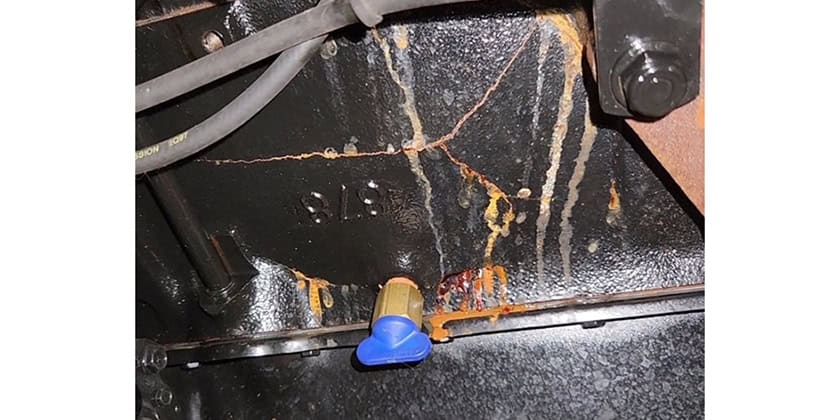
Step 1: Locate all the drains – consult the service manual if necessary. Some larger displacement engines can have up to 9 drain plugs!
Step 2: Use a thin tool to poke up into the drain holes to ensure that there is no sediment or debris blocking the drains
Step 3: Allow all water to flow out of the drain holes. The bilge will fill with water – ensure that the bilge pump is operable, or that the boat’s bilge drain is also open
Step 4: Remove the exposed hoses (often at the top/front of the engine, connected to a thermostat housing. While the drain plugs are still removed, pour antifreeze into the hoses and take a visual check of the antifreeze coming out of the drain holes. This step is removing an sitting water and flushing it out.
Step 5: Replace the drain plugs.
Step 6: Pour antifreeze into the hoses until they overflow (the overflow may flush out a bit of water, too!).
Step 7: Replace the hoses and ensure that clamps are tight.
Don’t forget the other steps in the winterizing! This article focused on antifreeze – don’t forget to protect your fuel, your fuel delivery system and your batteries, too!

Andrew McDonald is the owner of Lakeside Marine Services – a boat repair/maintenance firm based in Toronto. Andrew has worked in the marine industry for 12 years and is a graduate of the Georgian College ‘Mechanical Techniques – Marine Engine Mechanic’ program.