


The Boat Guy: Sacrificial Anodes are Critical! – Part 2: Mistakes and Tips
September 24, 2026
By Marc Robic, The Boat Guy
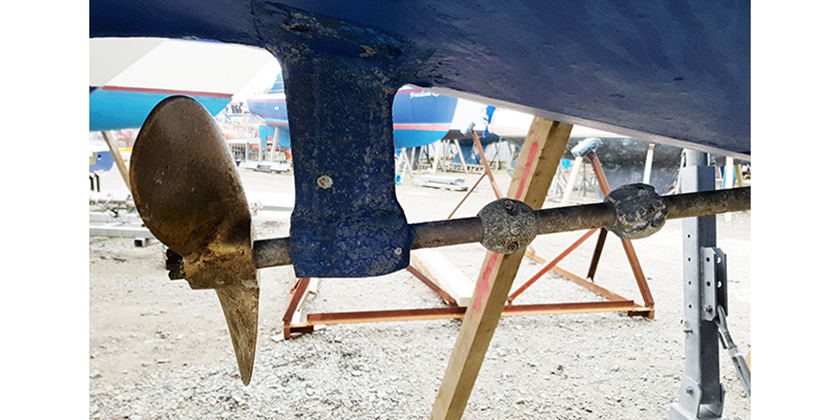
Biggest mistakes I see are poorly installed and cared for anodes. I see some installed directly to a fiberglass hull, which does nothing unless the anode is somehow grounded inside thru the hull (see image of proper thru-hull installation). I’ve seen people, once in their slip, hang an anode overboard. That does not work either, unless it is somehow attached to a grounded wire.
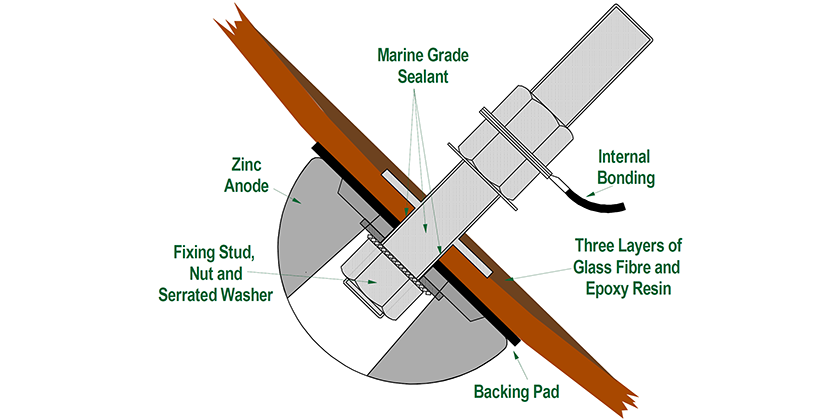
Other mistakes I see are anodes installed on a painted metal surface, which provides zero metal to metal contact, and painting over their anodes, which also renders the anodes useless.
A common mistake is using undersized anodes. Telltale signs are the surrounding metal areas showing signs of corrosion and pitting. If this is the case, the best practice is to stop the progression asap by simply replacing it with a bigger anode or multiple anodes.
Zinc or aluminium?
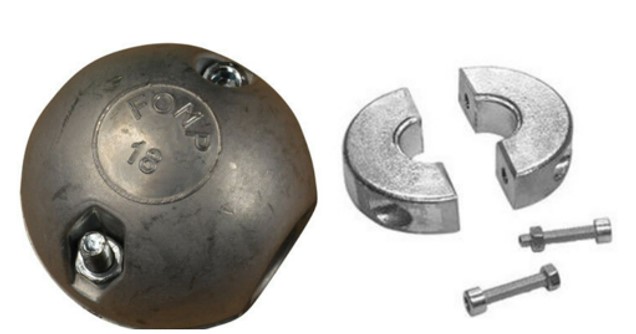
There are environmental concerns about zinc anodes releasing cadmium in our waterways and so, aluminium was introduced a few years ago. At the time, aluminium anodes were more expensive, but the cost has since gone down and is now competitive with zinc. So, when changing anodes, consider switching to aluminium and make sure all your anodes are of the same material. Mixing anode types is not recommended.
Also, aluminum anodes usually last longer and work better than zinc in brackish and salt water.
…Or Magesium
In freshwater applications, another choice is magnesium anodes, which offer much better protection underwater, especially any underwater aluminum. However, magnesium is only good in freshwater. So, if any of your time is spent boating in brackish or salt water, keep to zinc or aluminum anodes.
Another great option, which I’ve been using for well over ten years now, are combination prop shaft anodes and line/weed cutters. These have saved me a lot of problems when faced with unexpected large weeds or submerged mooring lines. I even doubled up by installing two of them of my prop shaft.
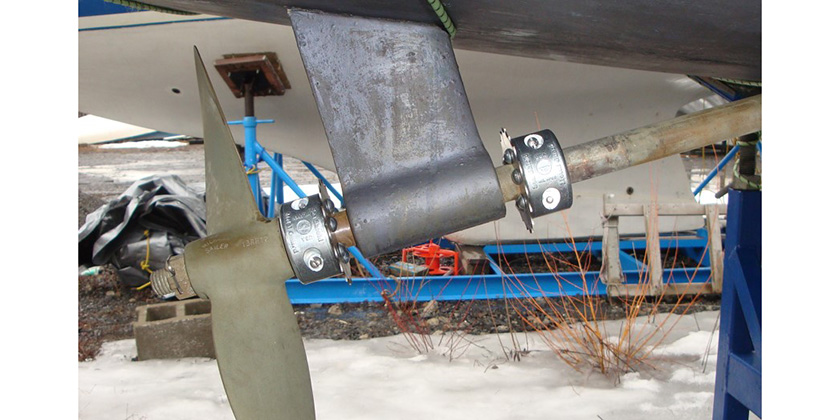
I ended up choosing the Sea Shield by Salca. These prop shaft anodes are available in both zinc or aluminium and come in all shaft diameters. The extremely sharp serrated cutters are made of stainless steel and remain sharp and unforgiving for any weed, fish nets or lines that get in the way!
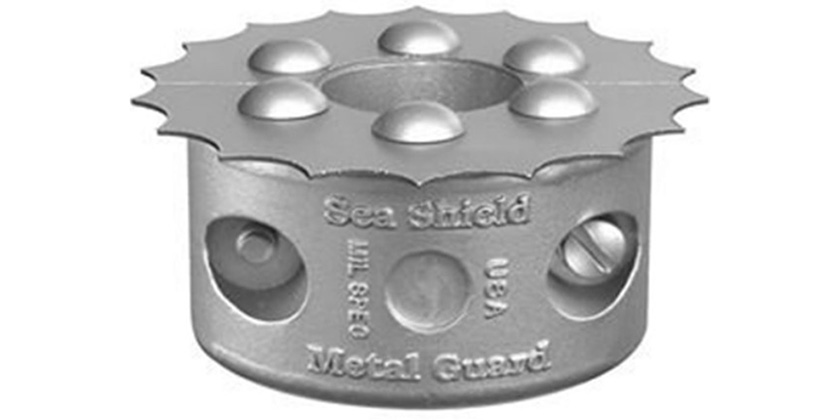
After viewing the videos on Salca’s website, I elected to install two anodes, one forward of the cutlass bearing and one behind. The idea is that should the prop shaft loosen and come off the transmission flange, the forward anode will prevent the shaft from sliding off and thru the cutlass bearing and end up in the bottom of the sea plus leave a large hole in the hull. But the idea of anodes on each side of the cutlass bearing is to prevent lines from wrapping themselves between the prop and the bearing.
Of course, there are many other makes, models and shapes of combo anode/cutters available on the market. Do your own research. BUT, if you have more than one anode, make sure they are all of the same material and are properly installed with direct metal to metal contact, well grounded and NOT PAINTED over!
Testing your anodes
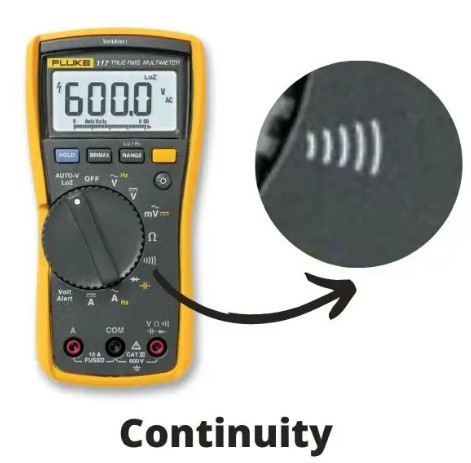
Even if your anodes seem to be in good shape visually, you still need to test them to make sure they are effectively well installed. Using a basic digital multimeter set to check continuity, touch either wire to the anode and the other wire to the prop shaft, metal rudder, outboard drive, etc. If the anode is well installed, the multimeter should give you a reading and (most) will also emit a beep to confirm. If there is not reading or audible beep, your anode is in need of attention… reinstall properly or replace.
Reference:
Metric SALCA Line Cutter Shaft Anode (Zinc) | Anode Shack
Sea Shield Marine | The World’s Best Zinc Anodes
Marc Robic – The Boat Guy – Marc is a member of BoatCan who, with his wife, sails their Catalina 270, Aquaholic 3, out of the Ile-Perrot Yacht Club in Montreal, where Marc spent 16 years as Harbour Master. They are also regular Caribbean bareboat yacht charterers.
With over 40-years experience on boats, Marc is our OnBoard do-it-yourselfer.