


Ask Andrew: Antifreeze
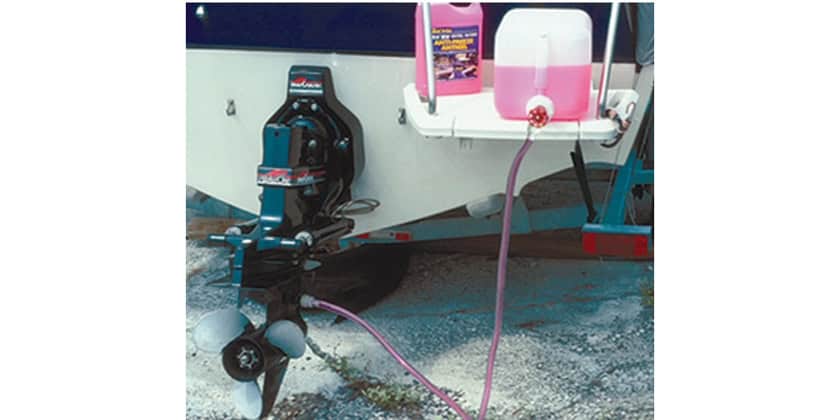
A DIY winterizing kit to winterize while the engine is running.
Nov 7, 2024
There’s a meme that circulates only boating pages and social media at this time of year: An a-frame sign reads ‘A moment of silence for those forced to winterize their boats’.
Not all of us do – 12-month boating is possible on Canada’s west coast – and those of us in the colder areas of the country can fight over indoor heated storage. The rest of us are forced to winterize our boats.
There are a few methods and steps involved in winterizing a boat – and most boat yards, marinas and dealerships have it down to a science. Many are opinionated about their favourite method, steps and products.
Two methods exist, depending on the type of engine that you have:
1) Engines without drain plugs and exposed hoses (ex Volvo, Yanmar, Universal, Atomic 4 on sailboats)
2) Engines with drain plugs and exposed hoses (Ex Mercruiser or Volvo Penta inboard gasoline on powerboats)
In the first case, where there are no drain plugs or exposed hoses exist, the engine has to be flushed through with antifreeze. When the engine runs when it’s in the water, it sucks water up from the water surrounding the boat and uses it to cool. It exhausts through the exhaust tube, into a muffler, and then out through the exhaust port on the transom, overboard.
Now that the boat is on the hard, there is still water trapped between the intake hose, the engine block, the exhaust tubes and the muffler. Without drain plugs, there is no way to drain that trapped water. Without exposed hoses, there’s no way to ‘break into’ this closed system to flush the engine with antifreeze.
The solution? Remove the intake hose from where the engine picks up seawater (at a through-hull), run the engine and pour antifreeze into the hose. The engine doesn’t know the difference; it’s designed to pump fluid through all its cooling paths. The antifreeze will ‘push’ any water left in the engine, and it will flow out through the exhaust. The antifreeze will also pick-up any water trapped in nooks and crannies as it flows through.
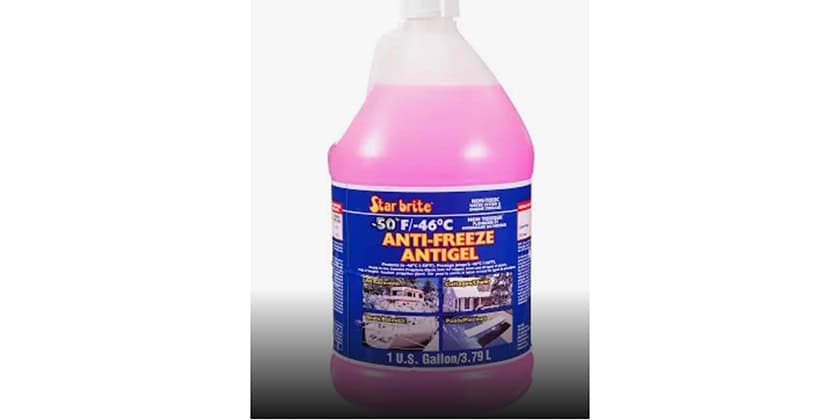
The biggest caveat is this: as the antifreeze flows through the engine, it is effectively diluted every time it picks up a drop of water. As you winterize, you need to allow enough antifreeze to flow through the system so that the water is displaced completely, and the antifreeze that is left trapped inside the engine block is of sufficient strength (undiluted) to prevent any damage or cracking during freezing periods over-winter. Ie. If the antifreeze is rated to -50 degrees, and it is heavily diluted by water in the system, the antifreeze that is left in your engine may only now have a protection level to -10 degrees.
A few final thoughts:
- Winterizing should never be done by rote. Each step is important and can be the difference between major damage and no damage. Think about each step and the best way to ensure that the process is done thoroughly and completely
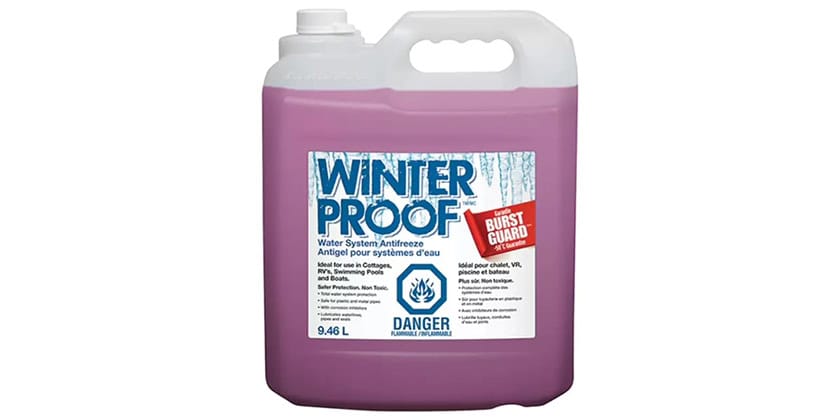
- The highest quality products should be used. Its tempting to choose not work on a budget at the end of the season. Not only to quality marine antifreeze products offer superior protection, but they are designed for use in cast iron, they show less effect of dilution, and they offer corrosion protection which aids in keeping the inside of your engine block and water system clean and functional
- If in doubt, consult a qualified marine tech or your engine’s service manual. You may be able to work with a marine tech to walk you through the steps that he/she is taking so that you can expand your knowledge and try to take it on, on your own, in future.
- Don’t forget the other steps in the winterizing! This article focused on antifreeze – don’t forget to protect your fuel, your fuel delivery system and your batteries, too!
Next time: step by step methods for flushing the engine

Andrew McDonald is the owner of Lakeside Marine Services – a boat repair/maintenance firm based in Toronto. Andrew has worked in the marine industry for 12 years and is a graduate of the Georgian College ‘Mechanical Techniques – Marine Engine Mechanic’ program.