


The Evolution of Sailboat Design & Key Systems
By Zuzana Prochazka
What’s new in the design, build and use of cruising monohulls and catamarans
Boater tastes and patterns are changing the way boats are designed and built today. The evolution of the way we use sailboats has become a key driver of innovation, one that will make sure we don’t sail the same old way ever again.
Size, Hull Shape & Construction
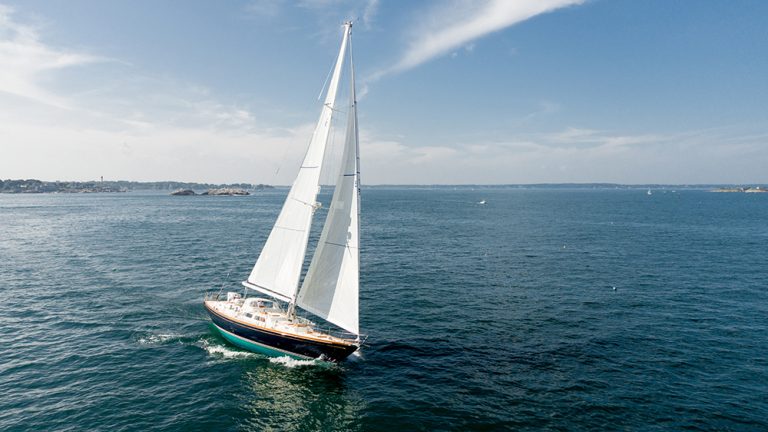
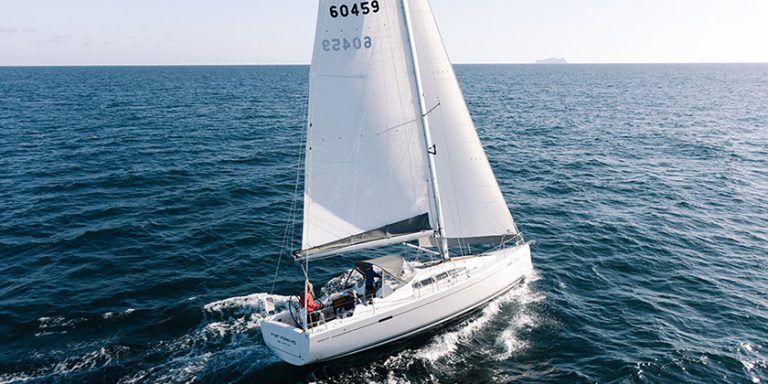
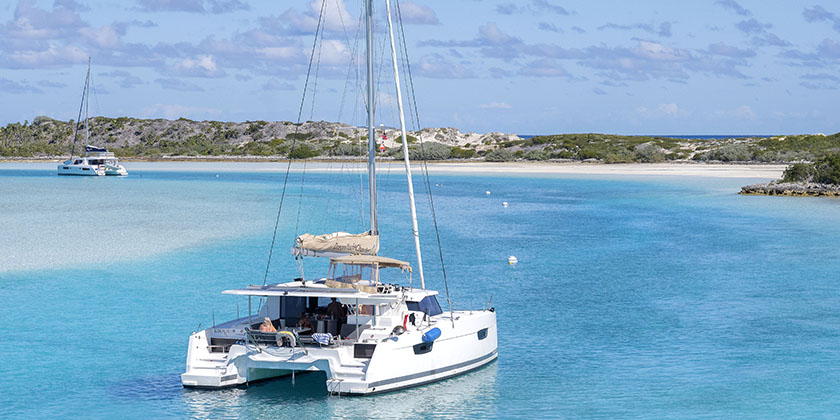
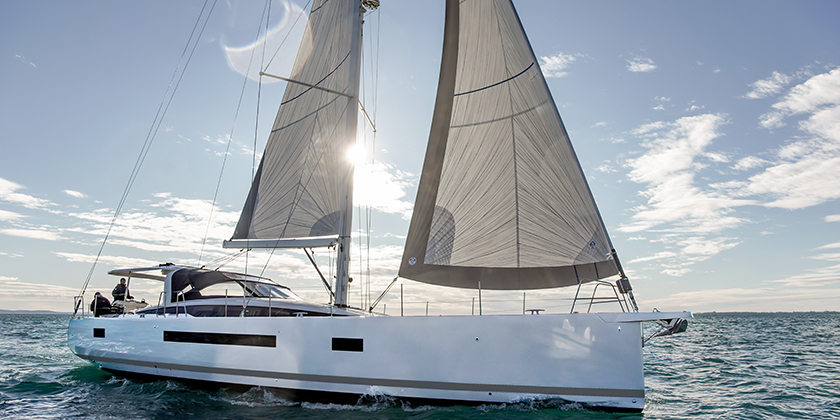
The average boat has gained both length and beam, and more people are embracing catamarans over monohulls. Expansive beams on monohulls with multihull-like dimensions have led sailors to dub them “monomarans”. These wide hulls have created the need for twin rudders so one can grip while the other is almost out of the water when heeling. Plumb bows and square transoms now provide extra buoyancy as well as a modern aesthetic, and builders have introduced hard hull chines that help monohulls sail flatter when they lean on that chine, stabilize, and accelerate. Chines are used on catamarans, such as the Lagoon 43, to enhance interior volume but still keep the bow slim at the waterline for better upwind performance.
Many of these hull design changes have are now possible due to the strength and lightness of modern boat building materials. More durable non-balsa wood coring substances, fibre-reinforced polyesters and vinyl esters, (and of course, carbon fiber construction) make today’s bigger boats stronger and lighter.
Bagging with wet laminate cured under a vacuum pulls out excess resin and creates strong high fibre content. Resin infusion is a variation of vacuum bagging where the resin is infused into the dry laminate after the vacuum is created. Both methods produce clean and light fiberglass parts that are stiff and require less fairing and sanding. Some high-end builders have also used aramid fibers like Kevlar and Twaron to reinforce hulls with little added weight.