

The Hidden Cost of Old Sails: Performance, Safety, and Fatigue

May 7, 2026
Most sailors know that sails wear out. Fewer realize how much they’re giving up by continuing to use them past their prime.
Old sails don’t just make your boat slower — they make it harder to sail across wind ranges. In heavier conditions, the limitations of old sails become even more apparent and more physically demanding for the crew. The real cost isn’t just performance. It’s efficiency, control, and fatigue over time.
As sails age, the fabric stretches, load paths distort, and the intended shape begins to stretch. What was once a clean, efficient shape becomes fuller, deeper, and harder to control. This leads to increased heel, more weather helm, reduced pointing ability, and slower acceleration. Trimming then becomes less about optimization and more about managing limitations.

Fatigue
Fatigue is often overlooked as well, yet it is one of the most significant consequences of inefficient sails. A well-balanced boat is predictable, responsive, and relatively easy to manage. An unbalanced boat requires constant correction. Small adjustments become continuous work for sailors. Fatigue is not just an inconvenience — it is a safety concern.
“One More Season”
It’s common to hear that sails will “last one more season.” Structurally, that may be true. However, performance and handling are often already compromised. The hidden costs of delaying replacement include more time spent motoring in marginal conditions, longer passage times, and ultimately a less enjoyable experience on the water. Over time, these factors can outweigh the perceived savings.
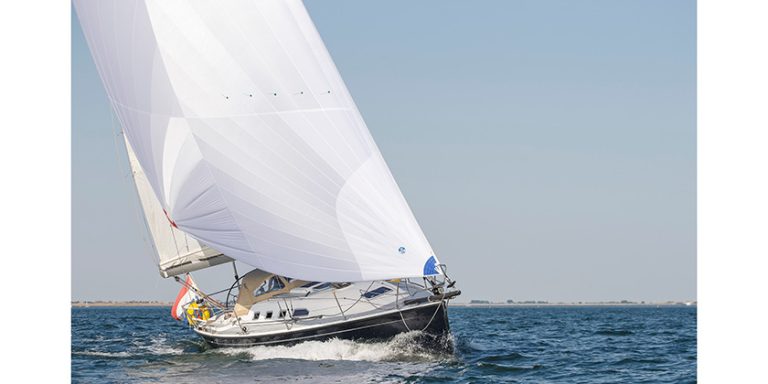
Determining when a sail is no longer effective is not always about visible damage. More often, it comes down to function. Signs include a draft that has moved aft and cannot be corrected with trim, persistent flutter along the leech, UV degradation along exposed edges, and a growing frequency of repairs. Perhaps most telling is the feeling that the sail no longer responds as expected — trimming has become reactive rather than precise. For spinnakers specifically, if you can breathe any amount of air through the sail, it’s past its prime.
Inspect & Review
Sails should be a part of your annual boat maintenance. They are the engine above the deck; critical to how a boat performs and behaves. A well-matched sail inventory reduces strain on both crew and equipment, improves safety margins, and enhances the overall sailing experience. In this sense, upgrading sails is less about speed and more about improving the entire system.
The key question is not whether your sails still function, but whether they are still functioning effectively. Ask yourself at the end of every season, how did they perform? Were they easy to trim? How did the boat feel with them? Bring them into your local sail loft for review and inspection.
Connect with a North Sails expert today:
North Sails Toronto | North Sails Vancouver | North Sails Victoria | North Sails Lunenburg