

Just Ask John: Inflatable Personal Flotation Device (PFD) requirements
May 9, 2024
I have taken much of this information direct, with limited editions, from the Canadian Safe Boating Council’s website. Requirements come from Transport Canada’s Small Vessel Regulations.
Inflatable Lifejackets (PFDs) have been designed for wearability. However, if you decide that an inflatable best suits your boating needs, it is important that you understand its limitations, how to use it and how to care for it.
It is also important to note that under Canadian Small Vessel Regulations an inflatable PFD is only approved in an open boat if you are wearing it. If your boat has an enclosure, then you only need to wear the inflatable PFD while you are on deck or in the cockpit. An enforcement officer will only recognize an inflatable PFD of any kind if you are wearing it while on deck. If you are not wearing the inflatable PFD then you could be subject to a fine of over $250.
Inflatable PFDs come in three styles:
- The first is a vest type, which can be inflated manually or automatically with a CO2 or hydrostatic system. The automatic inflatables are designed to inflate when submerged. They also have a manual inflation system which is activated by pulling a toggle.
- The second is a pouch style which can only be inflated manually by pulling a toggle.
- There is now a third hybrid option that is part inherently buoyant and part inflatable. The inflatable part functions like any other inflatable.
All inflatables have an oral inflation tube in case the CO2 system has been discharged or fails. However, for weak swimmers and young people, this might be hard to use when they are trying to keep their head above water.
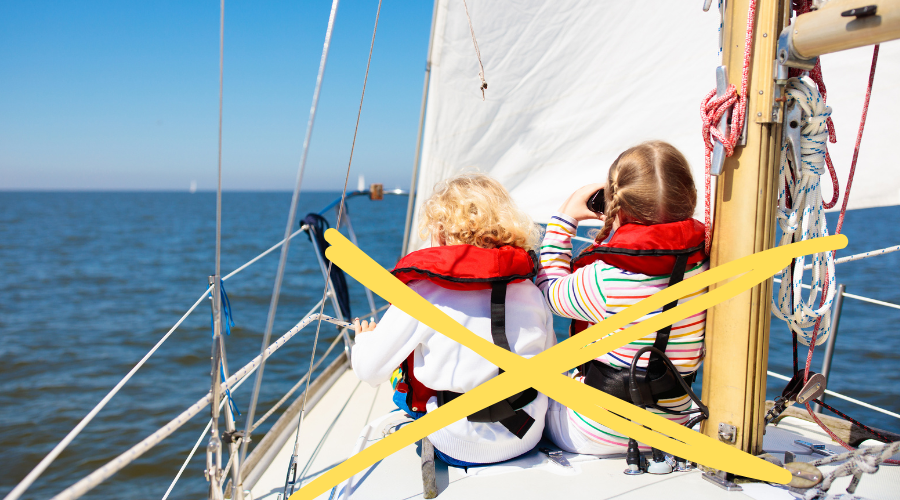
It is important to know that inflatable PFDs are NOT approved under the following conditions:
- Anyone under 16 years of age.
- Anyone who weighs less than 36.6 kg or 80 lbs.
- Use on personal watercraft.
- White water paddling activities.
When choosing a lifejacket or PFD, remember the differences in functionality between inherently buoyant lifejackets and PFDs and inflatable PFDs. Pick one that best suits you needs and think carefully before purchasing. Also consider colour when you make your choice. Bright colours are easier to spot in the water. The best lifejacket or PFD is the one that you will wear whenever you are on the water.
Remember that an emergency is no time to try out a new lifejacket or PFD. So, locate your owner’s manual for whatever type of PFD or lifejacket you own, read it fully and know how to use it and care for it before setting out on the water and when storing it.
PFDs and lifejackets only work when you are wearing them.
John Gullick,
Manager of Special Programs