


Ask Andrew: Below-The-Water Inspections in the Before Launch – Power and Sail
Feb 27, 2025
When the boat is in the water, It’s easy to take for granted the parts of the boat that are under the water. It’s also convenient to think ‘everything worked well last year, so I won’t worry about it this year.’
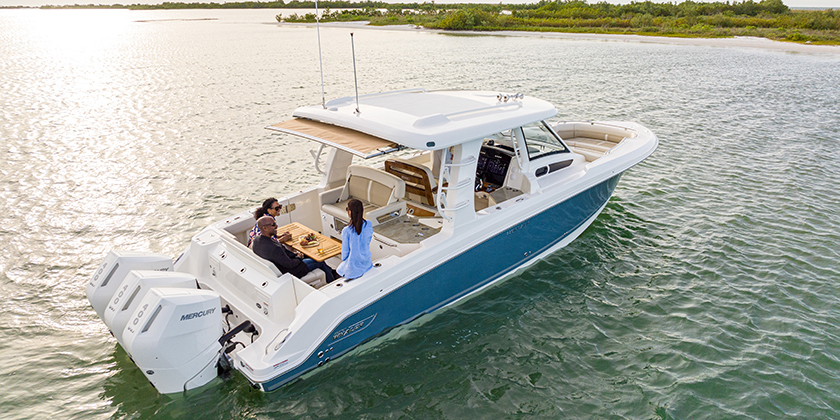
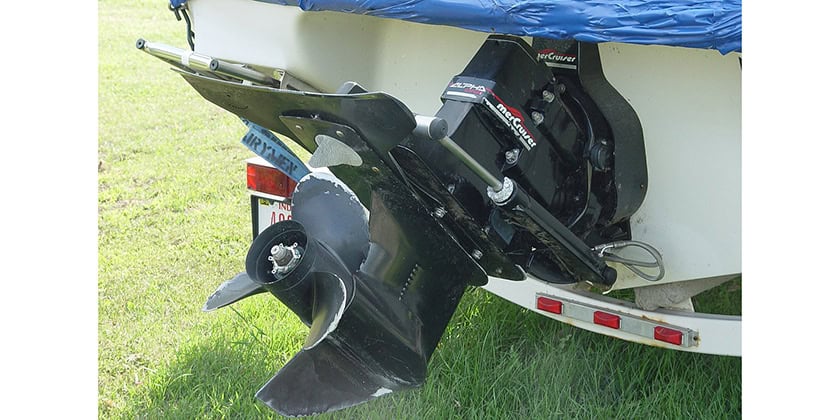
For powerboat owner, while there’s a number of checks to perform on the underwater machinery before launch, there’s a lot more happening besides propulsion. Powerboats can have sterndrives, trim-tabs, anodes, through-hulls, speedometer pick-ups, and transducers. But beyond this, the transom, chines and overall condition of the hull and coatings should be inspected. Here’s a quick checklist:
- Sterndrive – check to ensure that the drive shifts into gear, and spins freely when the engine is in neutral (by shifting in and out of gear at the helm, while the engine is OFF). Check to make sure that the gear oil is clear and at the appropriate level. Check the condition of the drive bellows – if they are split or cracked, they should be replaced.
- Check the condition of the anodes – the stern-drive unit will have multiple anodes, as will the prop shaft and trim tabs. Some power vessels will have large anodes mounted to the transom below the waterline. While looking at the anodes, check to see if there is any corrosion on any underwater metal components, or if paint on the drive needs to be touched up.
- Check the prop for any chips or damage. Check that the prop retaining nut is tight, and any cotter pins are secure
- Check the trim tabs for damage and ensure that they are functioning through their full range of motion. Check fluid levels and top-up as necessary.
- Check the speedometer pick-up and hose for any damage – replace any damaged components
- Check transducers and through-hulls for damage, and to ensure that they are securely mounted
- Check the condition of the hull and transom. Use a small hammer or tool to tap on the hull to see fi there are any ‘soft’ spots, which may indicate water intrusion. Check chine edges, and any trailering damage. Check bow hooks, and cleats for wear or separation.
- Check the condition of the coatings – whether bare gelcoat or antifoul. For bare hulls, clean using an appropriate hull cleaner. For hulls with antifouling; Sand, clean, touch-up and coat where necessary
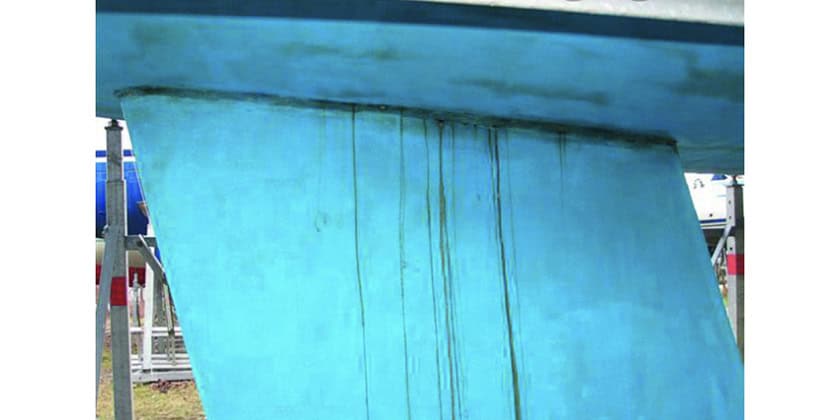
Sailboats differ. Through-hulls and transducers may be similar, but underwater machinery is kept to a minimum. The major difference is the keel, which can necessitate some added considerations.
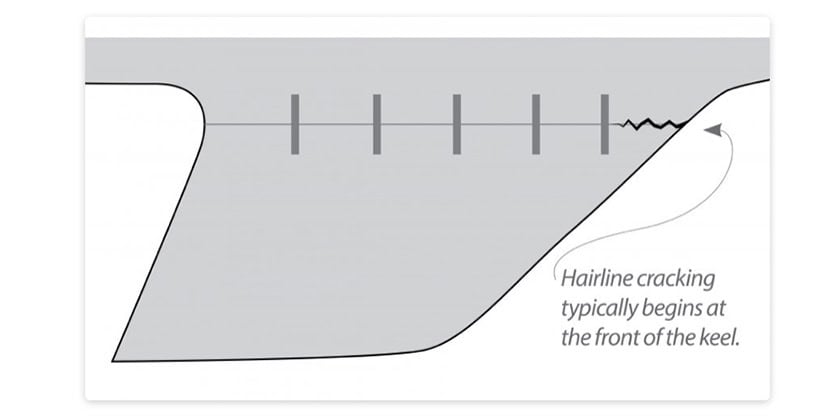
For most production sailboats, the cast iron or lead keel attaches to a keel stump (made of fibreglass) via threaded rods entering the boat’s bilge and secured with a threaded nut. Because the keel is fashioned of two joined parts, the keel flexes and moves, developing the ‘keel smile’ at the joint.
As water enters the joint, and subsequently freezes over the winter, the joint will widen naturally. This is an important area to check each year, both for optimum sailing performance and vessel longevity.
There are a few steps that can be taken to minimize damage and to repair this joint prior to launch:
- Ensure that the keel bolts/nuts are tight. Because the keel is ‘hanging’ in the cradle, drawing downward pressure, make sure that the cradle pads are slightly loose against the hull, therefore closing the gap between the cast iron or lead keel, and it’s fibreglass mating surface
- Once the gap is closed as tight as it can, tighten the keel nuts inside the boat’s bilge. This may require some oversized sockets and lubricants to both loosen and tighten the threaded fittings.
- Sealants and/or fillers can be used to fill any/all voids, and to finish or fair the exterior joint
Coatings and antifouling products can differ widely from powerboats – the entire hull below the water should be inspected, prepped and coated as necessary, following the manufacturers applications directions.
One of the few advantages of living in a climate that requires boats to be pulled from the water each year, is that ability to inspect and maintain the vessel’s hull. As always, consult an expert if you have questions, or if there are maintenance tasks that are beyond your scope or comfort level.

Andrew McDonald is the owner of Lakeside Marine Services – a boat repair/maintenance firm based in Toronto. Andrew has worked in the marine industry for 12 years and is a graduate of the Georgian College ‘Mechanical Techniques – Marine Engine Mechanic’ program.