


Plugboats: Halifax Technology Lets Electric Boats Feed Power Back to Grid
One of the keys for the world’s transition to renewable energy is the need to store the electricity generated from sources like solar and wind that can only operate intermittently.
June 21, 2023
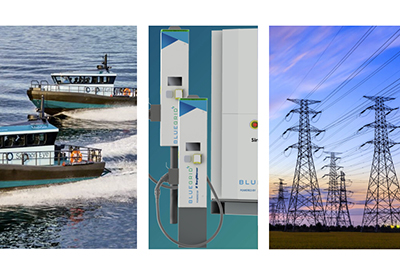
BlueGrid technology makes it possible for electric vessels to be virtual power plants for the electric grid.
One of the keys for the world’s transition to renewable energy is the need to store the electricity generated from sources like solar and wind that can only operate intermittently.
Rimot has developed their BlueGrid technology as a bi-directional charging system that turns electric vessels into virtual power plants (VPP) by using the batteries to store electricity that can be fed back into the onshore grid when required.
It is the same concept as the electric car Vehicle-to-Grid systems in London, Tokyo, New York and other cities, but in this case the electric vehicle is a vessel.
Rimot’s BlueGrid platform is an aggregator that monitors the batteries of many electric vessels at the same time, creating a combined storage capability that can hold as many kilowatt hours as there are batteries.
The key to it all is data management. BlueGrid uses the information from the vessels, chargers and the grid to make real time and predictive models of the best times to charge the vessels, leave their storage untouched or feed electricity into the grid.
Rimot predicts that electric vessels can become economical energy storage resources to support electricity grids at times of greatest demand without negatively impacting vessel operations. Another aspect of the data management that is beneficial to electric boat owners is that it can schedule the charging of boat batteries for low-demand periods where grid power is less expensive.
 For commercial vessels, long term fuel/energy costs are greatly reduced with a switch from fossil fuel to electric propulsion. The V2G system adds another incentive for going electric by providing revenue streams for the vessel owners by selling electricity back to the onshore customers.
Companies and organizations partnering with Rimot include Nova Scotia Power, the province’s ministry of Natural Resources and Renewables, Fisheries and Oceans Canada and Dalhousie University, home to the Jeff Dahn Research Group, a world-renowned leader in battery chemistry development.
One of the first projects Rimot was involved in was a study analyzing ways to de-carbonize Nova Scotia’s lobster fishery. Now Rimot is partnering with Norwegian electric boat motor manufacturer Evoy, which was founded to help electrify the country’s large fish farming industry.
“In complementary ways, Rimot and Evoy are each focused on getting more V2G-enabled electric vessels on the water, said Andrew Boswell, Founder & CEO, Rimot. “This partnership is setting a new foundation for both companies to build on our respective expertise and technology to significantly lower emissions for marine transportation and the electric grid.”
Leif A. Stavøstrand, Co-founder & CEO of Evoy, said “As someone who was born in Canada, I am excited about pursuing partnerships and opportunities that will expand Evoy’s impact in North America and beyond. Fighting climate change and getting to net zero means that the oceans sector must play a major role in reducing its emissions and having companies like Evoy and Rimot collaborate can only improve results for the planet.”
 Jeff Butler is based in Toronto and is the Editor/Publisher of plugboats.com, the international website covering everything electric boats and boating. He is also President of the Electric Boat Association of Canada and is busy preparing to bring electric motor boat racing and exhibitions to Toronto Harbour in 2023 for the first Toronto Solar Boat Races.