


Floating Trash Skimmers Have Come to Granville Island
July 8, 2021
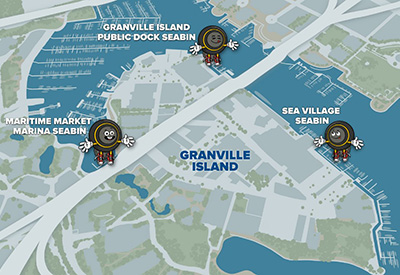
Seabin locations
Swim Drink Fish is spearheading the Vancouver Plastic Cleanup by installing, maintaining, and overseeing multiple Seabins in Vancouver over the next three years to engage in a waste characterization, plastic education, and advocacy project.
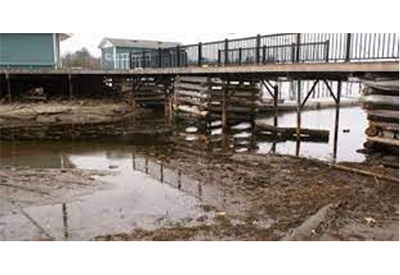
This summer, three Seabins were installed at marinas across Granville Island, including Granville Island Public Dock, Sea Village Marina, and Maritime Market Marina Ltd. These sites were selected due to the significant amount of floatable debris concentrated in those areas. By collecting floatable litter, these Seabins are cleaning up False Creek.
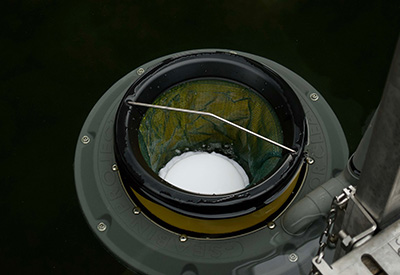
A Seabin is an innovative technology that skims the surface of the water using an electric pump that filters water 24/7. Trash Skimmers collect floating debris such as macroplastics, microplastics as small as 2mm, microfibers, hydrocarbons, and contaminated organic waste like seaweed. Essentially, a Seabin is a floating garbage bin that captures plastic pollution before it travels further into the sea and enters the food chain.
Made possible by generous funding from Peter Wall Coastal Protection Initiative, the Vancouver Plastic Cleanup is a coalition spearheaded by Swim Drink Fish. It was inspired by the Great Lakes Plastic Cleanup, co-founded by Pollution Probe and the Council of Great Lakes Region.
Coalition partners include Fraser Riverkeeper, Peter Wall Charitable Foundation, Smart Marine, Dentist on Demand, Great Lakes Plastic Cleanup, Pollution Probe, Skookum Yacht Services, CMHC – Granville Island, Sea Village Marina, Maritime Market Marina Ltd., Surfrider Foundation Vancouver Chapter, Poralu Marine and Water Products & Solutions, and the U of T Trash Team.
Each year, tens of thousands pieces of plastic litter are collected by community scientists. In 2017, 25,000 microplastics were counted in False Creek in a single reading. An estimated 30 billion microplastics are released into Vancouver’s waters each year by water treatment plants, polluting their surrounding watersheds.
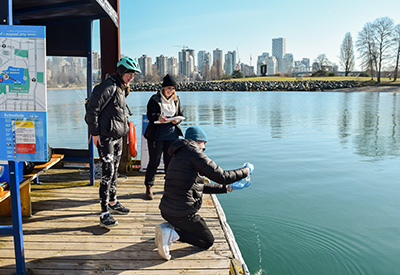
The network of Swim Drink Fish citizen scientists capture data and measure debris collected by mass and characterize the litter by product type and then properly disposed of by local partners. The data will be uploaded to the Vancouver Plastic Cleanup and Great Lake Plastic Cleanup websites. Combined, this data will allow the team to understand the effectiveness in removing plastic litter and make predictions about the sources of litter entering our waterways.