


Ask Andrew: Checking your engine out for the summer ahead
June 7, 2017
Power
For Powerboaters, the engine is the heartbeat of the boat – no engine, no movement. With some simple preventative maintenance tips, time on the water can be maximized, while avoiding some potentially costly repairs.
Here are a few things to watch out for:
 Batteries – these provide power to start the engine and keep it running. A standard 12V Battery should read above 12 Volts before starting the engine, and will typically read at 13.5 Volts while the engine is running. The increase in voltage happens because the alternator charges the batteries while the engine runs. Keep an eye on the voltage before start up and while underway to confirm that they are functioning as designed
Engine oil – The type of oil (synthetic vs. conventional) and the weight of oil (10W40 for example) can differ from engine to engine, but you should follow the guidance of the manufacturer. Check the engine oil using the engine’s dipstick regularly, keeping an eye on colour (oil should be a honey-brown colour – NOT Black), and level (the dipstick will have ‘add’ and ‘full’ marks, or hash lines to indicate what level the oil should be).
Coolant – manufacturers specify the type and quantity of coolant to be used, and should be kept within the quantity range specifications on the engine. Lack of coolant could cause the engine to overheat, possibly causing breakdowns and repair costs. Keep an eye on the temperature gauge and make note of the regular temperature range at start up and while under heavy load.
Fuel – modern gasoline found at the pumps contains up to 10% ethanol, which are not ideal in the marine environment. Try to avoid using gas with ethanol, and opt for a high-test gasoline containing less ethanol
Drive belts – friction and heat cause belts to wear out over time and should be inspected regularly for points of wear, and also tightness. If more than a ½” of play is found, belts should be tightened
Spark Plugs – plugs should be checked for dirt/carbon build up and cleaned/replaced if they are found fouled.
Keep an eye on the sounds your engine makes and the way it performs – coughs, sputters, problems at idle or at high load should be noted and taken to a qualified marine tech for further investigation.
Sail
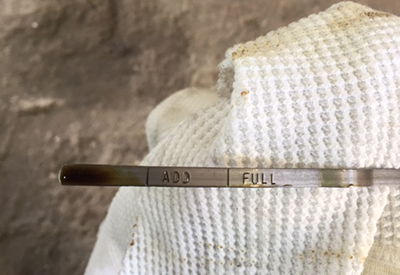 Oil level dipstick – good colour, but the level is low
On sailboats, engines are often referred to as ‘auxiliary’, or ‘back-up’. For most of us, this means that the engine is used to get in and out of dock, and occasionally for travel from point A to point B. Engine maintenance requirements differ somewhat, because of limited engine use.
In addition to the items to watch for powerboaters, sailboaters should also pay attention to:
Fuel: How long will fuel sit before using it again? If your boat will sit at dock for weeks at a time without the engine running, consider adding a fuel stabilizer to the fuel tank (either for gas or diesel engines) to keep the fuel ‘fresh’ and ready to use the next time you leave dock
Shift and throttle controls – in and out of dock, making tricky and unexpected turns and sudden maneuvers tends to take a toll on shift and throttle cables. If you notice that it is difficult to shift into forward/neutral/reverse, adjustments may be needed, or cables may need to be replaced
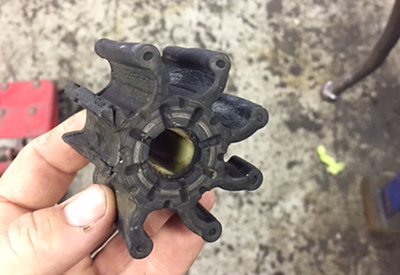
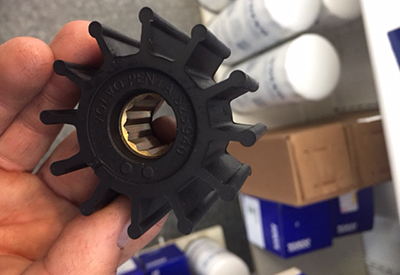
Cooling water – most marine engines use lake water to cool them down. The cooling water enters the boat through the hull and exits with the exhaust. Watch for bags/debris in the water that could block up the water intake, and check to ensure that water is flowing out of the boat through the exhaust. Annually, replace the fresh water impeller (a device with rubber blades that draws water into the engine).
Preventative maintenance, and knowing the ins-and-outs of your boats systems can make boating more enjoyable – but if you’re not hands-on (or hands-dirty), seek out a local qualified repair technician to go over your boat and begin a preventative maintenance program.
Andrew Macdonald

Andrew McDonald is the owner of Lakeside Marine Services– a boat repair/maintenance firm based in Toronto. Andrew has worked in the marine industry for 12 years and is a graduate of the Georgian College ‘Mechanical Techniques – Marine Engine Mechanic’ program