

Sail Techology: Simple Sailing Tips… That Everyone Forgets
May 18, 2022
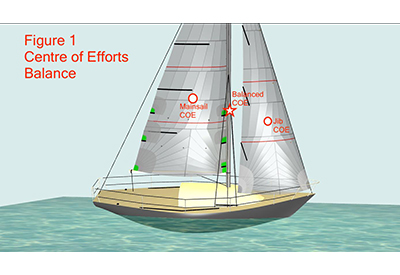
Figure 1 – Centre of Efforts Balance
Sailing really is a simple sport, just you and the wind and waves. And the boat, an infernal contraption made of twisted ropes, slipping cleats and flapping sails. Ok, so sailing is simple when you tame Hydra’s nest and get all the ropey bits correct. I’m quite lucky that I get to talk sailing nearly every workday, and many sailors get some of the simplest things wrong which leads to a mess once in a while.
Headsail Only – NO
Sailing with only a furling headsail up. Please don’t! “But my C&C 34 sails perfectly well with 25 degrees of heel with only the #1 genoa up” everyone says. To heel your boat at 30 degrees is about the most load your sails will ever receive, and to do it with only one sail, means that it is quite overloaded compared to the same heel angle with two sails up. The boat will also exhibit lee helm, the tendency to bear away from the wind in a big puff. I get it, it sails and the boat heels, it just does not sail well!
Look at Figure 1 and see how unbalancing the Centre of Efforts (COEs) will add a turning moment to the boat. If sailing with main only, it is possible to open up the sheeting angle by letting the traveller car down and adding some more twist by easing the sheet tension. The overall balance will be towards weather helm, which is the tendency to head into the wind. Sailing with jib only, overtrimming the jib will move the COE aft and help get the boat in balance but doing so with a very inefficient rig with more sideways force than forward.
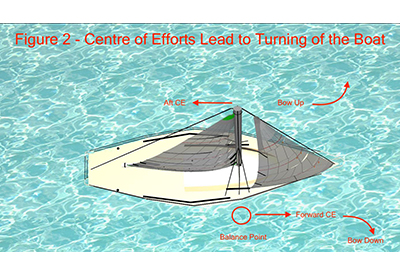 Figure 2 – Centre of Efforts Leading to Turning of the Boat
Hoisting a mainsail should not be as difficult as most sailors make it! Everyone has forgotten how to use a topping lift. The purpose of the topping lift is to hold the boom up when you hoist, douse or reef the mainsail. It is adjustable because you must adjust it, all of the time.
Release the vang and raise the boom up about 300mm higher than the level when it is sheeted in. This is the setting for hoisting and reefing. When you start sailing, lower it down so it doesn’t put any tension on it. If you have a solid vang or Boomkicker setup, they essentially replace the topping lift with a spring that raises the boom up when you ease out the vang. This is even easier, but you still need to let the vang off and allow the boom to raise before hoisting or reefing.
Main – YES
This may sound like a simple first lesson in raising a main, but everyone forgets. Lazy jacks and sailcover systems hide the fact that these systems replace the topping lift and these need to be adjusted similarly. More ropes lead to more things to adjust. If you are struggling to hoist the main, especially the last couple of metres, you need to take the sail tension off by raising the boom.
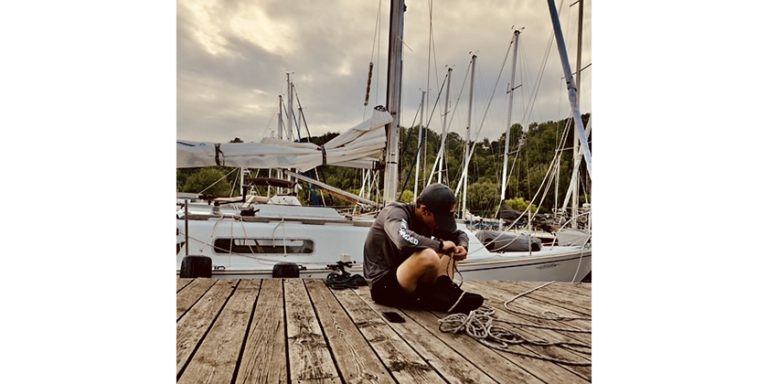
The last tip is managing halyards and sheets. Do not coil your ropes into perfect ovals by adding a twist every layer. You want to coil in figure 8’s so the line will run freely without any twists that get stuck running through clutches and blocks. After a maneuver, coil the loose rope and lay it down on the cockpit benches or floor with the free end on the bottom. If you ever see a messy coil, recoil it. Some of the best racing crew I’ve sailed with are compulsive rope coilers, and the ropes always run free.
 Keven Piper, two-time Shark 24 World Champion, founded Hamilton, ON-based Bay Sails in 1998. Email: baysails@gmail.com