


The rules guy: New Rule Changes III
Mar 25, 2021
This month, we continue our exploration of changes included in the 2021-2024 edition of the Racing Rules of Sailing.
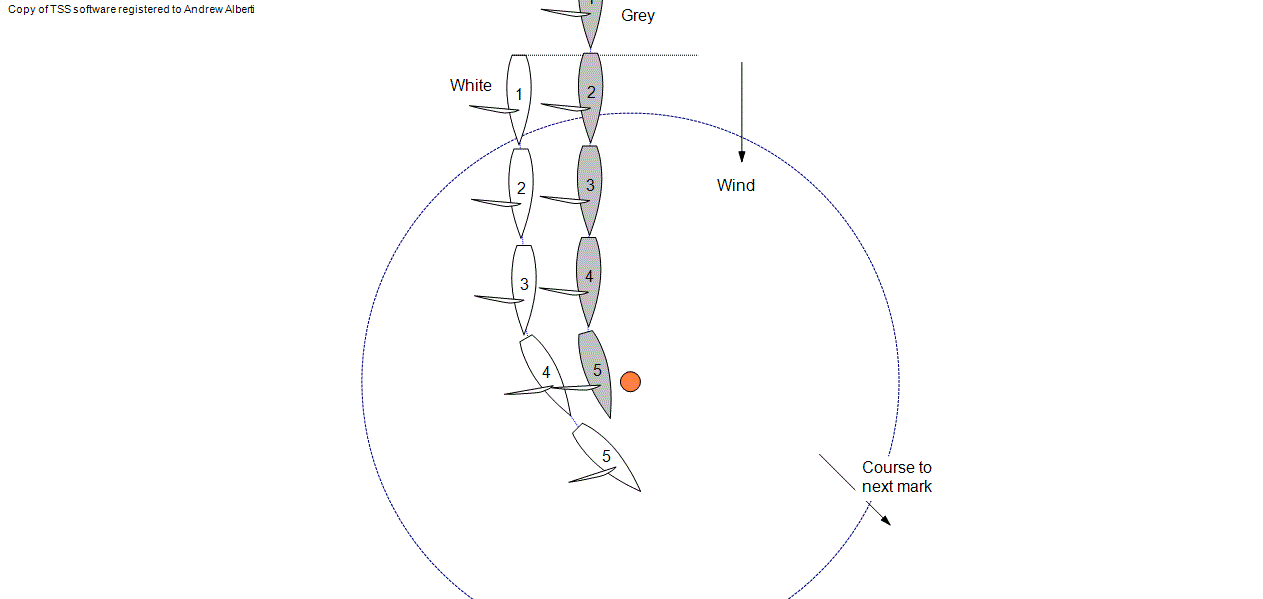
The next right-of-way rule that appears to have several changes is one that has changes every time a new rulebook comes out. rule 18, Mark-Room. The changes this time are very minor. Rule 18.2(b), the main part of this rule, gives mark-room to boats that are ahead or overlapped inside when they get to the zone. 18.2(c) says that those boats get to keep that mark-room, even if the overlap situation changes. 18.2(d) describes some situations where that mark-room stops. One of the situations that caused the mark-room to stop was the boat having been given the mark-room. The old rule turned off rule 18.2(b) and (c) when the boat entitled to mark-room had been given it, but left it on for 18.2(a). The new rule moved that “turning off” back up to the end of 18.1 and applied it to all of rule 18.2. This is very unlikely to make a difference to anyone, but the diagram shows a situation where it does.
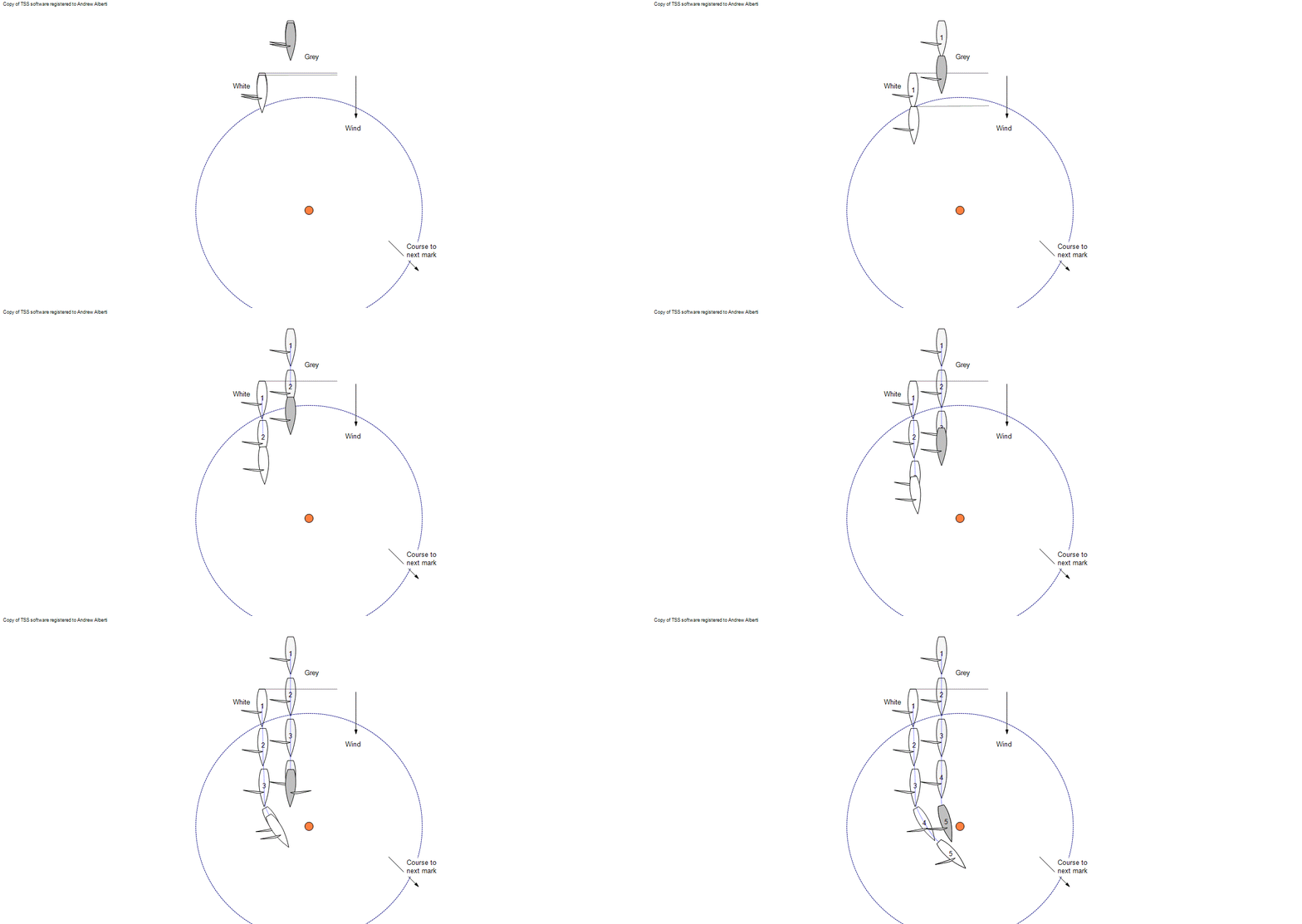 In the diagram, White and Grey are sailing downwind toward a gybe mark. In position 1 when White gets to the zone, White is clear ahead so Grey has to give her mark-room. At position 5, White has been given her mark-room and is sailing on the course to the next mark. According to the old rule 18.2(d), since White had been given her mark-room, 18.2(b) and 18.2(c) no longer applied. 18.2(a) still applied and since the boats
were overlapped, White had to give Grey room. The new rule changes this and now that mark-room has been given, rule 18 – including 18.2(a) – can no longer apply, so White does not have to give Grey room. This is unlikely to change the way anybody sails.
The biggest change is to the title for rule 18.3. “Tacking in the Zone”, has become “Passing Head to Wind in the Zone” which better matches what the rule already said.
18 MARK-ROOM
18.1 When Rule 18 Applies
Rule 18 applies between boats when they are required to leave a mark on the same side and at least one of them is in the zone.
However, it does not apply
(a) between boats on opposite tacks on a beat to windward,
(b) between boats on opposite tacks when the proper course at the mark for one but not both of them is to tack,
(c) between a boat approaching a mark and one leaving it, or (d) if the mark is a continuing obstruction, in which case rule 19 applies.
Rule 18 no longer applies between boats when mark-room has been given.
18.2 Giving Mark-Room
(a) When boats are overlapped the outside boat shall give the inside boat mark-room, unless rule 18.2(b) applies.
(b) If boats are overlapped when the first of them reaches the zone, the outside boat at that moment shall thereafter give the inside boat mark-room. If a boat is clear ahead when she reaches the zone, the boat clear astern at that moment shall thereafter give her mark-room.
(c) When a boat is required to give mark-room by rule 18.2(b),
(1) she shall continue to do so even if later an overlap is broken or a new overlap begins;
(2) if she becomes overlapped inside the boat entitled to mark-room, she shall also give that boat room to sail her proper course while they remain overlapped.
(d) Rules 18.2(b) and (c) cease to apply if when the boat entitled to mark-room has been given that mark room, or if she passes head to wind or leaves the zone.
(e) If there is reasonable doubt that a boat obtained or broke an overlap in time, it shall be presumed that she did not.
(f) If a boat obtained an inside overlap from clear astern or by tacking to windward of the other boat and, from the time the overlap began, the outside boat has been unable to give mark-room, she is not required to give it.
18.3 Passing Head to Wind Tacking in the Zone
If a boat in the zone of a mark to be left to port passes head to wind from port to starboard tack and is then fetching the mark, she shall not cause a boat that has been on starboard tack since entering the zone to sail above close-hauled to avoid contact and she shall give mark-room if that boat becomes overlapped inside her. When this rule applies between boats, rule 18.2 does not apply between them.
Red text is new to the 2021 rulebook, Red strikethrough text is deleted in the 2021 rulebook. Italics shows a term used in the sense stated in the definitions.
 Andrew Alberti is a National Judge and National Umpire. He is a member of the Sail Canada Rules and Appeals Committees. Send your questions to Andrew at kyrules@alberti.ca.