


Pursuit of Happiness: 5 Tips for Reverse PHRF Racing
May 17, 2023
By Heather Mahady
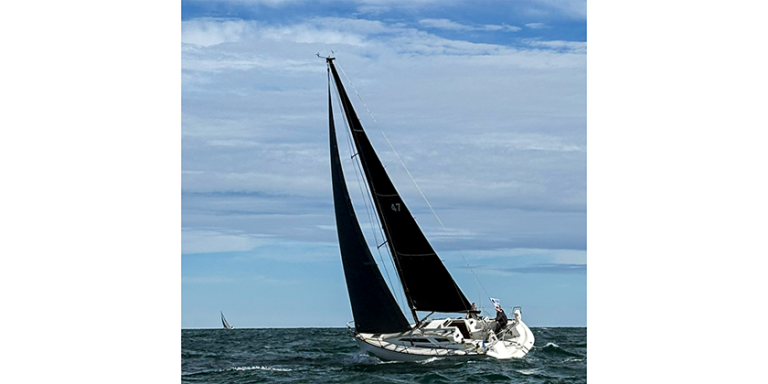
Every dog has its day, and pursuit racing is an excellent way to make all competitors feel like they have skin in the game. Pursuit racing, commonly called reverse handicap racing, is a variant of PHRF racing where boats start in reverse order, with their start times pre-determined by their ratings and the course length. The staggered start times are designed to result in a tight finish for every boat on the course, with many of the benefits and thrills of one design racing.
The reality is different, however, after battling up and down the course in varied conditions and facing tactical choices. Usually, only a handful of boats are in the running by the final leg. Nevertheless, they provide a fun event that varies the standard fare of windward/leeward round-the-buoys club racing. The slowest boats, having had a head start, experience the thrill of leading the way around the course while the faster boats need to be strategic about jockeying through the fleet.
The beauty of this is that you always know how you are doing, similar to racing in a one design fleet. If a boat is ahead of you, it’s beating you; if you’re ahead, you’re ahead. It’s that simple. There is no waiting after the finish for a computer program to crunch the numbers.
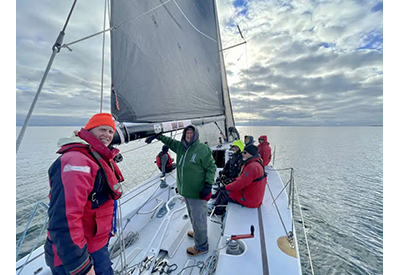 Five key pursuit racing tips:
Get in line and GET A GOOD START, IN CLEAR AIR. The staggered start times should leave you with a lot of room at go. Arrive early to the starting area to select the favoured end of the line, assess the conditions, run the line a few times, and take transits on shore. This is your chance to really nail the start! Typically, start times are listed in advance, and there will not be a sequence for each boat.
- If you aren’t the final boat to start, CONSOLIDATE YOUR POSITION on the fleet behind you. Keep tabs on the fleet and keep your boat positioned between them and the next mark. Boats that start after you have a faster rating, and will close the gap as the race progresses. Lead the fleet, it is harder for them to pass you if they are following the same course.
- SAIL YOUR OWN RACE, stay focused, and look for any opportunity to pass those ahead. Don’t get caught up with your head outside of the boat too much. The boats that started before you have a slower rating, and you can catch them by maximising your own boat speed and performance.
- Avoid wasting time getting stuck to leeward, caught-up in a luffing match or a tacking duel during the early stages of the race. But towards the finish, you can use these tactics to DEFEND YOUR POSITION. This becomes increasingly more difficult as the fleet compresses in a well-balanced pursuit race.
- Get to KNOW YOUR COMPETITION. Pursuit racing often lumps a huge range of PHRF ratings into a single division. Such a wide variety of boats will have an assortment of strengths and weaknesses, which are also impacted by the wind conditions. Being out-pointed by a leeward boat, out-manoeuvred by a small sport boat, or sailing into the wind shadow of a larger, slower, cruiser are examples of unexpected setbacks you could encounter.
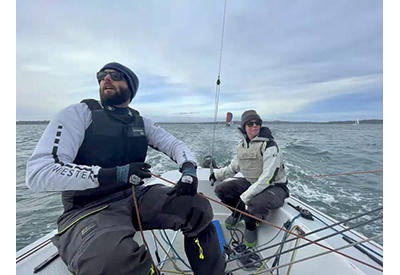 While in many ways, pursuit racing levels the playing field for all competitors, variable conditions can also skew results. If it is windy early in the day, the first boats on the course can get a considerable head start and leave their competitors bobbing in the tide when the wind shuts off. On the other hand, there is nothing more dismaying than to watch from the lead position as a puff creeps up from behind, allowing the faster boats to rocket past. But that’s what sailboat racing is all about.
Pursuit racing can also be enticing for less experienced racers and serves as a great way to introduce new racers to PHRF racing. This format gives the whole starting line to individual boats; there are only multiple boats on the line when boats share the same rating. Seasoned racers may argue that races can be won and lost at the start line, and that an empty start line doesn’t challenge the skills required to succeed in a conventional sequence. But for that reason, it removes huge obstacle to new racers, who may still be uncomfortable manoeuvring in such close proximity to other boats.
There is a small amount of luck involved in any sailing race, but there is always plenty of skill required to spot shifts, puffs, tidal and tactical advantages. While many yacht club trophies seem to be reserved for the elite sleds, a pursuit race with a single winner allows the name engraved to represent a broader range of competitors, and even the most humble vessel has a fighting chance to win.
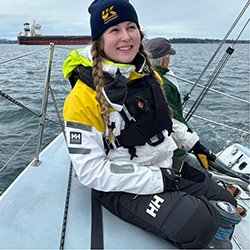 Heather Mahady is the General Manager of UK Sailmakers International. She is based on Vancouver Island in the Pacific Northwest, and is a passionate sailboat racer, sailmaker, and sustainability advocate.