

MarineShrink by Layfield – The Boat Wrap with a Sustainable Approach to Plastic Waste
July 30, 2020
We all know that plastic and plastic waste is a huge issue globally. In 2014, the annual global production of plastic was 311 million tons, a 20x increase since 1964. Projections estimate global plastic production will double over the next 20 years.
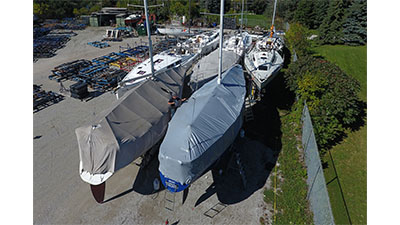
Driven by innovation and consumer demand for sustainable packaging options, Canadian manufacturer Layfield recently introduced BioFlex™ MarineShrink Boat Wrap coast to coast. Layfield has been working on an eco-friendly solution to plastic waste since 2008. Twelve years later, after exploring several options to find the best solution, BioFlex™ material made its appearance. The product is a proven technology ready for the market.
Some of BioFlex™ MarineShrink Boat Wrap features include:
• Grey color – unique, slight color change during heating for identification
• Uniform Gauge Thickness – consistent thickness across the roll
• Ease of use – fully compatible with accessories
• Packaging – large and small roll sizes, centerfold for easy deployment and transport
• Disposal – just landfill it
Disclaimer * BioFlex™ has been shown to produce biogases 22 times faster than conventional plastic in the ideal conditions of an anaerobic digestor landfill over the course of 2.13 years, using the ASTM D5511-12 test. When disposed of in a landfill with modern biogas capture technologies, this energy can be harnessed as a source of renewable energy. Such a facility may not exist in your area.
“I love Bioflex™. The best part is this material can be easily recycled, but for this and many applications it’s actually probably best going to a landfill to turn back into natural gas. Plastic is made from gas and this biodigester microbial environment (modern landfill) helps Bioflex™ turn back into gas instead of lasting hundreds of years. 1 lb can create enough energy to power an electric car for 12km offsetting coal or more harmful energy inputs. I understand all ten major cities in Canada are now running modern landfills managing gas collection. Although counterintuitive to many, this is what I consider “fully circular” material.”, says Mark Rose, President, Flexible Films at Layfield.
From a packaging, life-cycle assessment perspective, BioFlex™ MarineShrink Boat Wrap presents a more sustainable, conscientious, and responsible alternative when compared to conventional wrap for your boat. Bioflex™ performs the same as a conventional structure – it has the same appearance and physical properties and will not compromise shelf life – the only difference is in how it behaves in the landfill.
As recycling is not currently feasible for many flexible plastic applications, BioFlex™ Marine Shrink Boat Wrap is developed as a solution that actually provides sustainability benefits in today’s reality.
To learn more, visit here.