


Remembering Clay’s Wharf
You could not believe the sense of nostalgia that hit me when I saw the cover of your February 2014 Canadian Yachting West with its shot of the yachts moored in Pelican Bay, as it is now called, on the south side of Granville Island! This is where I grew up – at my father’s “marina” known as Clay’s Wharf.
I spent my early days and youth working on boats at this very spot until 1961 when I married and moved to Port Moody and began teaching in Coquitlam.
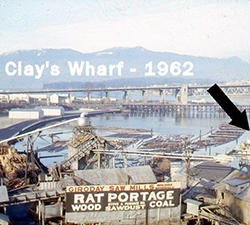
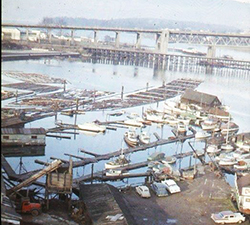
Clay’s Wharf was not big but it was the first place people could moor their boats in Vancouver and it all began in 1928 when my father had a 27’ cruiser and needed somewhere to keep it. He obtained permission from the mill on the site and the city to moor his boat at the extreme left of your cover picture and it was just a matter of time before other boat owners happened along and wanted moorage as well. In time the wharf grew out of this corner to Granville Island and then along the south shore of the creek to the booming grounds of the mill to its largest capacity: 200 berths. The photo shows most of the wharf at this size in 1954.
Things went well until Vancouver began planning for Expo ’86 when the survival of the wharf came into question. So my father planned a new wharf to be built between the Burrard Bridge (seen in your cover picture – background) and the Kitsilano Railway Trestle (now removed). After obtaining permission from the Department of Indian Affairs to have this land put up for sale and drawing up plans for this new marina, he took the plans to Vancouver City Hall to obtain a permit. Unfortunately, the city liked his plan so much it decided to acquire the land and build the marina itself. So the concept of the Vancouver Civic Marina was born. Shortly after this, because the land on which Clay’s Wharf fronted was now owned by the city as a result of a CPR swap with Langara Golf Course, the mayor told my father: “I don’t want to see you and your family getting rich so we are cancelling your lease on your present wharf and you will have to vacate the area.” After almost 50 years, he was awarded $8,000 for his work, of which his lawyer took $4,000! On the good side, we helped create a base for local marine trades businesses, developed some good boat skills ourselves, and my brother went to Pender Harbour and built his own Madeira Marina. And we all have wonderful memories of Clay’s Wharf and Arrawac Charters Ltd. The wharf helped make the businesses and trades of the area very aware of the potential of False Creek as a boating centre and the area has developed into a boaters’ paradise.
So I think you can understand that to see your amazing picture on the cover of CYW was a huge nostalgic event for me, now that the area is transformed into what it is today. Thanks for the memory revival! Keep up the great work!<
Gordon Clay, Coquitlam BC