

Vessel Preparedness and How To Get A Free Courtesy Check
May 23, 2019
Every year thousands of boaters go out on the water without the proper safety equipment that is required by law. This equipment can be of great benefit and comfort and can mean the difference between a great day out on the water and a potential disaster.
Required items vary depending on boat length but here is a list of things that you require on board, in good working condition and within reach each time you go out:
Compulsory Items required on a typical vessel 6 meters or less in length:
The vessels license or registration certificate if powered by a motor of 7.5 kw (10 hp) or more.
• A Canadian approved flotation device, lifejacket or PFD, in good repair and of appropriate size for every person on board.
• Fire extinguisher (depending on type of engine, gas tank or cooking appliances on board).
• Watertight flashlight or pyrotechnic distress signal requirements (flares).
• Sound signaling device.
• Buoyant heaving line (minimum 15 meters in length).
• Paddle or anchor with at least 15 meters of rode and /or chain.
• Re-boarding device.
• Bailer or manual water pump.
• Navigation lights.
Other items to check:
• Batteries are secure.
• Passive ventilation that allows air to flow through below decks.
• Exhaust fan or bilge blower that removes dangerous vapours.
• Flame arrester and heat shielding for inboard engines.
• Up-to-date charts.
• Magnetic compass.
• Radar reflector.
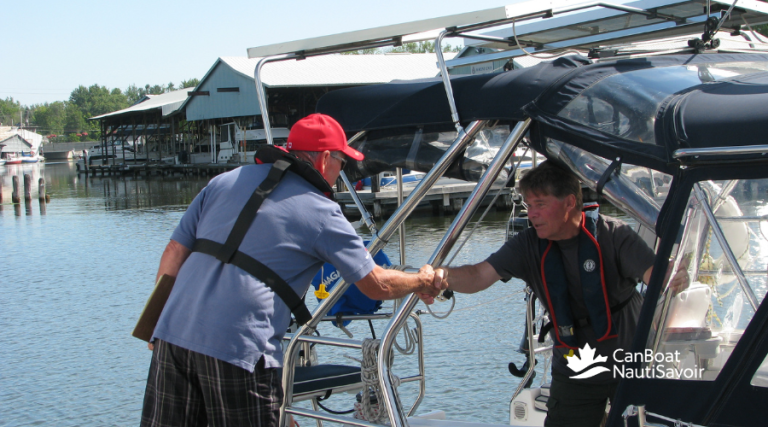
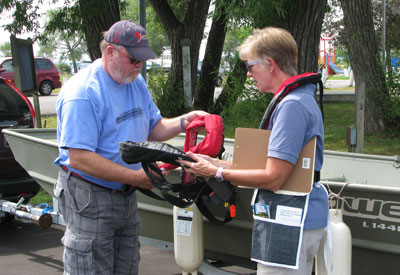
Consider requesting a Recreational Vessel Courtesy Check at http://www.courtesycheck.ca. This is a totally voluntary service and is conducted without penalty. You will receive an inspection certificate and, when you pass, a sticker. If a deficiency is found you will simply be advised of the requirement and a re-inspection will be offered when you have added these items.
They will inspect vessels that are in or out of the water. They can tell you what is required and give you specific information about each item, what items are best for your vessel and boating conditions and even how to properly use certain items or what additional training might be available.
CPS-ECP can offer free Recreational Vessel Courtesy Checks (RVCC) at your yacht club or marina during the boating season. Again, contact your local CPS-ECP Squadron.
It is said that knowledge is power and when it comes to boating you can never have too much of it. That knowledge can give you the confidence to really enjoy your boating experience and it can give others confidence in your abilities as a safe boat operator. The best trip is always a safe return trip.
By John Gullick, Manager of Government and Special Programs, Canadian Power and Sail Squadrons