


Blue Jay – Three Generations Restore an Enterprise Dinghy.
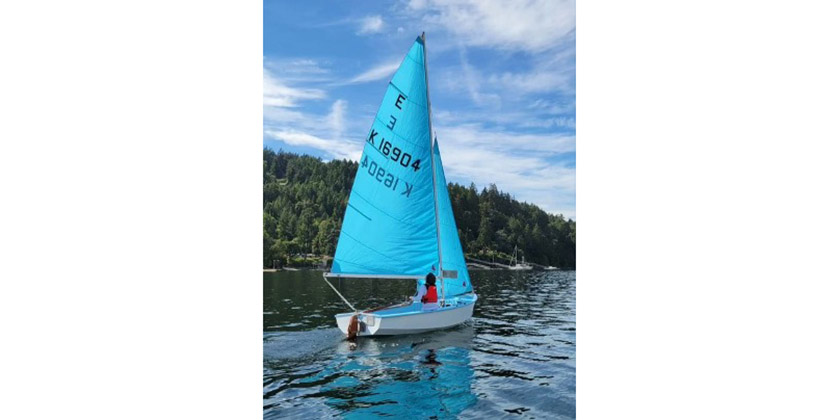
Blue Jay sails in light winds on the Salish Sea. Photo Credit Elissa Erickson
August 27, 2026
By Dave Erickson
Our son, then 15 and very involved with small boat sailing through the Canadian Sea Cadets, had been talking about a boat of his own. He had been holding on to an accumulation of cash from birthdays, yard work and working as a summer sailing instructor.
I had first seen the small blue and white dinghy on a local buy and sell website, the seller wanted $700 or trade for a sea kayak. It was an Enterprise and located on a nearby Gulf Island my partner and I agreed that a small project dinghy would be an excellent platform to teach a new boater basic maintenance skills. That was the last we thought of it until our son brought the ad to our attention several months later, by then he had saved enough to meet the seller’s asking price and was really keen to “just take look” (where did he ever learn a phrase like that?).
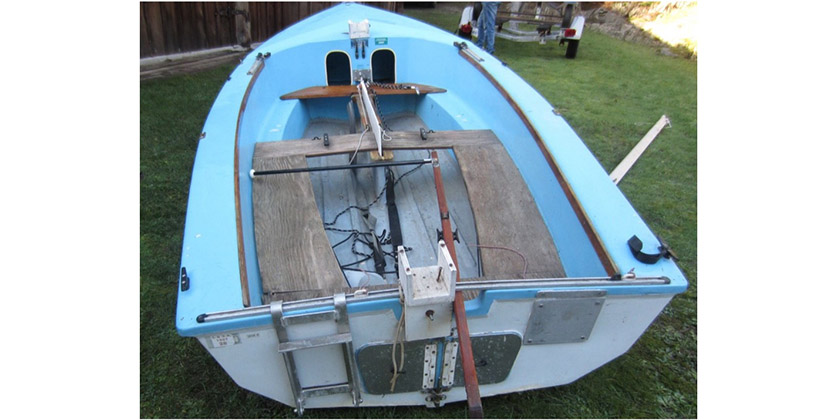
The boat was stored in the back of a timber frame barn, the light blue deck gelcoat still reflected well in the dim light. (Hence the eventual moniker Blue Jay.) We pulled the rusty trailer outside on its dry rotted tires and began to take account. The original thwarts had long ago been replaced with stained exterior grade plywood in a configuration that would allow the dinghy to be propelled by oars but would always force the crew to the rear of the cockpit, spoiling the trim. Hardware was attached with a miscellany of mild and stainless steel fasteners; the rudder foil was split and inexpertly repaired. Despite all this he could see value and a deal was struck and arrangements made to bring the dinghy home.
The Restoration
The first job after bringing Blue Jay home was to remove all of the deck hardware and interior joinery. The Enterprise Class website was a great source of technical drawing and specifications. This information allowed for a new rudder assembly to be created to the original specifications. The centreboard was in serviceable condition and benefited from a wet sanding and renewal of it’s pivot bushing. All hardware was removed and prepared for reinstallation with polysulfide bedding compound to prevent any water ingress and any old holes in the decks, cockpit or hull where sealed up with thickened epoxy.
The hull had the benefit of being stored indoors for the last decade and was dry as it could be, so this was time well spent. With the hardware removed a simple cut-polish and wax of the decks and cockpit (taking time to mask-off the future locations of hardware and thwarts) was a straightforward process.
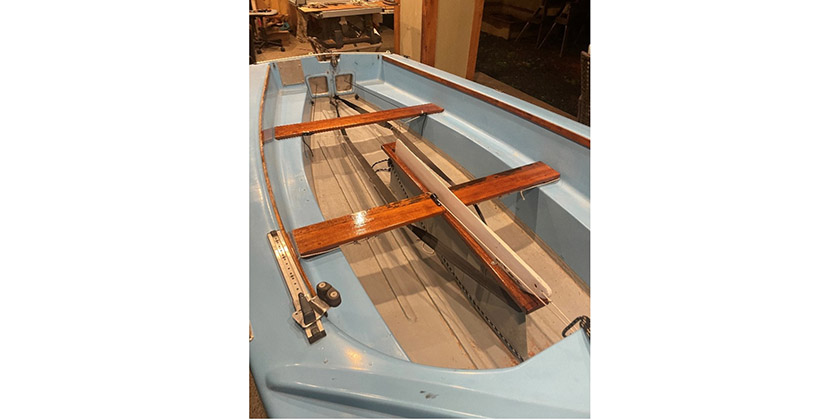
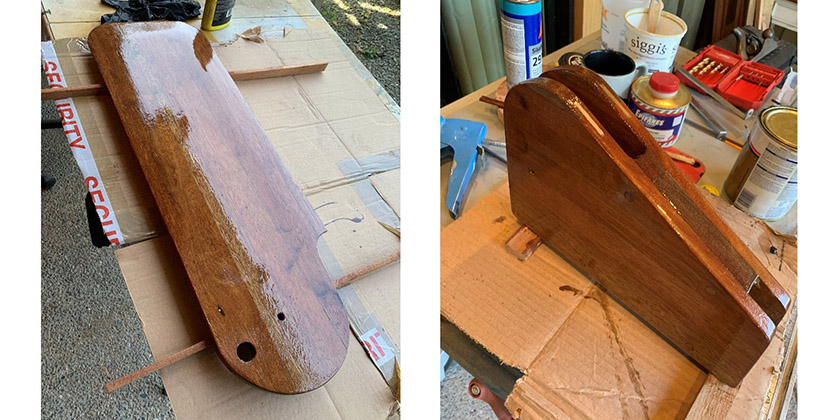
We dug into our stash of Honduras Mahogany to recreate the rudder, thwarts and centreboard trunk cap. There was some debate over the material and its added weight over a softwood like Western Red Cedar. However, the utility of having the mahogany on hand over the green second growth cedar we had access to, made the choice easy. The heavier tropical wood is aesthetically pleasing and wears better. Each mahogany part was laminated with west system epoxy and sealed with two coats of S-1 epoxy penetrating sealant before being installed. The permanent parts were fastened with stainless steel and bedded in polysulfide compound (Sikaflex 291). After clean up all wooden parts received 4 coats of spar varnish to provide UV protection that is not afforded by the S-1.
A third generation then stepped in to help renew the tiny steel trailer that could be generously described as rough. My dad, an experienced metal fabricator assisted with making new bunk and roller brackets, then supervising the replacement of tires and packing of new wheel bearings, a key skill for all small boat sailors to master!
A secondary value for old boats is the opportunities that they present to learn and master new skills. This small restoration project introduced a new generation to wood working, wood finishing, the principals of fastening and bedding hardware, plus the skills needed to maintain a safe, reliable boat trailer. Engaging with these tasks doesn’t only add value to an old dinghy, but also builds confidence in the user, in this instance passing down skills and knowledge to the next generation of small boat sailors.
The Class
While not unknown in Canada and other commonwealth countries, the Enterprise with its light blue sails is most well known in Great Britain, where an active class association thrives. It dates back to the post war small boat boom in the same country when national newspapers commissioned dinghy designs that could be built and raced by their readers.
Over 23,000 Enterprises have been reported built first in plywood and later in glass reinforced plastic.