


4 Steps to Control Vessel Flooding
July 7, 2022
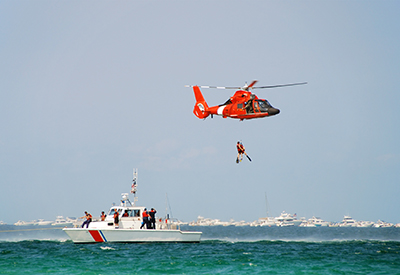
Every year the Coast Guard reports thousands of boating incidents, many which involve collisions with objects or equipment failures. While most boaters have safety gear on board that is legally required, many do not have the tools and materials on-hand to make a critical repair in case of an emergency.
Flooding can happen quick! For example, a 3-inch hole, 2 feet below the water line, will result in flooding of 250 gallons per minute – not something your average bilge pumps can keep up with. Being prepared is key and the following 4 steps can help prevent an incident or reduce the amount of damage in the event of an emergency.
 1. Prevention – Operate your vessel safely, and within the limits of your ability. Routinely inspect through-hulls, seacocks, piping, hose clamps, drains, rudder posts and shaft seals for leaks, corrosion, and damage. Repair and replace as needed.
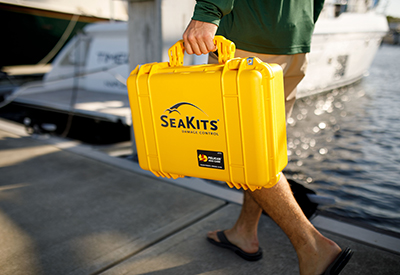
2. Preparation – Make sure you have a damage control kit on board that is easily accessible. SeaKits provides high-quality damage control kits for vessels of all sizes. Each kit includes tools, materials and safety equipment to help repair holes and leaks quickly and effectively.
3. Assessment – In the event of flooding, get prepared to abandon ship, shutdown generators and inverters, and identify the source of the flooding. Notify the Coast Guard.
4. Control – Ensure all bilge pumps are operating. Work quickly to slow the flow of water using plugs, wedges, neoprene sheets, tape and sealants from your damage control kit. Once flooding is under control, consider ways to improve the repair. Maintain a watch on the flooding site until back to safety. Update the Coast Guard as necessary. 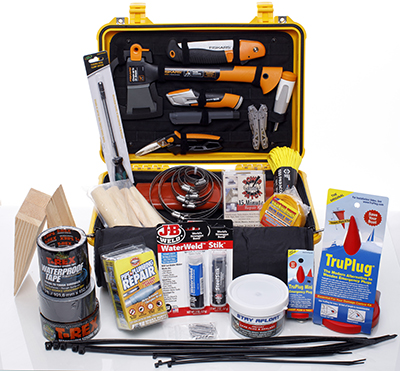
For more information on damage control and repair kits, visit www.SeaKits.com