



From the Expert: Comment from Fogh Boat Supplies on the Statement from Interlux Regarding the Discontinuation of VC17
Jan 9, 2024
By Morten Fogh
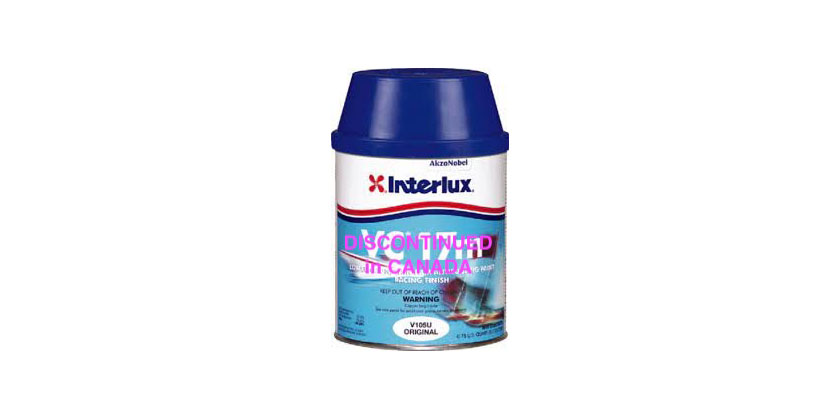
After reading Interlux’s statement on the discontinued VC17 antifouling paint, we have prepared some of our recommendations:
- Sand the VC17 off entirely with 80 grit sandpaper rather than 120 grit sandpaper. If you don’t remove almost all the VC17, whatever is applied over may not adhere to the hull and fall off.
- After sanding with 80 grit sandpaper, apply one or two coats of Interprotect 2000. It will allow a good binder between the hull and the new paint to be applied. (Add 3-4 more coats for a total of 4-5 coats and you’ve waterproofed your hull.)
- After applying the Interprotect 2000, you can now apply the antifouling paint that is available in Canada from Interlux. Bottomkote-CA, Micron CSC-CA and VC Offshore.
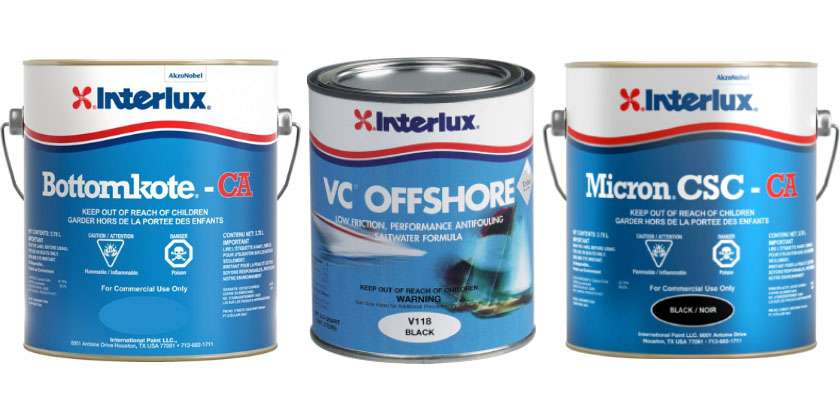
Bottomkote-CA
Pros: Least expensive of the three available antifouling paints. Ablative paint (wears off as it loses its effectiveness), so minimal layer build up over time.
Cons: Not as effective as the other two paints. Single season paint. Layer build up over time, but since it is ablative, a good power washer will remove most of the season’s remaining paint.
Micron CSC-CA
Pros: Very effective, multi season antifouling. Can skip 1-3 years or more if enough layers have been applied. Can be used in fresh and salt water. Less expensive than VC Offshore and comes in 1 litre and 4 litre containers.
Cons: Not a hard, smooth paint. Not ideal for high-speed powerboats as it will wear quickly.
VC Offshore
Pros: Somewhat compatible with VC17. Can be polished smooth with 400 grit sandpaper followed by bronze wool which is ideal for racing sailboats or anyone wanting a smooth bottom. Can be used in fresh and salt water.
Cons: Most expensive of the three antifouling paints. Only comes in 4 litre quantities and only in black and blue. Cannot be shaken in a paint shaker. (Our in-store shaker was used to shake a can and the paint blew out of the can. One of our suppliers has had the same result.) Must have 10C/50F temperature to apply this paint and must wait at least 16 hours to polish. This will hinder those on a tight launch schedule in the Spring. We recommend applying it in the Fall after haulout. Mixed messages on whether it is a multi season paint or not. Some people are getting one year, some are getting more.
Conclusion:
If you are already sanding to remove most of the VC17, remove it all to give you the option to choose any paint that will properly adhere to the hull without any risk of peeling or flaking off. This option will allow you to choose any of the antifouling paint available.