


Where do we want to go next?
Apr 12, 2023
A question asked by all boaters and one that was asked in a different context at the March Education Meeting with respect to Electronic Navigation.
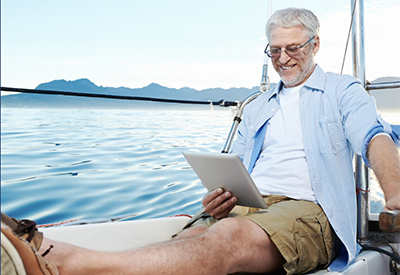
In our recent members’ survey, 86% of respondents said they used electronic devices as their prime navigating tool. Chartplotters were in the majority (61%), then tablets (16%), smartphones (5%) and computers (4%). Paper charts came in at 14%.
This shows that we need to increase the electronic navigation content in our range of Boating courses and take into account that boaters are embracing the relatively low cost navigational “Apps” now available for their existing smartphones and tablets.
Importantly, our courses should also cover the topic of what to do when the electronics fail. Backup and a plan “B” are essential considerations.
Based on all of this, work is now underway for updating the content for the existing B2 and B3 courses to be followed by our other B series courses that have electronic navigation content.
Don’t forget, paper charts are still mandatory unless you are familiar with the waters and, interestingly, our survey showed that 62% of respondents used paper charts for planning their trips. The larger size of paper charts makes it much easier to see “the big picture, plus they provide a very reliable backup when onboard.
A concern is that, with the focus on device screens, (pun intended) boaters are losing the connection with the experience of being on the water. The use of our senses of sight, sound, feel and even smell can play an important part in our enjoyment and even more importantly, help in emergency situations. With experience you can “calibrate your eyes” to estimate distances and speed; useful skills when the instruments fail. Similarly, your nose can be the best sensor of leaking transmission fluid or an overheating bearing.
Tune up your senses, have fun, be safe and get the most out of this wonderful pastime called boating.
Mike Paterson, Electronic Navigation Course Chair and ANEO.