

Top 4 Mistakes Boaters Make When Using VHF Radios
Mar 28, 2024
Get the most out of your VHF radio and ensure you’re heard every time
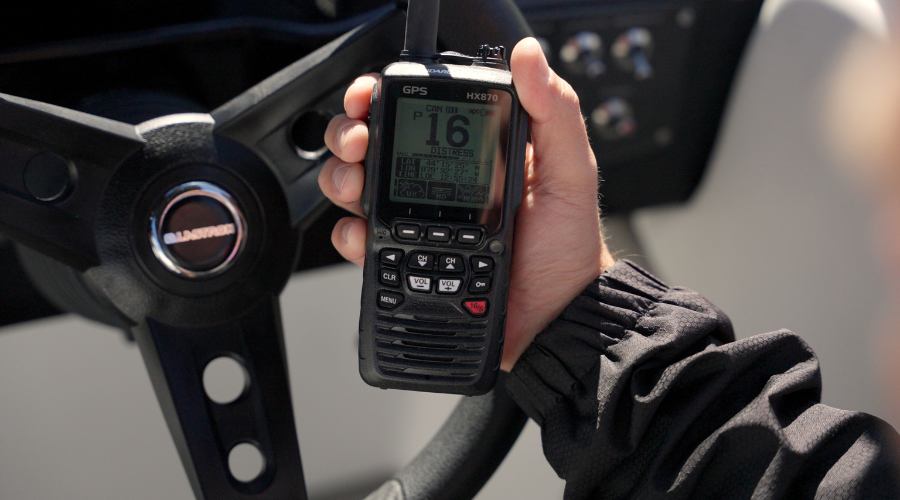
For most recreational boaters, VHF radios are a better lifesaving tool than the omnipresent cellphone, even as more boaters use cellphones for emergency on-water communications. Why? The VHF radio remains the only tool at the boater’s disposal that can summon those potential rescuers on the water nearest you – sometimes with the press of one simple red button – saving critical rescue time.
To help boaters get the most out of their VHF radio, the BoatUS Foundation for Boating Safety and Clean Water reveals the top mistakes boaters tend to make when using VHF radios. The same concerns can be applied to Canadian boaters and Canadian Power and Sail Squadrons has added information to their article to provide Canadian boaters with the resources needed to effectively operate a VHF Radio in Canada. Here are the highlights:
1. Failure to get an MMSI (and program it in)
A Maritime Mobile Service Identity (MMSI) number brings your VHF into the modern age of Digital Selective Calling (DSC VHF), offering the ability make direct calls to other DSC-VHF radios. However, what an MMSI-equipped DSC-VHF radio does better than any cellphone is it allows a simple, one-button mayday distress, giving everyone aboard the ability to summon emergency help to your precise location on the water. This unique nine-digit MMSI number is issued for your vessel and must be programmed into your radio. Without it, you lose your DSC-VHF’s biggest lifesaving advantage. In Canada you can request an MMSI from Industry Canada. There is no fee to apply for an MMSI.
To learn more visit the Industry Canada website.
If you purchased a boat that already has a Canadian MMSI, you can use it. However, to use it, you will need to update your contact information.
2. Forgetting to speak slowly and clearly
Life on the water isn’t always peaceful. We may have to deal with a tricky situation, which causes stress that may affect the way we speak. If you have pick up the VHF microphone to summon emergency help, remember to slow down, speak slowly to help ensure your words are understood the first time. It can save rescuers time.
3. Talking on VHF radio Ch. 16
Think of VHF channel 16 as a “street corner” where you go to meet up with friends before heading to an activity, a night out, or fishing. You “connect” there, and then move on. More importantly, Ch. 16 is the place to summon emergency help, because Coast Guard watchstanders are also on the “street corner.” However, because only one person may transmit on Ch. 16 at a time, routine communications with other vessels should move off the “street corner” as quickly as possible. To do this, simply hail the vessel you wish to communicate with, and once they respond to the affirmative, bring the conversation to working channels.
A complete list of working channels for the regions of Canada can be found on the Industry Canada’s RBR-2 — Technical Requirements for the Operation of Mobile Stations in the Maritime Service Schedule I (Refer to Section 8). Write these channels down on your radio with a sharpie so you’ll remember. This keeps channel 16 clear of non-emergency chatter. The Coast Guard asks that VHF radio checks also take place on working channels.
4. Not Having a Restricted Operator Certificate Maritime ROC-M
In Canada, the operation of a marine radio requires the possession of at least a Restricted Operator Certificate-Maritime (ROC-M). Canadian Power and Sail Squadrons offers courses for VHF Radio operation and the exam to obtain your ROC-M. In this course you will learn uses of marine radios, choice of frequencies, channel selection, operation, phonetic alphabet, procedural words and phrases, as well as Digital Selective Calling and the Global Maritime Distress and Safety System, (DSC/GMDSS).
Register for a Maritime Radio course at: www.boatingcourses.ca. Classes are available online or in-person