


Boat Ramp Etiquette
July 23, 2026
By John Gullick
I often get asked questions about how best to use a boat ramp while giving due consideration to other users. Often boaters arrive at the ramp and there are others waiting in line to use the same ramp.
The basis for this article originally came from Bill Ballard of the Antique and Classic Boat Society, Michigan Water Wonderland Chapter.
When waiting for the use of a ramp and the lineup can be over an hour long it is very important to be efficient. When boaters have had a late night or trying to get an early start, they can be brutal with their suggestions if you hold them up. The exercise of proper ramp etiquette is most important.
While waiting in line prepare the boat for the day:
- Load what you need from your vehicle.
- Check and secure the drainage plug.
- Remove all straps and safety chains.
- Unplug the trailer wiring harness.
- Check the bilge for gas vapour and turn on the blower if necessary.
- Give the gas hose a squeeze.
- Check drive belts for correct tension.
- Check oil.
- Secure your dock lines to the bow and stern so you can launch with the dock on either side.
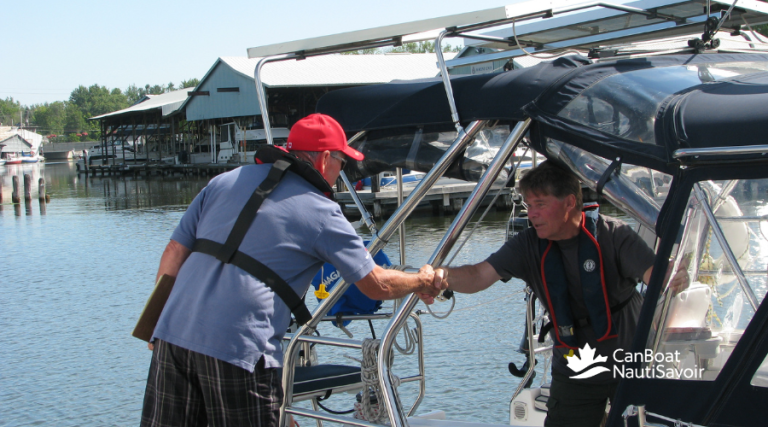
When the ramp opens up, back in carefully, float the boat off while someone hangs on to the dock lines and secure the boat to the dock. While the driver parks the vehicle the crew can turn on the blower, get the motor running and warmed it up. Try to keep the total time at the dock to less that a few minutes.
Other additional suggestions to help keep things moving smoothly:
- Considering the above list and prepare your boat while waiting to use the ramp.
- Have your passengers stay close so you can leave the dock asap. This is a ramp, not a slip.
- When launching roll down your windows so you can hear the docking crew’s instructions.
- Leave your bow pennant and stern flag poles stored aboard while launching and recovering the boat as they tend to get in the way.
- A spare set of identified keys will be helpful if a crew member parks your vehicle after launching.
An efficient ramp operation is a thing of beauty. If you are prepared, helpful and ready when the time comes all should go smoothly. Remember these may be your friends waiting in line behind you.
One other important thing I will add. If you offer to help another person with the launch or retrieval of their boat do not do anything without asking them first. If they do not accept an offer of help and provide specific guidance do not do attempt to touch their boat and gear.
How-to videos on Towing and Trailering, Ramp Etiquette and Preparation can be found on CanBoat’s YouTube channel.
Happy and Safe Boating.
By John Gullick, currently CanBoat’s Manager of Government and Special Programs and has been an active recreational marine specialist and writer for over 50 years.
Sign up for the CanBoat newsletter and visit CanBoat.ca to learn more about us.
Watch: