


Ottawa: “Weather Bomb 1913 – Life and Death on the Great Lakes”
Nov 7, 2019
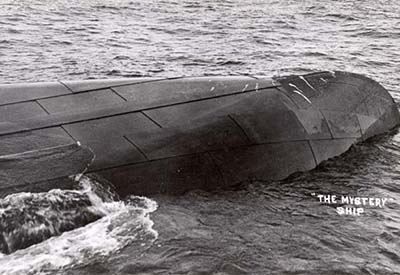
In the dark hours of November 9, 1913, death screamed across the Great Lakes in the guise of a rare white hurricane. The Storm continued to brutalize the region for most of the following week. In its wake it left crippled cities, paralyzed communications, a dozen lost freighters, the corpses of more than 250 men and women, and a mystery that remains unsolved to this day. Weather Bomb 1913 is a detailed and accurate accounting of the causes and costs of the Storm gleaned from the few surviving witnesses with living memory of the carnage, courtroom testimony, and period newspaper reports. Now modern ship captains and weather scientists contribute their expertise to explain and define this horrendous “extra-tropical cyclone” so that author Bruce Kemp can bring to life one of the most compelling dramas of the Great Lakes.
In his presentation Bruce will cover the actual storm, some of the research involved in tracking down eye-witnesses and others who contributed to this story, archival research to uncover various points about the storm, writing the book, meteorology then and now with an emphasis on computer modeling, and the disposition of known wrecks and the impact of the storm 100 years on. Bruce will be available for questions following the presentation.
 Bruce Kemp
Bruce Kemp is an internationally known award-winning author and photographer who has covered everything from fine dining in Europe to the America’s Cup and voyages through the Northwest Passage. In the 1980’s he was the sailing columnist for the Toronto Star and contributed to most of Canada’s major newspapers. He has also been the editor of Travel A La Carte, Sailing Canada and SailOntario. His previous books include: The Complete Travel Writer, the 2006 update to the Ports Cruising Guide to the Rideau Canal, the recent Weather Bomb 1913: Life and Death on the Great Lakes and the novel The Fugitive’s Son. In 1981 he was involved in a project to raise the William Roué- designed schooner Blue Dolphin, which sank in Sarnia, Ontario. He has been a diver since 1977 and his first open water dives were on the wreck of the Charles S. Price – the only wreck from the 1913 storm whose location was known at the time. Since then he has explored the oceans and lakes of the globe. Most recently his work has appeared in Wooden Boat Magazine (Maud Returns Home and Book Review: Erebus – Sept-Oct. 2019 edition) and will appear in the upcoming December/January edition of Canada’s History Magazine with a piece about the 1812 schooner, Nancy.
LOCATION: Clocktower Brew Pub – Glebe Location (525 Bank St – Basement)
Monday, November 18th, 7:00pm