

Your Onboard Emergency Toolkit – “You had better take it with you…”
I’m superstitious – I admit it. But I have reasons to feel that way. When the lawn is burned out and the gardens are wilting, just wash the car. It’s sure to rain after that. The reverse is true. On a beautiful summer’s day, be always pack a raincoat and an umbrella just in case. It’s certain to stay sunny and clear.
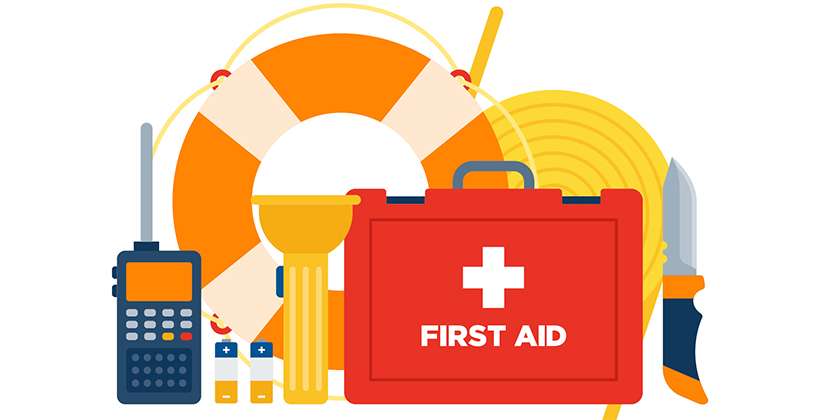
Operating on the same idea, Canadian Boating magazine has developed our Onboard Emergency Toolkit with a list of things that we suggest you had better take with you every time you cast off for a boat ride. Problems can happen even close to home and an offshore breeze can take you out a long way in a short period of time.
But being superstitious, if you keep your emergency kit at the ready, you will probably never need it!
LEGAL REQUIREMENTS
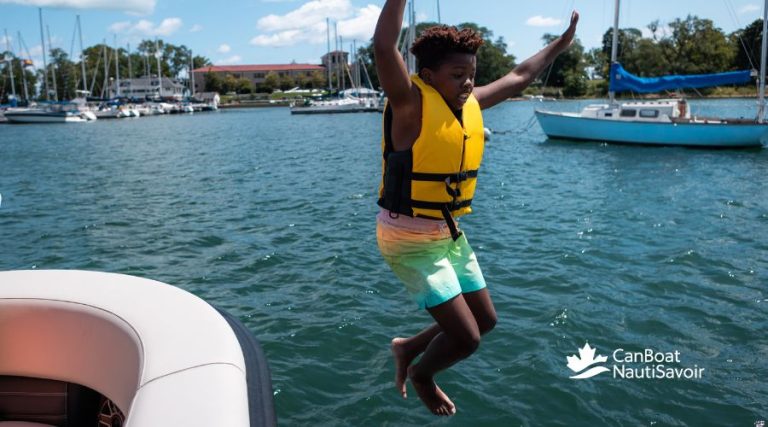
Start with the full list of Transport Canada-mandated safety equipment for your size of boat. (https://tc.canada.ca/sites/default/files/2024-03/tp_511e.pdf ). Make sure everyone onboard is properly equipped and knows how to use their equipment. You can’t put on a PFD once you are floundering in the water.
THE ONBOARD EMERGENCY KIT LIST
- Emergency fuel supply. Running out of fuel is one of the most common reasons people get stranded.
- Emergency battery booster and jumper cables. Dead batteries are the other most common reason people get stranded.
- Powerful flashlight and fresh batteries.
- Emergency reboarding device – even just a rope with loops knotted into it can be a ladder.
- First Aid Kit.
- Towing rope and bridle.
- Very sharp knife to quickly cut the tow rope in an emergency
- Anchor and plenty of rode to keep you in one place and away from the rocks or the middle of the lake.
- Weather Information. (see Communications device below)
- Communications device – A VHF radio or a portable VHF radio is usually best and receives Weather Radio Canada local broadcasts. Your cell phone might work near shore but get a weather app for boating like PredictWind.com – it’s free for basic services and you get winds and weather all around the world.
- NOTE: To operate a VHF radio, you need to take the VHF Radio course from CPS-ECP to get your license and to know how to use your radio.
- Download and learn to use the “What 3 Words” app – it’s free. With that and your VHF or even your cell phone, Search and Rescue can locate you within a few yards almost anywhere on the planet.
- Get an emergency battery pack for your cell phone.
- Learn what a “float plan” is and always use one when you are travelling out of sight of home.
- Carry information about your boat that even guests can use – colour, length, description of boat and motor, and registration numbers.
- Trailer launch rope so you can hang onto the boat as it floats on or off the trailer. Your arms will not be long enough!
- Big manual bilge pump. European boats are required to have one.
- Emergency propellor, wrench and extra hardware. Learn how to change a prop. Making contact with a lone unmarked rock can disable the boat.
- Better yet – get a Mercurymarine.com service kit for your engine (Yamaha and others also sell these DIY Tuneup kits). It can accomplish two things; be sure your engine is running well before you cast off and in the process, learn more about your boat and motor.
- Binoculars – spot marker buoys, other distant details
- Get a C-Tow membership. Leave the rescue to the pros!
Do you already have an Onboard Emergency Toolkit? Do you like the ideas we are suggesting here? Do you have other smart ideas that you would be willing to share? Send your comments and ideas to Andy Adams, Editor at aadams@kerrwil.com
NOTE: Where practical, we suggest taking your Onboard Emergency Toolkit off the boat for storage. Minimize corrosion, avoid theft and check it before you head for the boat!