


Safety: Operate Your PWC Responsibly
July 11, 2024
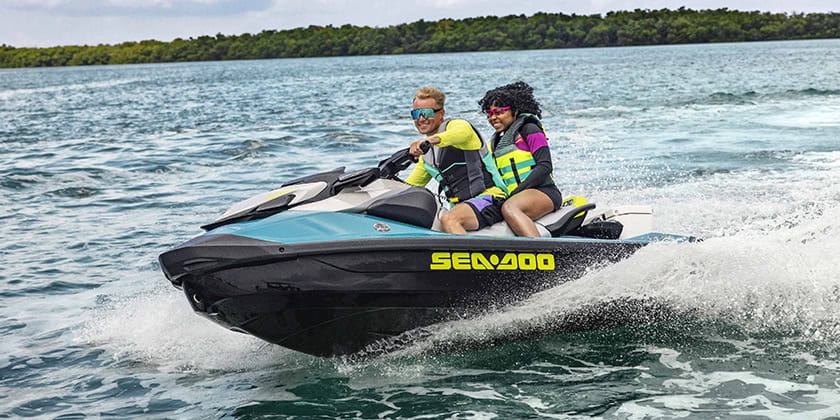
Welcome to the busiest boating season of the year. Sea-Doo reminds all riders to prioritize safety. More people than ever will be taking to the water to enjoy all that boats, pontoons and personal watercraft (PWC) have to offer. This year, the National Marine Manufacturers Association estimates that across North America 100 million people will go boating, which means a lot of vessels —and fun — on our lakes, rivers, and coastal waterways.

Jérémi Doyon-Roch, Global Marketing Director, Marine at BRP says “Holidays are a great time to be out on the water with your friends and family and it is our responsibility to help ensure riders know how to safely enjoy the water and, most importantly, return to the dock or shore to do it all over again the following day.” While personal watercraft are sound and reliable machines, following a few basic safety practices drastically reduces the likelihood of preventable incidents occurring on the water.
- Wear proper-fitting safety gear for PWC use. Always wear a Coast Guard-approved life jacket designed specifically for PWC use, and make sure it is properly sized and fits correctly, meaning nice and snug.
PWC specific life jackets are designed to be stronger to endure higher speed water impacts and produced to maintain higher buoyancy when a rider enters the water at higher speeds. If you end up in the water, a properly fitting life jacket that is fully zipped up or buckled helps ensure you’re properly buoyant.
When it comes to watercraft gear, neoprene shorts are a must. Neoprene’s form-fitting protection prevents injuries to the lower body when striking the water during a fall backward. It also acts as a cushion between your body and the saddle while limiting exposure to the jet pump thrust.
- Attach safety lanyard before starting the engine In the event you fall off, the safety lanyard will detach from the engine cut-off switch and automatically shut down the engine, allowing you to safely reboard the watercraft with the engine off and continue riding. Ensure the lanyard is securely attached to your life jacket. And make it a habit to attach the safety lanyard to your life jacket or wrist with a wrist strap before attaching it to the watercraft.
- Maintain a safe distance at all times. PWCs are generally faster, nimbler, and less visible than conventional boats. Before you throttle up, be sure that you have a clear and obstruction-free path ahead of you. Always be respectful of other vessels and anything else that may be in the water, including swimmers.
- Observe posted speed regulations Always follow the rules of the road – or water – and slowdown in restricted speed areas, including slow speed and no-wake areas. ‘Slow Speed’ is usually 7 mph or less and ‘No Wake’ is just that, slow enough to not create a wake. In addition to being illegal, speeding in these areas increases the likelihood of collisions with other vessels or underwater obstacles.
- Familiarize yourself with your watercraft’s braking system While PWCs of the past had no braking capabilities, most PWCs now offer some type of braking or slowing system for making quick, emergency stops from speed. Sea-Doo’s Intelligent Brake and Reverse system allows riders to come to a complete stop by simply squeezing the left handlebar lever, allowing a watercraft traveling at 50mph to stop 100 ft sooner than a model without the braking feature.