




October 10, 2013
Volvo Penta and Garmin Work Together to Make Boating Easier
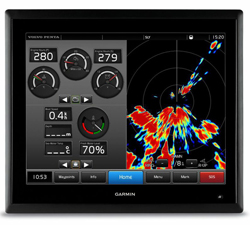
I was delighted to be invited to Gothenberg, Sweden at the end of June where Volvo Penta hosted an exclusive new product media introduction with a careful selection of approximately 50 marine journalists from 14 different countries including Argentina and Brazil from South America. There were just three journalists from North America, and I was the only one from Canada – very flattering!
August 20, 2013
Don’t Do It Yourself!
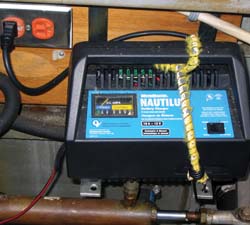
It’s not just a matter of cost – there are simply lots of people who enjoy puttering around on their boats and doing their own mechanical work. There are many useful tasks that an owners can do to keep their own little ship “shipshape”, however there are some things where we say, don’t do it yourself! Generally, your fuel system is not a DIY item. For safety reasons alone, a boat’s electrical wiring and grounding systems should always be handled by a qualified marine technician. But, there are other areas where home handyman knowledge can get you into trouble.
August 20, 2013
Aftermarket Joystick Docking for Twin Outboards
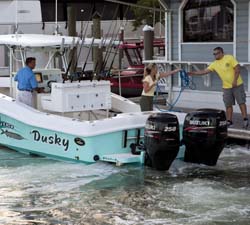
Absolutely and without a doubt, the biggest advance in boating in recent memory has been the introduction of joystick docking. With these new systems, first pioneered in recreational boating by Volvo Penta in their IPS pod drive systems, docking a large boat in tight quarters, windy conditions, or in strong current was transformed from a task that would challenge the most experienced captain to something a child could do. Children took to it almost immediately because joystick docking was so similar to their videogame controls and so intuitive to use; point the joystick in the direction you want the boat to go and it responds.
August 20, 2013
Marine Electrical Systems – Part II
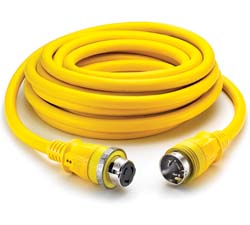
This continues our look at improvements to marine electrical systems. Following on our feature on new battery technology, here we review re-charging those batteries, starting with shore cords and isolation transformers. We’ll follow with a subsequent review of generators as well as alternators, dynamos, solar panels and fuel cells. As we noted in the April 2012 Canadian Yachting on page 50, new battery technology is increasingly common in marine applications, but new technology batteries need to be well matched to charging systems and first, you need a power source.
August 2, 2013
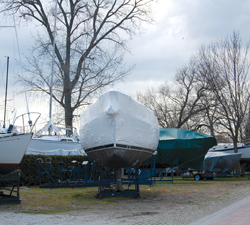
Ten Winter Storage Dangers
A few people winterize and store their own boat. Many of us pay the pros to do it. Spring commissioning is far more rewarding because you are preparing for a great summer with your boat. Winterizing is a tough chore because we usually keep boating until the weather turns nasty, plus you are struggling with that “down-feeling” that the boating season is over. That makes it doubly hard to dig in and do a great job of winterizing and protecting your boat for the winter.
August 2, 2013
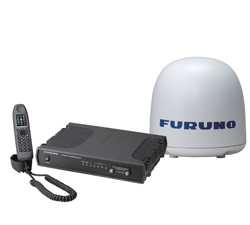
The Comforts of Home with Internet Onboard
It used to be that “all the comforts of home” meant an easychair, a pipe and the newspaper. Today, the easy chair is an office chair and the pipe is gone, no matter what we could have put in it. The poor old ‘paper’ newspaper has been replaced with an electronic version that carries pretty much all the same stories, plus streaming video, the ability to search, cut ‘n’ paste things you want to keep and stories that you can forward to friends and colleagues.
May 30, 2013
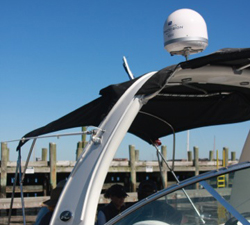
Going online – Onboard
Last year in Canada nearly 28 ½ million of us were online at least once a month, almost 83% of the population. Canada has just over 18 million people who are subscribed to Facebook. With stats like these, it’s no wonder that boaters have started to ask themselves: How is it possible to take the online experience onboard their boats? Traditionally boats have been a safe haven from the hustle and bustle of life. It’s a chance to unplug and unwind, to break the connection with the office and with the electronic world.
May 14, 2013
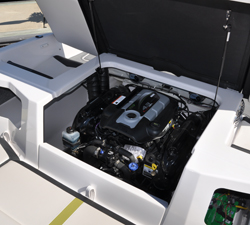
Before You Leave the Dock!
So the boating season has finally arrived and since you have been a diligent owner, all your spring outfitting has been carefully attended to. Everything on that spring check list has been duly checked off and your guests are on their way. The coolers are filled with drinks and snacks and you’re looking forward to great day on the water. However, as experience has taught us, we are at our most vulnerable when our guard is down. Routine can lull us into a false sense of security. Now is the time to make sure you have a proper procedure for departure, one that can make the difference between fun on the water and a day of frustration, or worse.
May 14, 2013
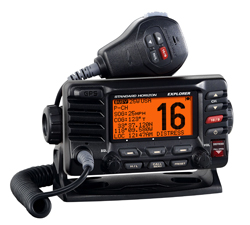
VHF, DSC, AIS and EPIRB
Why these acronyms should ring a bell. Communication is of the utmost importance when spending time on water; if anything goes wrong you want to make sure that you can alert someone close to your vessel to say that you are in need of assistance or that you are in danger. Using your cell phone on the water simply doesn't cut it. Cell phones do not provide the reliability that is needed on the water; coverage areas are different for each provider, signal strength is limited (or non-existent) when you are not close to shore.
May 13, 2013
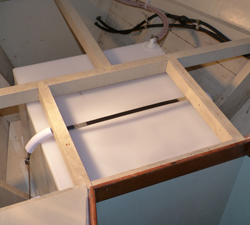
Guide to Sewage Discharge Regs
New rules severely restrict where and how salt-water boaters can discharge sewage. Is your boat ready to comply? In May 2012 a significant environmental anniversary slipped by with little fanfare. It was the end of the promised five-year transition period before new sewage discharge regulations for small craft in salt waters, introduced in 2006-07, took full effect. From 2012 onwards all vessels in Canadian waters, fresh and salt, are covered by the same legislation regarding sewage discharge. Salt-water boaters have a bit more flexibility in pump-out options but the basic rules are now the same for fresh and salt water.
April 4, 2013
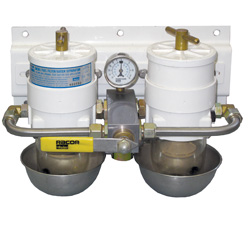
Fuel Filtration – Once Again, For the Record
There is no end of discussion and debate about the fuel filtration needs of diesel engines. Myths and half-truths abound. So let’s set the record straight. Diesel engines are the most reliable of all internal combustion engines; they are robust and they need only two simple inputs, air and fuel. Properly maintained they will perform well for upwards of 15,000 hours before needing a re-build. By contrast, that is about three times the life of a well-maintained gasoline engine.
April 4, 2013
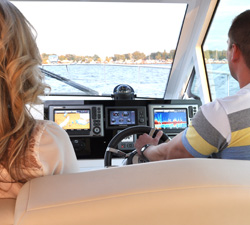
Chasing Software – Stay Up to Date with Software Updates
There has been a real change in the focus and direction we’ve seen in marine electronics in recent years. Gone are the standalone equipment pieces, replaced by multifunction devices capable of “talking” to the other electronic devices on board your boat. To get first-hand information on what is really happening in the field, we traveled to CMC Electronics Esterline and spent the morning with Lead Technical Service Representative, Lorne Spence.
April 4, 2013
Spring Commissioning
Even if you are on salt water and your boat can safely stay in the water year-round, are you using it regularly? Metal fittings are corroding all the time, the sun beats down on fibreglass and woodwork, and the rain and damp air all contribute to the slow but inexorable process of deterioration. When engines are used, oil and other lubricants are warmed up, spread around and parts are kept running freely. Air circulates through the interior when you are out and moving. Boats just like to be used more than they like being stored.
March 8, 2013
On Board Entertainment
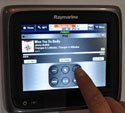
We all know how nice it is to have a great home entertainment system. Watching live sports on TV, surfing the Internet and listening to music are everyday activities that we take for granted. Because of the advances in technology, we can transfer this land-based enjoyment over to our boats. Wouldn't it be great if you could watch the latest golf tournament at your favourite anchorage, or listen to your favourite playlist from your iPod? All this is possible, and with the latest and greatest in marine technology, things like controlling your music through your MFD (Multi Function Display) and watching TV while underway, make it that much more appealing.
March 8, 2013
The iPad Onboard
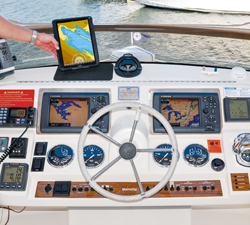
Overnight, the iPad is revolutionizing the field of marine electronics. It offers versatility for charting, navigation and cruise planning, and there’s a fast-growing world of choice in practical helmside apps. Nautical software apps on the iPad are the big news in marine electronics this year. A full range of apps for use onboard is available, covering navigation, tide and current data, AIS reporting, cruising guides, reference books and more. Capabilities once costing hundreds of dollars for navigation software on the PC are now about $50 on the Apple App Store.
January 3, 2013
Boating with Thrusters
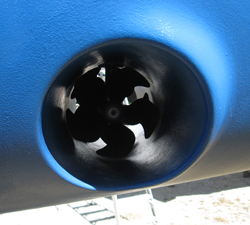
There are two kinds of people; those who have thrusters and those who want them! Recently, I was having a conversation with Jon Moles from Toronto Yacht Services and he mentioned how much consumer interest there was around installing bow or stern thrusters. He added that there are often attractive deals at the winter boat shows for smart shoppers who want to save a little money and also be ready to go at the start of the season. So, we set up a time when I could interview Jon and ask what consumers have been looking for from his perspective as the man who actually installs thruster systems.
November 30, 2012
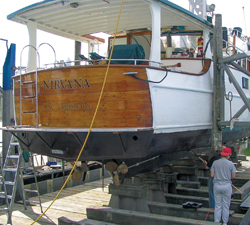
Winterizing and End-Of-Season Check-List
It was always a bit sad when we “put to bed” our power-boat at the end of the cruising season. Then, one year, our favourite mechanic suggested creating a service program at the end of this season, rather than the beginning of the next one. Price savings could be had, he explained. From then on we regarded the winterizing phase for our boat as a start of the next cruising season, not the end of the current one. What follows are some ideas to make this as easy as possible — and perhaps even less expensive.
November 22, 2012
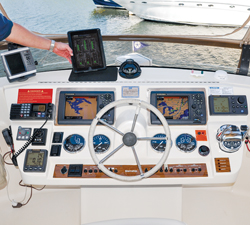
User Benefits Of Navigation Electronics At The Helm On A 40’ Power Cruiser
What The Latest Electronics Can Do For You! Nicely laid out and easily learned, the flying bridge on this Mainship 40 has it all! BENEFIT: NMEA 2000 Helps All The Components Work Together. Networking: In today’s installations, all systems and instruments can be connected by “backbones” of cables that carry data using protocols such as NMEA 2000 or Raymarine’s proprietary SeaTalk NG. These interfaces greatly simplify installation while improving system reliability.
November 22, 2012
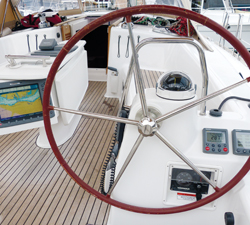
User Benefits Of Navigation Electronics At The Helm On A 43’ Cruising Sailboat
What The Latest Electronics Can Do For You! While sailboats are usually steered from the cockpit alone and core instruments and displays are needed there, often a lower navigation station has the primary equipment. Today’s mid-sized sailing cruiser requires much the same in electronics as a powerboat of similar size and range, with the exception of sailing-specific instruments. One key difference is that while most powerboats duplicate their electronics array at two steering stations, sailboats are usually steered from the cockpit alone and core instruments and displays are located there.
November 22, 2012
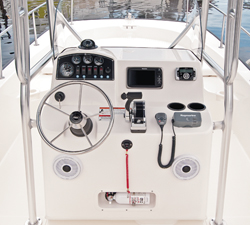
User Benefits Of A Thoughtfully Equipped Helm On A 22’ Power Boat
What The Latest Electronics Can Do For You! Despite the simple appearance, this Boston-Whaler Montauk 220 has a surprisingly complete electronics suite and a host of user benefits. In marine electronics there have been incredible advances in performance, simplicity and convenience combined with gradually dropping prices over the past few years. However, industry insiders tell us the prices have probably bottomed out; we’re not going lower. So, if you have an older boat, now is the time to re-think the benefits you can gain by upgrading your helm electronics equipment.
October 15, 2012
Tips on Cleaning Electronics
Our friends at GPS Store sent us this reminder about the cleaning of electronics, tips that are more important now that boats are being put away for the season. From my own experience I can confidently remind readers not to try to clean modern touchscreen electronics with a damp cloth while the unit is turned on! The GPS Store’s suggestions:
September 13, 2012
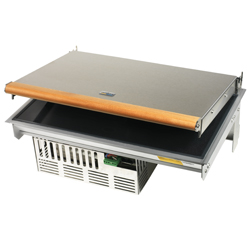
Staying Warm or Keeping Cool
Heating and cooling systems add immensely to cruising comfort, whether you boat in cool shoulder seasons or contend with hot, muggy summers. Most boaters learn quickly that extending their season is ideal – Canadian summers are so short, whether you’re on the west coast or the Great Lakes. In central areas, summer is short but it can be hot and humid, and winter is too cold for much cruising in all parts of Canada. Extending into spring and fall makes boating so much more enjoyable, to say nothing of helping justify the costs.
September 12, 2012
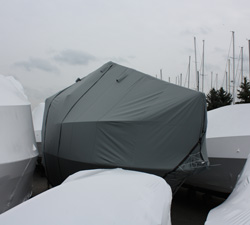
Reusable Boat Covers
Investing in a reusable winter cover is a sound environmental choice and a practical way to facilitate winter maintenance on your boat. Over the past few decades, more and more boats in Canada have been put away for the winter under shrink wrap. Properly applied, shrink wrap seals the boat from water and intrusion by creatures, its slippery surface sheds snow (when we get it), and it resists wind and sun all winter. Shrink wrap can also be recycled quite effectively, and some shrink wrap suppliers have created programs to gather used wrap to ensure that it’s recycled and not disposed of in a landfill site.
September 6, 2012
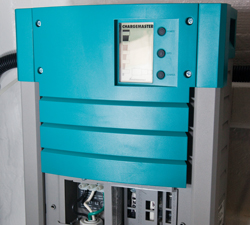
Charging
With a source of external power, shore-cord or generator, current still needs to be fed back into your battery banks to reset their chemistry and return them to full electrical output. This requires a battery charger. Here most boaters can rightly claim to confusion. There are dozens of brands available and most products are a “black-box” with little to distinguish one from the others. There is nothing to show a quality comparison or actual performance, save massive ‘spec’ sheets that tell us too much, usually in techo-talk; incomprehensible without an advanced degree.
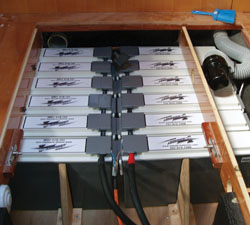
April 16, 2012
New Technologies Improve on the Flooded Marine Battery
Batteries lie at the heart of most boats. We need them to start our engines, power our electronics, chill our food and sometimes cook our meals. We rely on them but often don’t give them much thought until they fail. Or outlive their normal lifespan of about five years and need to be replaced. With major advances in new technologies reaching the marine marketplace, let’s take a look at alternatives to the traditional lead-acid battery.
March 14, 2012
Is It Time to Give Your Boat’s Interior a Fresh Look?
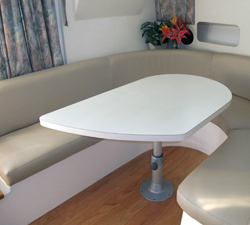
We all know what a fresh coat of paint can do for a room. The same holds true for the interiors of boats except instead of paint, you can introduce a new swatch of fabric that can do amazing things to a dining area, the salon and even a sleeping cabin. Not everyone can buy a new boat, but a relatively small investment and some taste can provide a fresh new look and feel…and it's not that hard to do.
February 29, 2012
Searching for the Ideal Engine Room
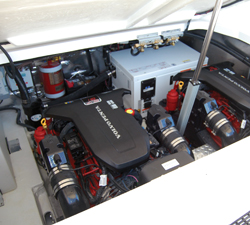
So, I have to open with a joke. There are two kinds of people in the world: those who divide all the other people in the world into two kinds of people, and those who don’t. For the purposes of this article, I do! To be more specific, I divide boaters into two kinds of people: those who want to play in the engine room and those who don’t. Whether your boat is power or sail, you are almost certain to have an engine and every engine needs maintenance and occasional repair.
February 16, 2012
Big Navigation Features Migrating to Smaller Systems
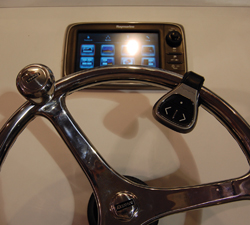
In the past three months, the marine electronics industry has announced several new products that clearly show how big-boat navigation features are migrating down to smaller systems. While these new systems are physically smaller and come with smaller price tags too, they still deliver big performance. You can benefit in several ways. First, the overall prices are down given the performance levels, so you can afford more capabilities for your boat, large or small.
February 10, 2012
Small Efforts Get Big Engine Room Cleaning Results
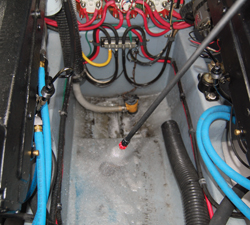
Putting your boat away with a clean engine room and bilge at the end of the season is extremely important. A coating of oil, or a mixture of oil and fuel, will dry out over the winter and cake onto all of the bilge systems, fasteners and mechanical equipment that it touches. Then, over the winter, the storage wrap traps the oil fumes giving it months to permeate every part of your boat. It also makes the bilge a lot harder to clean out in the spring, but spring is a time when a clean bilge has particular value.
October 18, 2011
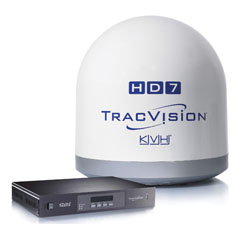
Upgrading to Satellite TV
In keeping with our ‘extending the season’ theme for the September issue of Canadian Yachting magazine, we wanted to suggest "Upgrading to Satellite TV" systems for your boat. It is perfect timing. The new TV season is starting, lots of great new shows will premiere and the days will start getting shorter; a perfect excuse for getting cozy in the cabin and watching TV, especially if you have a heating system! (See How To and DIY, Electrical).
October 18, 2011
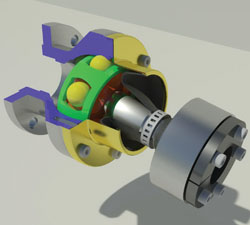
Lining Up the Repower Project
Getting the owner of an older sailboat to spend the money on a brand new diesel auxiliary is a challenge for many marine service businesses. Often the costs involved in the purchase and installation of a new powerplant carries a bill that can make most recreational boaters blush and run away. Some vessels, however, are built for the long haul and replacing the diesel engine on an otherwise sound mechanical vessel can extend the life of the boat at a fraction of the cost of the replacement of the entire boat. Newer marine diesels are also more fuel efficient, smoother, quieter, lighter, and pack far more horsepower into smaller packages.
October 18, 2011
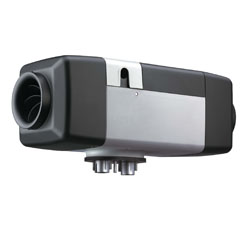
Extend Your Season With A Non-Electric Heating System
We thought this was a good time to remind our readers that there are a number of highly effective heating systems that you could have onboard to extend your cruising season, but without needing shore power, or running a generator. I know it's tough to beat the comfort and efficiency of a reverse cycle system that provides heat, dehumidification and air conditioning for year-round comfort, but almost all of these systems need either shore power, or a big load of 110 V AC from a generator system.
September 7, 2011
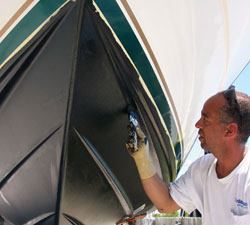
Antifouling: More Than One Way To Think Green
Well it’s spring and time to organize most people’s least favourite spring outfitting job. Time to get the bottom painted. These days, when it comes to antifouling paints, we need to consider not just the cost to ourselves, but also the cost to the environment. With a little education, boaters can make both a green and a cost-effective decision for their antifouling paint. First, a little history. From early days, copper in various forms, from copper sheathing to cuprous oxide in paint was the best available biocide for antifouling. Remember TBT (tributyltin).

September 7, 2011
Spring Cleaning the Green Way
Ahhh… The snows have melted (mostly) and spring is in the air. That means it’s time to think about commissioning and getting our boats ready for another summer on the water. Not surprisingly most of us have a bit of work to do on our boats so now is the perfect opportunity to look at cleaning up our act, so to speak. With interest in all things environmental sweeping the globe, it’s worth thinking about how we can get our boats ready to go and do our part to keep our waters, and ourselves, healthy.
August 23, 2011
Smart Battery Chargers for Smart Boaters
Smart chargers are not new, but they are getting smarter all the time and that’s a great thing. In almost every issue of Canadian Yachting, we suggest you add some new or upgraded piece of equipment to your boat and virtually everything runs on electricity. The highest draw equipment onboard would be your windlass, air conditioning and refrigeration, but new entertainment systems, navigation equipment and galley items can all add big load increases. Complicating this, battery manufacturers are always working to improve the performance of their products and new batteries can change the “charging profile” of the battery bank.
August 23, 2011
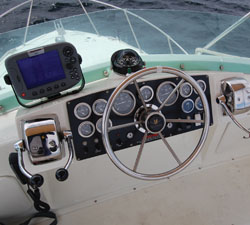
Care and Feeding of Your Control Cables
We’ve all seen it, or worse, had the experience ourselves; an older boat making a less than elegant landing due to sticky throttle cables, or stiff, balky steering. There are lots of older boats out there that get less use than they deserve due to old and uncooperative cables. This is confirmed by the amount of discussion on various chat rooms concerning the problems associated with cables. Assuming your engine is in good working order, your steering and control cables are the next most important systems on your boat. Yet so often we see boats where these cables are poorly installed or corroded.

May 8, 2011
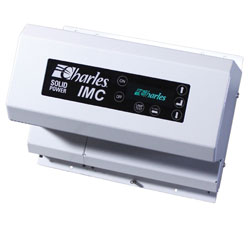
Add an Isolation Transformer to your boat
First, if you just remember one thing from this article, remember – never swim in a marina.Why? Because in a marina, you have people, water and electricity. When everything is working properly, that is a recipe for fun and great times. But, if just one wire chafes through its insulation and shorts to ground, there is the potential for tragedy.
January 12, 2011
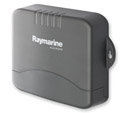
The Glass Helm: AIS for Every Boat
Although the Automatic Identification System (AIS) isn’t new, the importance and functionality of AIS for pleasure craft may well drive dramatic growth in the coming years, so we have chosen AIS as Part 4 in our Glass Helm series. There are many reasons why. First, there are two versions of AIS1: 1) a receive only system; and 2) a Class B transponder which both sends and receives.

January 12, 2011
Adding a 12-Volt TV and DVD
As Graham Toms at Payne's Marine Group points out, more and more boats are being used as cottages and the owners expect all the comforts of home including, of course, television shows. Sea-faring TVs have become very popular in recent years because the new flat screen technologies enable people to install a television where previously the depth and sometimes the weight, simply could not be accommodated.