

Georgian Bay Water Levels Bounce Back
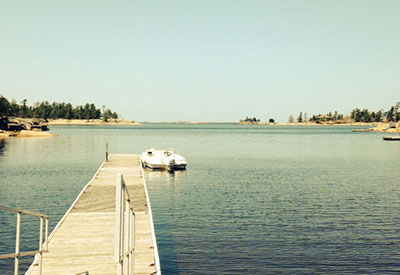
Observers caution it’s too early to say rise more than a blip. Water levels in the middle Great Lakes have bounced back dramatically nearly two years after hitting historic lows. But just because the water is higher doesn’t mean the problem is solved, say those working to keep the issue of low water levels in the public eye.
In Lake Huron, which includes Georgian Bay, the water level remains half a metre (20 inches) above chart datum of 176 metres. It’s also about 80 centimetres above where it was two years ago, when the level of the lake was headed toward a record low. According to the U.S Army Corps of Engineers, which tracks water levels on the lakes, seasonal rise of lakes Huron and Michigan and continued through October due to persistently wet conditions. it was the second consecutive month with above-average water levels after a 15-year stretch continuously below conditions. The middle lakes also benefited from near-record ice cover this past winter, which helped keep evaporation low.
It’s predicted – especially if another cold winter occurs- that water levels in Michigan and Huron could stay 40-50 centimetres above chart datum over the next six months. Drew Gronewold, a hydrologist with the National Oceanic and Atmospheric Administration (NOAA) Great Lakes Environmental Research Laboratory, says the rise in water levels from a record low in January 2013 to the current level is the largest in recorded history .”The challenge for us is to understand what variables are driving this change,” he said from his office in Ann Arbor Michigan. “There is a combination of factors.” Along with increased precipitation and less evaporation, the middle lakes have also seen increased flow from Lake Superior, which is 30 centimetres higher than last year, and above its long term average. Collingwood’s Ulli Rath, who’s made water levels his passion, is not convinced the tide has turned. A geologist by trade, he communicates on a regular basis with water level experts at the U.S Army Corps of Engineers, the NOAA and the International Joint Commission. “Most of the people I deal with tend to think what we’re experiencing is an outlier.” Rath said. “We’ve had 14 years of (low water conditions) and now we’ve had these extremes in a very condensed period. I don’t believe this is the start of a long- term trend.”
Gronewold said the NOAA expects Michigan – Huron will follow their current trend for the next six months, but otherwise it can be difficult to predict what water levels. “No one could have predicted the cold air mass (last winter), so it’s hard to tell where things are going and it’s hard to say what’s occurring is some kind of blip.” He said. “The lakes can oscillate in extremes… Variability is part of the system.” Georgian Bay forever executive director, David Sweetnam, cautions a one year blip in water levels shouldn’t be taken as an indication the issue is solved. “We’re looking at weather impacts,” he said “Climate is different – it takes a lot longer to look at those impacts.”
“In terms of (shoreline) ecology and the economy, we’re not out of the woods. We’re still trying to understand the science. In five years, we could be back at record lows.” Rath said the U.S Army Corps of Engineers is wrapping up a proposal for a long- term solution to maintain water levels in the middle lakes by installing compensation structures in the St. Clair River. He also wants the Canadian government to take more of an interest in both the issue and in funding a study. “We should continue to keep the pressure on the politicians. It’s nice to see the lake levels up, but I just don’t believe it’s a responsible approach to say, ‘That’s it.”‘
Originally published in the Midland Mirror, November 2014
Ian Adams (iadams@simcoe.com)