


Drinking and Boating in Canada: the Facts
March 26, 2026
By Ellie Bisset, Egan Houseboat Rentals
Here is how the responsibility is split regarding the boating and alcohol laws:
1. Federal Laws (The Criminal Code & Safety)
The federal government, primarily through Transport Canada and the Criminal Code of Canada, sets the baseline for safety and criminal offenses across the entire country.
- Impaired Operation: It is a federal criminal offense to operate any vessel (motorized or not, including canoes and kayaks) while impaired by alcohol or drugs. The legal limit is 0.08% BAC, just like driving a car.
- Licensing & Equipment: Rules regarding the Pleasure Craft Operator Card (PCOC), lifejackets, and mandatory safety equipment are federal regulations under the Canada Shipping Act.
65% of the boating-related accidents in Canada involve alcohol consumption.
2. Provincial Laws (Liquor Acts)
Each province has its own Liquor License Act (or equivalent), which dictates where and when alcohol can actually be “possessed” or “consumed” on a boat.
- Open Container Laws: In Ontario, for example, it is generally illegal to have open alcohol on a boat unless it meets very specific “house-like” criteria.
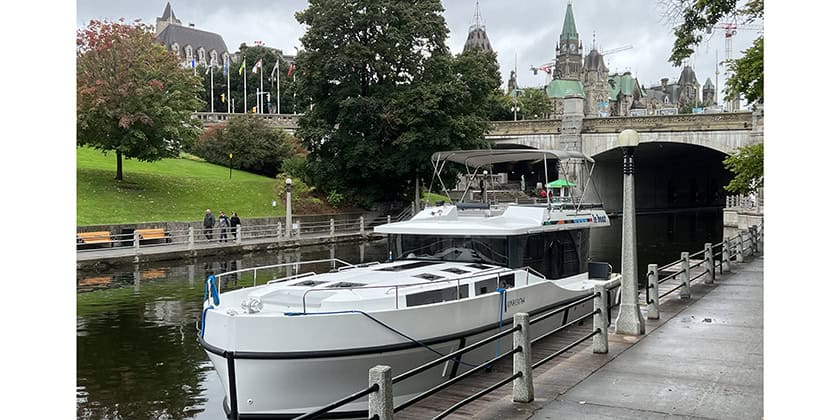
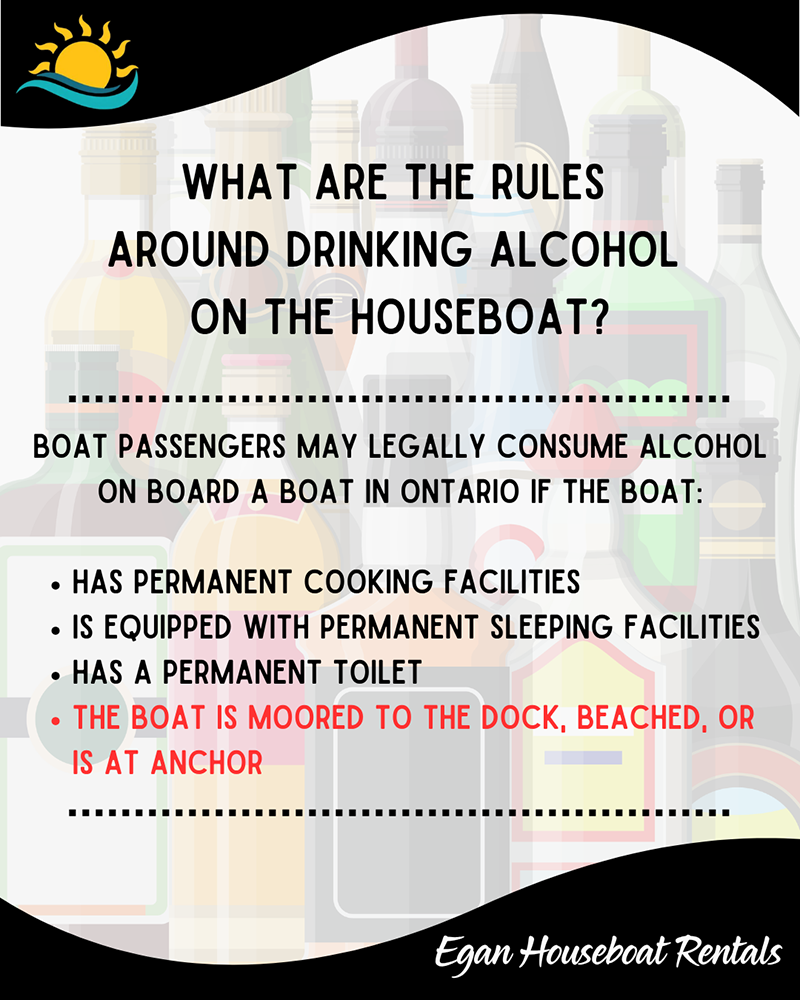
- The “Houseboat” Rule: To legally consume alcohol on a boat in most provinces (including Ontario), the vessel must meet all three of these requirements:
- Permanent sleeping facilities (built-in berths).
- Permanent cooking facilities (a built-in stove/galley).
- A permanent toilet (a plumbed-in head; portable toilets usually don’t count).
- Stationary Status: Even if your boat meets the criteria above, you can usually only consume alcohol while the boat is anchored, docked, or beached—never while underway (Quebec is the one exception- While carrying and transporting open alcohol in a boat is legal in Québec, it is NOT legal to be boating under the influence).
Enforcement
Because these laws overlap, you can be stopped by various authorities. The RCMP, OPP (in Ontario), and local municipal marine units all have the power to enforce both federal criminal laws and provincial liquor laws.
A Note for Ontario Boaters: In Ontario, a conviction for impaired boating can result in the suspension of your automobile driver’s license, even if you were nowhere near a car at the time. All provinces apply the same fines and penalties for driving a boat while under the influence of alcohol or drugs as if you are operating a motor vehicle under the influence.
What are the penalties for drinking and boating?
In Canada, if you’re convicted of boating under the influence of alcohol or drugs, the minimum penalties are:
- 1st Offence: A minimum fine of $600
- 2nd Offence: A minimum fine of $600 and at least 14 days in prison.
- 3rd or Subsequent Offence: A minimum fine of $600 and at least 90 days in prison
Note: these are just the minimums. The maximum fines and penalties will vary by province.
Egan Houseboat Rentals is a Canadian-owned, small family business, offering adventure vacation on the Kawartha Lakes.