

Canada Ocean Racing in Collingwood for Summer
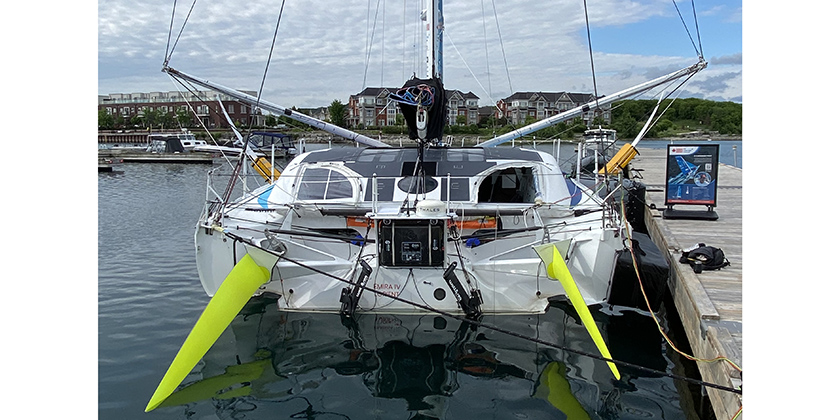
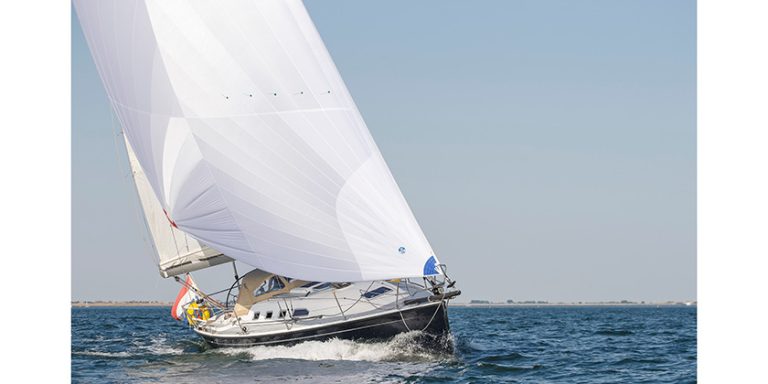
EMIRA IV, a foiling IMOCA 60, named for Scott’s children Emma and Keira in Collingwood. photo: Patti Bowden
July 9, 2026
Scott Shawyer has his eyes on three years from now when he plans to take part in Vendée Globe 2028, the legendary solo, non-stop, and unassisted round-the-world sailing race that occurs every four years.
For training purposes, Scott has brought his new boat to Collingwood where OnBoard caught up with him.
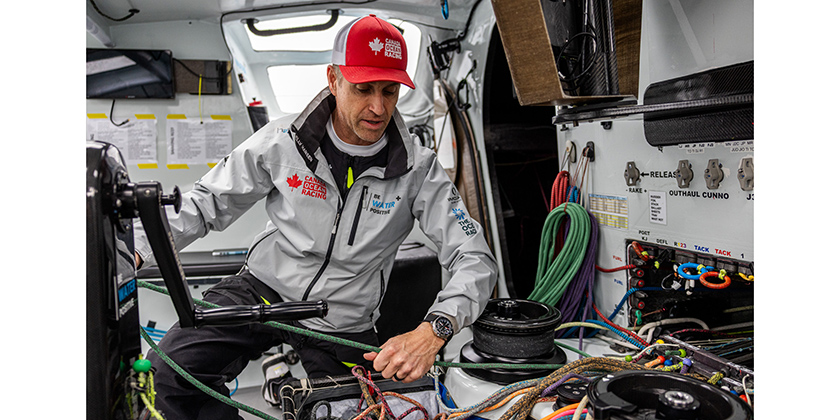
“I did my first solo transatlantic on my non-foiling IMOCA in June of 2024. It was from New York to Vendée and that went well, but I saw the speed difference of these IMOCAs is, you know, 30 to 50% faster with the foils than without the foils. I decided that I wanted to do the Vendée Globe in a foiling boat, and no better time than the present to get one and start getting acquainted with it.
I’ve been traveling to France and to England to sail the boat, and you know, by the time you travel there, jet-lagged, spend a few days on the boat, travel home, I’ve been feeling terribly exhausted and really not learning all that much. I also am prone to seasickness, so after a few days, I’m over it, but when you’re only training for a few days, it’s basically being sick for the entire time.
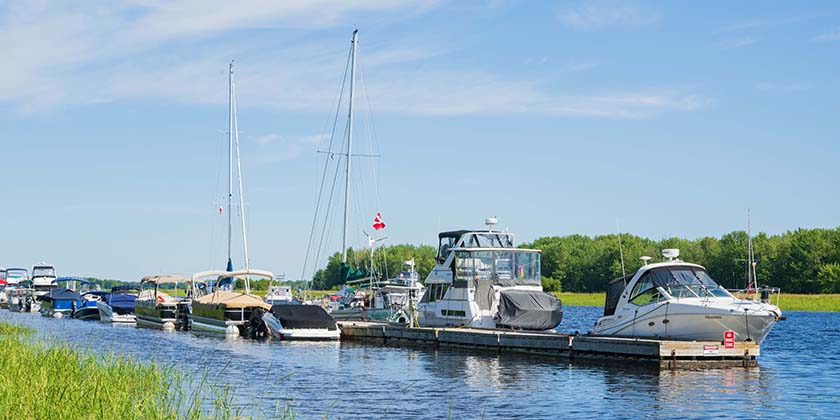
So, we thought about bringing the boat to Collingwood. We’re fortunate to have the depth we do because we used to build the Lakers here, and there’s 18 to 20 feet throughout the harbour, and this boat draws 15.
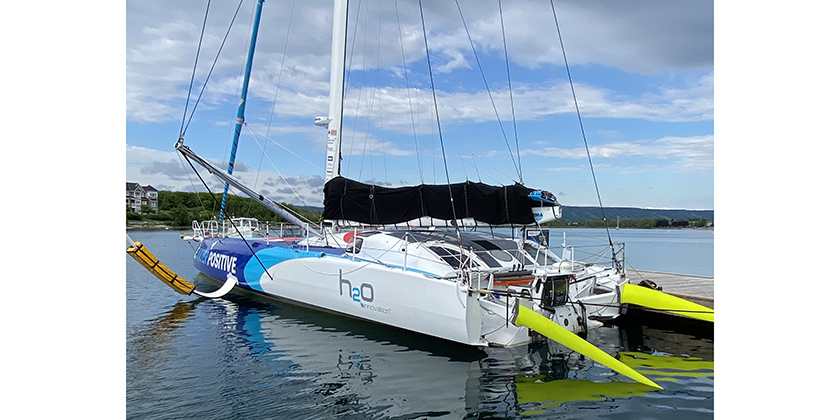
I’m grateful to the town of Collingwood, who has given us dock space for the summer. And it’s been fantastic already, just to have the access to the boat, be able to spend the time on it. We had a great first week of training last week, went sailing a few times, spent a couple days on the dock. There’s as much on my list to learn on the dock as there is on the water. Of course, on the water, I have to know how to set every sail, how to reef, shake reefs, tack and gybe under all wind conditions, and most importantly, learn how the foils work and how they change the performance of the boat and what the settings are. But on the dock, there are many, many things to learn. It was tough to think about flying to France to take apart an engine, or to go through electronic systems, or to configure computers and things like that, but all that needs to be done.
The community’s been fantastic in Collingwood. We’ve run some boat tours. Last Saturday, had 60 people through the boat. This Saturday, we’re doing the same, next Saturday, we’re doing the same. All the boat tours are booked up, but there may be more that we’ll make available come July.
I’ve had people ask me why would you bring the boat to Collingwood, you don’t get the wind or the waves that you get in the ocean. Of course, you don’t. But there’s enough base-level stuff for me to learn on this boat in flat water with gentle breeze that I can then scale up to the ocean when the boat leaves Collingwood in August.
I have checklists for tacking and gybing. For example, the tacking checklist has about 40 items on it to tack the boat, and gybing has about 50. And so, those steps stand regardless of the wind, but I need to know them like the back of my hand. So, just going out in 10 knots and tacking, tacking, tacking, tacking, tacking is going to help me learn all of that kind of stuff. So, the time in Georgian Bay isn’t really about big, heavy-weather sailing. It’s about learning the boat. I’m going to pause for now.”