


CY reviews: Zipwake Interceptor System
Mar 9, 2022
By Andy Adams
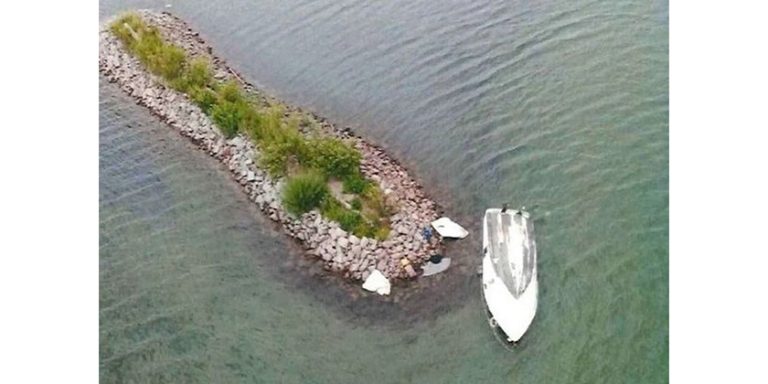
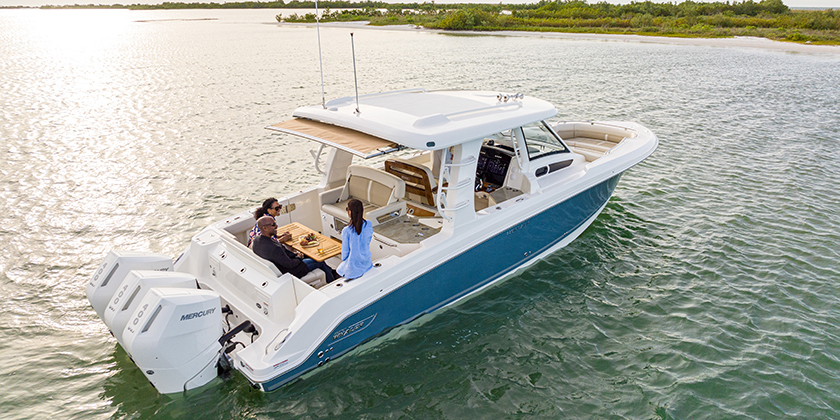
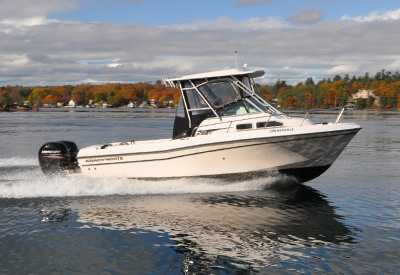
With the Zipwake turned off the boat rides bow up and needs more throttle
Andy’s full review will appear in the April edition of Canadian Yachting magazine!
I’ve been doing powerboat reviews for Canadian Yachting magazine for over 40 years now and I want to confess to a bias I have – I don’t use the trim tabs in my reviews. I want to feel how the boat naturally runs without using the tabs to adjust the ride angle or the side-to-side trim.
As experienced owners know, most powerboats operate more efficiently when the trim tabs are used with skill and understanding, but you need to have experience with the boat to know how it behaves under different conditions of load and trim to do that. And those factors can vary considerably.
Trim systems work by creating drag in one form or another. As the tab is deployed downwards into the water, it creates pressure that amounts to lift at the transom where the tabs are mounted. The tabs can be operated independently port and starboard and by using more “tab” on one side, you can counter the effects of an uneven load in the boat, or pressure from side winds.
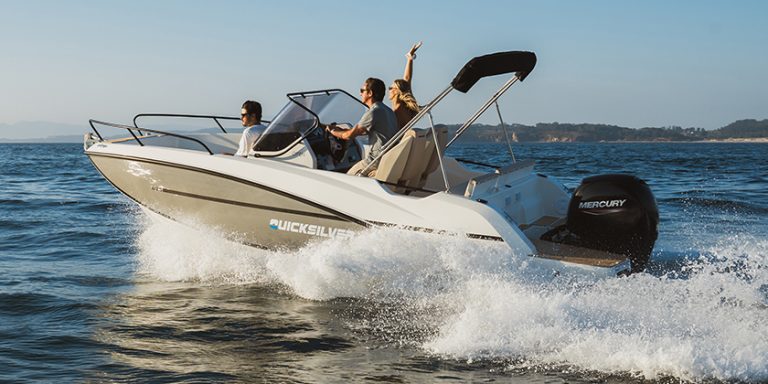
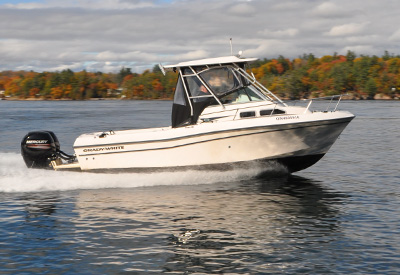 With the Zipwake on, the boat levels off and gains speed at the same throttle setting
Conventional trim tab systems have been used on boats, especially larger boats, since long before I started my writing career. Recently these systems have been improved with lighted indicators and much faster deployment, but on many boats, the tabs need a few seconds to deploy fully and the boat actually takes a little time to respond. As a result, I have often “over-tabbed” on boats I’m not familiar with, causing them to heel over too much at first.
In the last few years, a new system has come on the market and these are called “interceptors”. Zipwake is the brand name and the interceptors are not flat tabs that extend behind the boat, they are blades that drop vertically from the edge of the transom.
IMTRA is the company that brings Zipwake interceptors into our market and to me, it’s counterintuitive that these would work. I am accustomed to trim tabs which are like a flat metal panel extending out beyond the stern of the boat, that can be pressed down into the water by hydraulic or electromagnetic rams.
Interceptors work differently. Instead of being a flat tab, the interceptor is a blade attached to the trailing edge of the transom. The interceptor blade drops vertically, just a few millimetres, from the trailing edge of the transom.
It looks to me like this would create a lot of drag but apparently, it doesn’t work that way. Instead, it creates lift, but with a smaller surface than a trim tab would have.
Read Andy’s full article for complete information. Andy Adams is the editor of Canadian Yachting.