

Fall Boating – It Just Takes a Little More Preparation
Sept 12, 2024
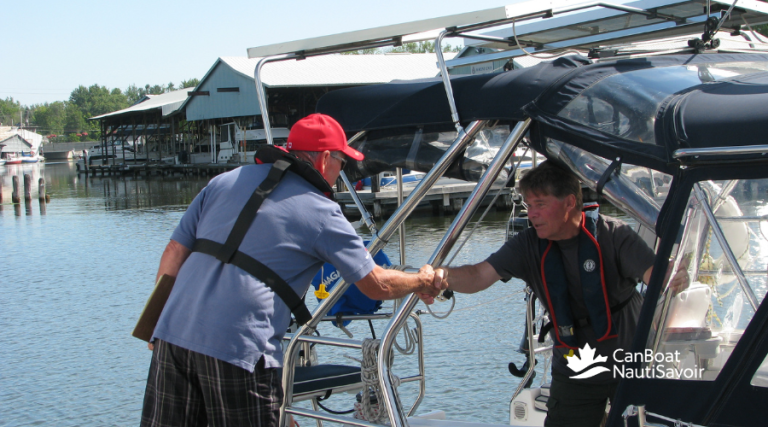
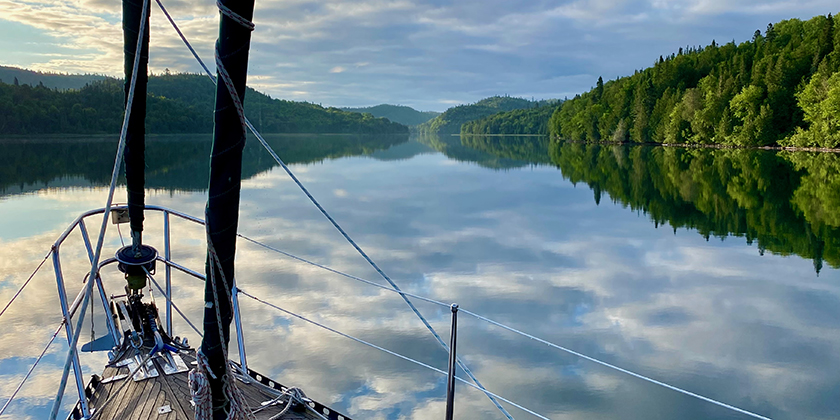
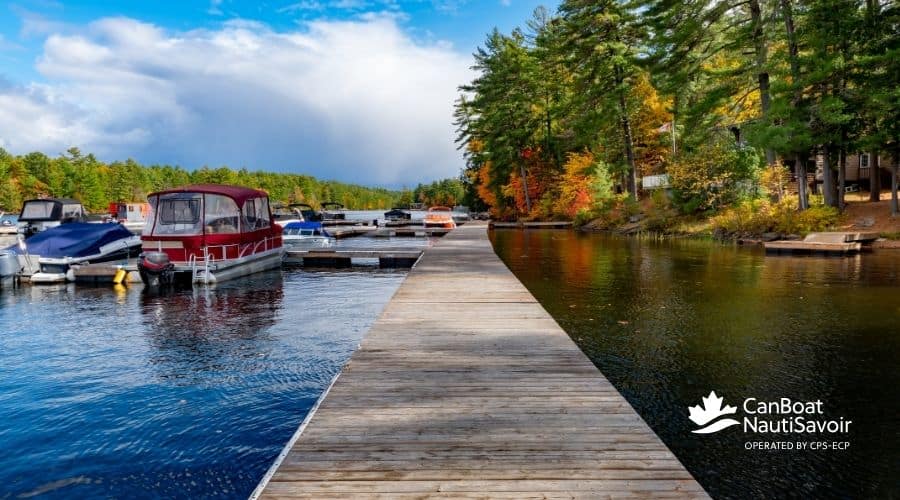
Those who have boated after Labour Day can attest to just what a beautiful experience it can be. The colours are spectacular in their shimmering reflections. Pristine anchorages jam packed during July and August can be enjoyed in relative solitude. For anglers, the action is hot as fish actively feed ahead of the freeze over. That said, to enjoy the season on the water safely, savvy boaters always keep the following practices top of mind before launching.
- Check the weather forecast. The mix of warm and cool air can quickly spawn storms that can whip up the wind and waves. It’s also a good practice to keep an eye on the sky for building storm clouds.
- Make sure their boat is mechanically sound so as to minimize the possibility of breakdown.
- Ensure all safety equipment is on board and in good working order.
- Ensure that there is more than enough fuel for the trip; one-third to go out, one-third to return and one-third in reserve.
- Have a reliable way to call for help should the unexpected occur. A key piece of safety equipment is a marine radio. With a VHF radio you have a means of direct contact with a Coast Guard Search and Rescue Center. Your distress message will also be picked up by other vessels of convenience who may be in a position to provide assistance close at hand.
- Leave a float plan with someone responsible describing the boat, the intended destination, number of people aboard, expected time of return and the number to call in the event of a potential emergency.
- Bring/wear clothing appropriate for the water temperature rather than the air.
- Have a way to quickly get back into the boat without assistance before hypothermia makes it impossible should they be tossed out by a wave or large boat wake.
So get out there and enjoy all that fall boating has to offer. Just remember that there will be fewer boaters on the water to render assistance should the unexpected occur. The sagest wisdom to follow is to always WEAR YOUR LIFEJACKET!
The Canadian Safe Boating Council
About Marine Radios:
The operation of a marine radio requires the possession of at least a Restricted Operator Certificate-Maritime (ROC-M). CanBoat / NautiSavoir offers courses for VHF Radio operation and the exam to obtain your ROC-M.
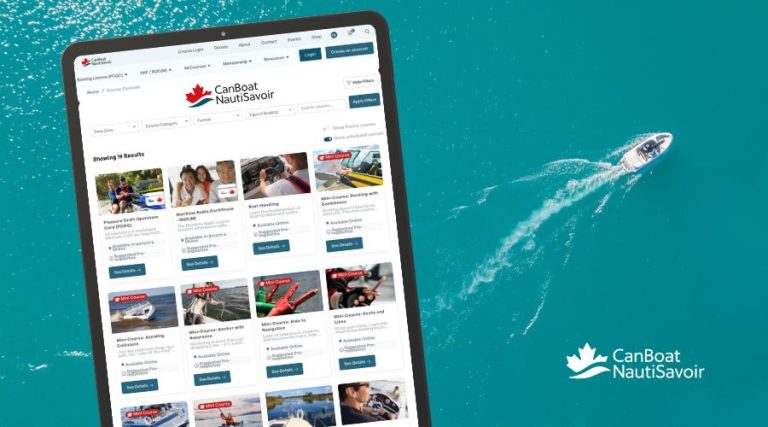
Register for a Maritime Radio course at: www.boatingcourses.ca. Classes are available online or in-person.