


July 29, 2022
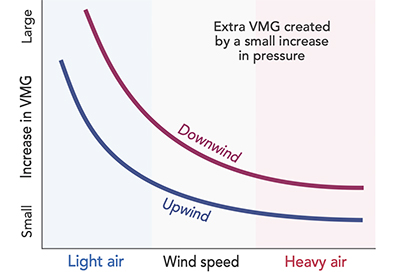
Speed & Smarts: Light and Heavy Air Differences – Part 2: the effect of wind velocity on strategic choices
In most races, two key strategic variables seem to have by far the biggest impact on boats’ overall success (or failure). These are wind velocity (‘pressure’) and changes in wind direction (‘shifts’).
June 27, 2022
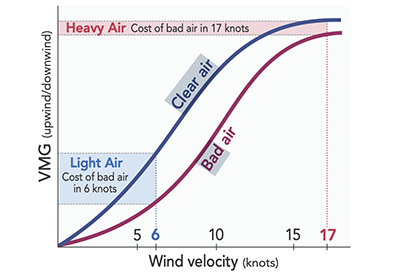
Speed & Smarts: Light and Heavy Air Differences – Part 1
It’s clear that the more wind you have the faster you’ll go. That’s why sailors avoid the bad air of other boats. The problem with sailing in wind shadows is that you have less wind velocity than boats sailing in clear air. This hurts in two ways.
June 14, 2022
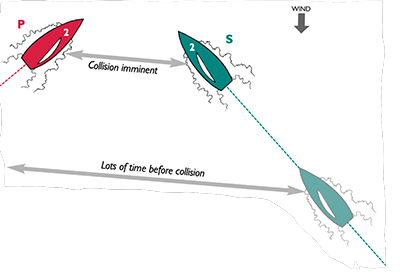
Speed & Smarts: Converging with a Starboard Tacker
Here is a common situation that requires an important decision. You are sailing upwind on port tack, converging with another boat on starboard tack (S). If you keep sailing straight you will hit the other boat, so you must make a choice about how you will keep clear of S.
May 17, 2022
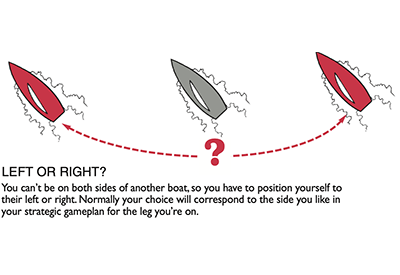
Speed & Smarts: On Which Side Do You Want to Be?
When you are trying to beat a boat that’s just ahead or behind, you have to consider strategy, not just tactics. In the same way that you want to be on the ‘favored’ side of the fleet, you should put yourself on the ‘favored’ side of any boat that you are trying to pass.
May 3, 2022
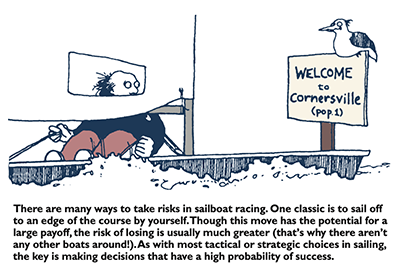
Speed & Smarts – Risk: A Racing Sailor’s Curse
One definition of risk is ‘exposure to the possibility of loss.’ That basically sums it up for sailboat racers. When you take a risk, you are accepting the chance that you will lose something you have – boats, time, you’re standing in the series, a chance to catch up, etc.
April 11, 2022
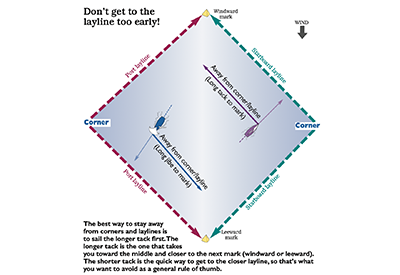
Speed & Smarts: Avoid Laylines and Corners
It’s impossible to round any mark without getting to the layline first. But the big question, both tactically and strategically, is how far you should be from the mark when you reach that layline. There’s a huge difference between making your final approach from three lengths versus 30 lengths.
March 28, 2022
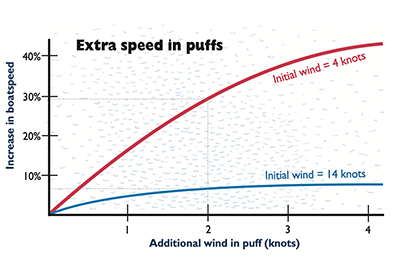
Speed & Smarts: Go For Puffs in Light Air, Shifts in Breeze
You’re sailing upwind on port tack on the first beat of a race, and it feels like you are on a pretty good lift. However, when you look toward the left side of the course, you see a small increase in wind pressure. Should you keep sailing on the lift, or tack to head for a little more breeze?
March 14, 2022
Speed & Smarts: Ladder Rungs Part 2 – Wind Shifts
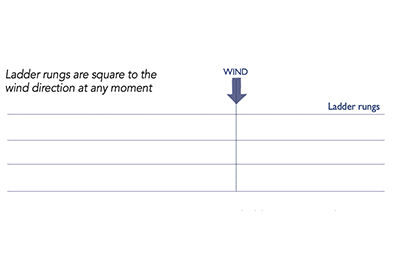
Ladder rungs are great tools for understanding how the wind direction affects boats racing up- wind or downwind. On most days the wind shifts constantly, even when it seems relatively steady, so ladder rungs (and the corresponding positions of boats in the fleet) are also changing continuously.
February 28, 2022
Speed & Smarts: Ladder Rungs Part 1
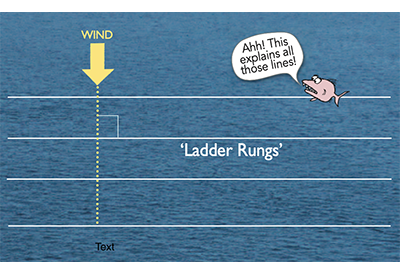
The race course for sailboats is similar to a playing field for baseball or football but in sailing there are no fouls lines or yard markers visible on the course. For critical boundaries like the starting line or zone around a mark, sailors must rely on their imagination and judgement.
February 14, 2022
Speed & Smarts: Fixing the Slows
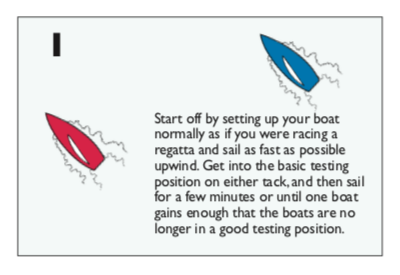
When it comes to curing a case of “the slows” and getting your boat up to speed, there may be no exercise more valuable than lining up near one other boat. There are several reasons why two-boat testing should be at the top of your priority list.
January 27, 2022
Speed & Smarts: How to Tackle a Speed Problem – Part 1
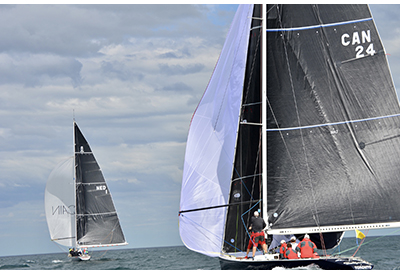
In sailboat racing, speed is almost everything. It’s important to be smart at tactics and strategy, of course, but if you’re not pretty fast you will never be consistently at the top of your fleet. Therefore, good speed is worth a large investment of time and effort.

January 14, 2022
Speed & Smarts: Do I Really Have a Speed Problem?
As they say in therapy, the first step in solving any problem is acknowledging that you have that problem. Most sailors are not shy about admitting they are slow; in fact, many are quick to blame poor speed for a variety of mistakes. But if you want to improve your racing results, you need an honest assessment of your strengths and weaknesses.
December 24, 2021
Speed & Smarts: A Closer Look at the Defining Qualities of Sportsmanship
Why is good sportsmanship important in sailing? Because no matter how hard we compete, most of us still want to have fun. And almost all of us feel it’s critical to have a fair playing field. If we want to attract more racers to the sport and continue getting good race management, sportsmanship is the only way to go.