


May 14, 2024
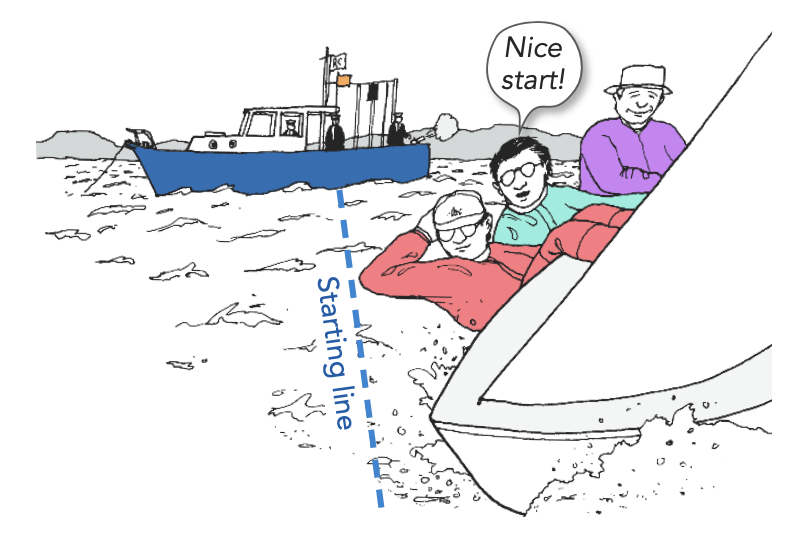
Speed & Smarts: Make a Starting Plan
May 15, 2024 The start of any race is a critical moment…
April 29, 2024
Speed & Smarts: Be ‘In The Hunt’ At The First Mark
May 1, 2024 Your goal at the start: The measure of a go…
April 16, 2024
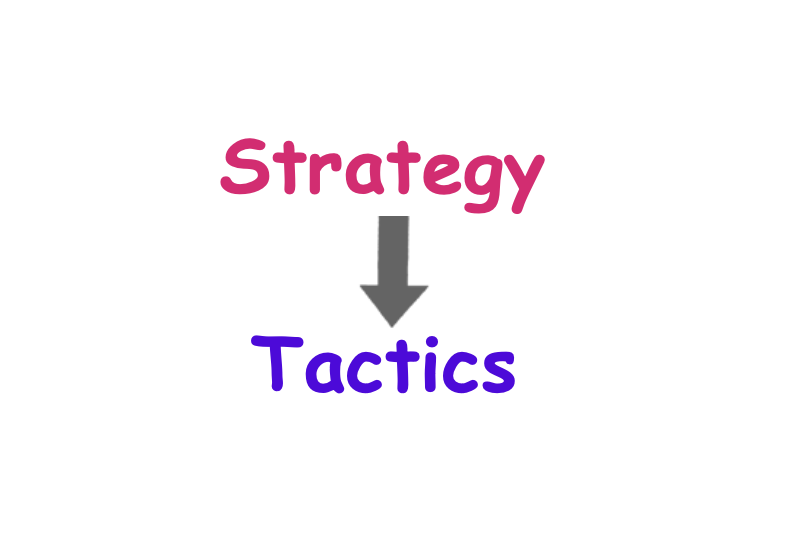
Speed & Smarts: Strategy First!
Apr 17, 2024 No matter where you are on the race course…
April 1, 2024
Speed & Smarts: Tips: Boatspeed 2 Before the Race
Apr 3, 2024 The title of Dennis Conner’s popular book o…
March 5, 2024
Speed & Smarts: Tips: Boatspeed
Mar 6, 2024 Change gears – early and often!When the win…

February 12, 2024
Speed & Smarts: Review and Test – Sailing Smarts Part 4: Ahead or Behind?
Feb 14, 2024 With the mild weather around, it’s hard no…
January 15, 2024
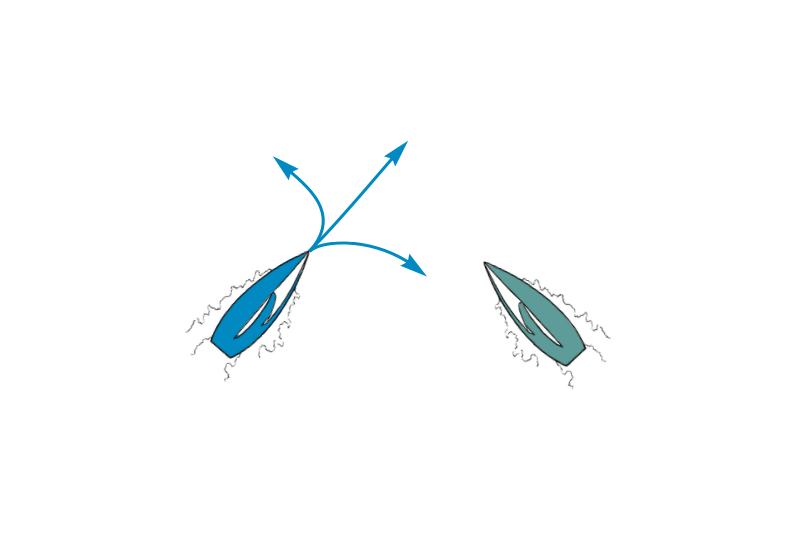
Speed & Smarts: Review and Test – Sailing Smarts Part 3 – When Boats Converge
Jan 17, 2024 It’s still the winter; unless you are head…
January 2, 2024
Speed & Smarts: Review & Test – Sailing Smart Part 2: The Longer Tack
Jan 3, 2024 It’s still the winter; unless you are headi…

December 11, 2023
Speed & Smarts: Review and Test – Sailing Smart Part 1
Dec 13, 2023 It’s the winter break, so let’s see what w…
November 28, 2023
Speed & Smarts: Taking the Appropriate Penalty
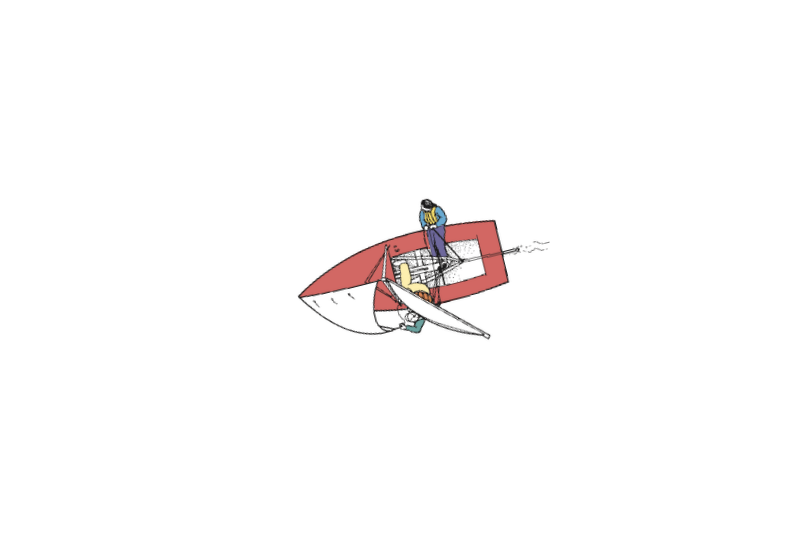
Nov 29, 2023 Just because you break a rule every now an…
November 13, 2023
Speed & Smarts: Sportsmanship and the Rules
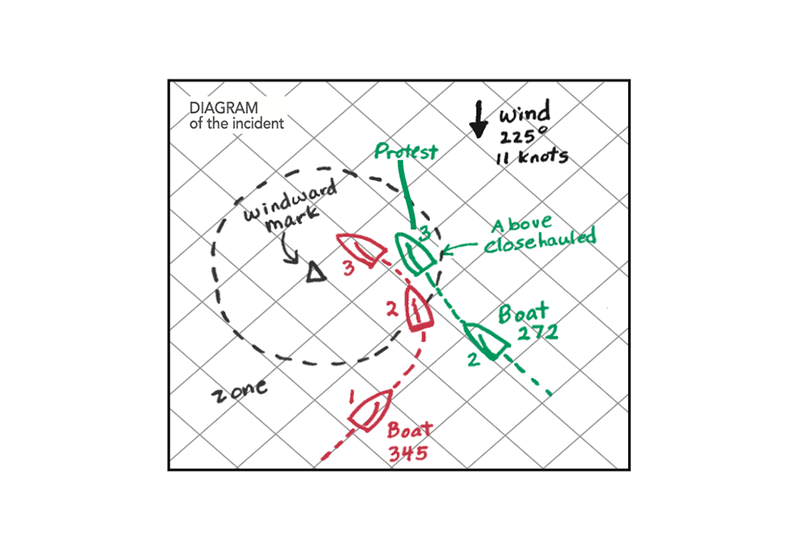
Nov 15, 2023 Competitors in the sport of sailing are go…
October 30, 2023
Speed & Smarts: Sportsmanship Part 1
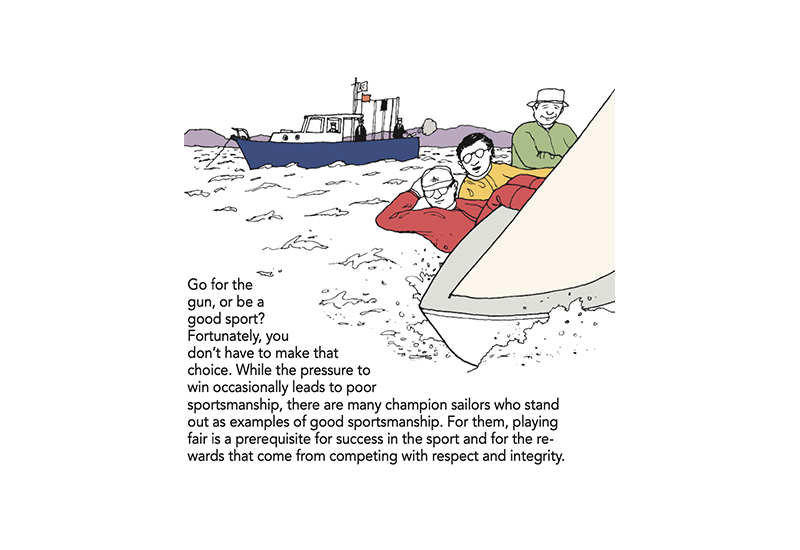
November 1, 2023 Good sportsmanship might be much more…
October 16, 2023
Speed & Smarts: More on Headsail Trim – Telltales
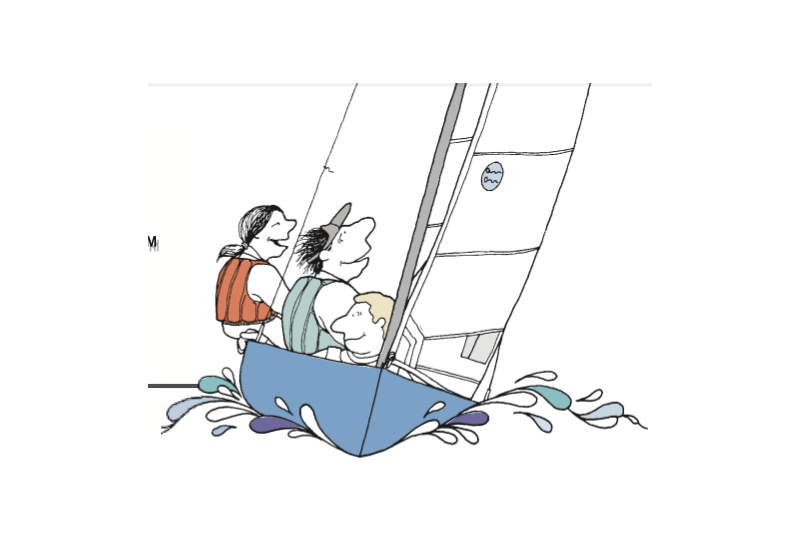
October 18, 2023 One of the best sail shape tools for a…
October 3, 2023
Speed & Smarts: Take Control of Your Headsail Part 1
The mainsail may be the biggest sail on most boats, but the jib provides a relatively large share of the boat’s driving force, for two reasons. First, the jib is not sitting behind a mast, so it sails in clear air with minimal turbulence.
September 2, 2023
Speed & Smarts: The Mechanics of Vanging
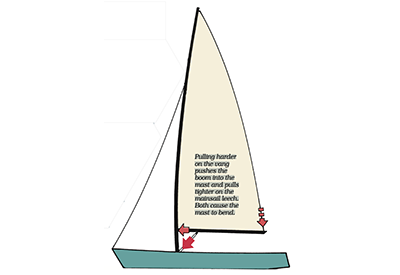
Pulling harder on the vang affects the rig and sails in many different ways, but the exact impact depends a lot on how the boat is rigged. For example, is the boom vang anchored to the mast or to the boat? How far away from the gooseneck does the vang attach (to the boom and mast or boat)?
August 14, 2023
Speed & Smarts: Take Control of Your Mainsail – Part 3 – Tips and Notes
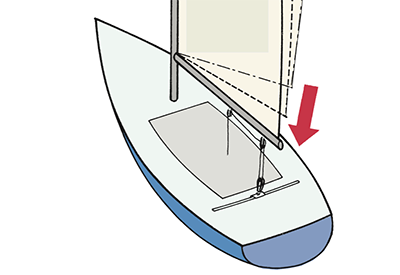
Don’t cleat the sheet. The wind and wave conditions are different all the time (even when it seems like they are static), so if you want to keep going fast you have to adjust your mainsail trim continually. Try never to put the mainsheet in its cleat.
August 1, 2023
Speed & Smarts: Take Control of Your Mainsail – Part 2 – Traveler
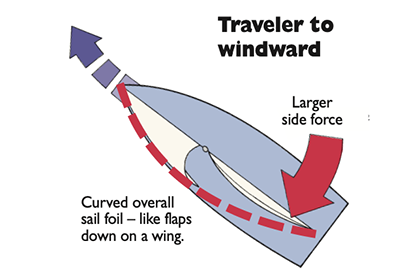
The traveler controls the angle of attack of the mainsail in much the same way as hydraulic cylinders control the flaps on an airplane wing. When the plane is going slowly and needs a lot of lift (e.g. to take off or land), the flaps go down to make the wing more curved and more angled to the oncoming wind.
July 17, 2023
Speed & Smarts: Take Control of Your Mainsail – Part 1
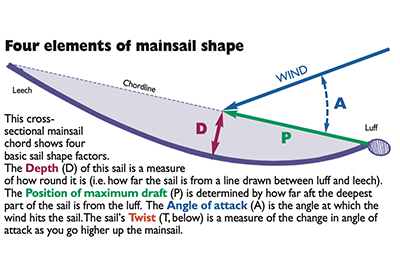
On most boats, the mainsail is easily the biggest upwind sail and therefore has a proportionally large effect on the boat’s speed and pointing performance. Because the mainsail must cover an incredible variety of wind and wave conditions, it has to be stretched and twisted into a wide range of aerodynamic shapes.
June 12, 2023
Speed & Smarts: Take Control of Your Headsail
The mainsail may be the biggest sail on most boats, but the jib provides a relatively large share of the boat’s driving force, for two reasons. First, the jib is not sitting behind a mast, so it sails in clear air with minimal turbulence.
May 30, 2023
Speed & Smarts: Familiar Layline Dilemmas – Part 2
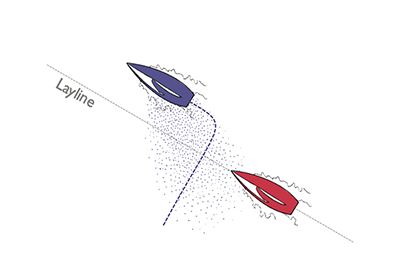
A layline seems like such a simple thing – a dotted pathway on the water that leads you straight to the next mark. But dealing with laylines while you are racing is not always so straightforward.
May 15, 2023
Speed & Smarts: Familiar Layline Dilemmas
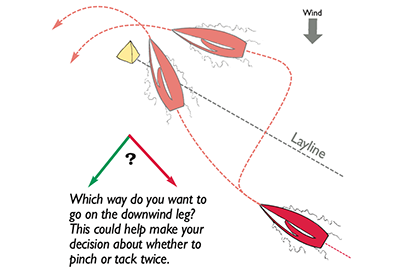
There are certain scenarios that always seem to play out when you get near a layline. Somebody tacks on you or you have the chance to tack on somebody. The wind shifts so you are no longer on the layline. You have to make a choice about whether to do two more tacks or sail straight, but slowly, toward the mark.
May 1, 2023
Speed & Smarts: Part 3 – Six Ways to Identify a Layline
Before you round any mark you have to get to the layline, so it helps a lot to know where the layline is. To avoid overstanding or understanding (and losing time or distance), find a good method for making consistently accurate layline calls. Here are some tips.
April 18, 2023
Speed & Smarts: Part 2 – Factors That Influence Layline Position
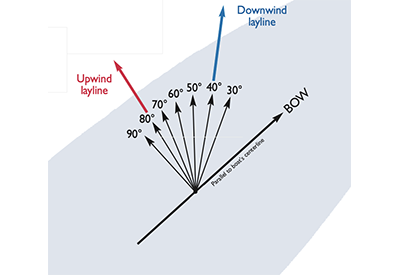
A layline is the path you would sail, when steering your optimal upwind or downwind course, to get around the next mark on one tack. We all know that laylines are invisible, of course, but many sailors don’t realize how much (and how often) laylines move around.
April 3, 2023
Speed & Smarts: Laylines – Part 1
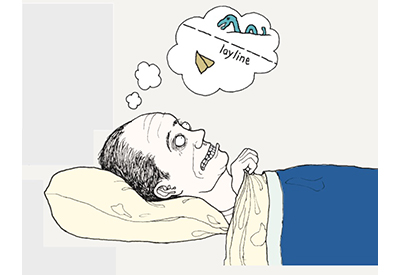
Layline – An imaginary line on a beat or run that shows a boat’s course when she sails her optimum upwind or downwind angle in the existing wind conditions and is heading straight toward the leeward or windward mark.
February 26, 2023
Speed & Smarts: Planning for 2023 – Tips 9 to 15
Last issue we began a series on the little things and the big things that make a difference in your performance. We continue with more of Dave’s series of tips to make you smarter and faster for racing in 2023. Now is the time to get set up for the season ahead.
February 13, 2023
Speed & Smarts: Planning for 2023 – Tips 1 to 8
It’s the little things. And the big things. Dave offers a series of tips to make you smarter and faster for racing in 2023. Now is the time to get set up for the season ahead.
January 30, 2023
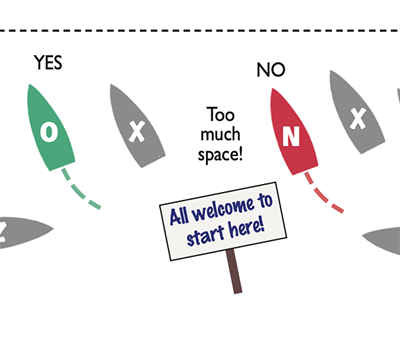
Speed & Smarts: MORE Starting Strategy & Tactics – Part 4
When the starting signal goes off, every boat would like to have a large space to leeward so they can put their bow down without the fear of being pinched off. But this doesn’t mean you want to have such a big hole to leeward throughout the starting sequence.
January 17, 2023
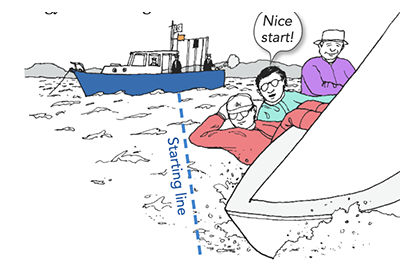
Speed & Smarts: MORE Starting Strategy & Tactics – Part 3
A good start is all about getting what you want and not letting other boats stand in your way. In the ideal world you want to start in the position you choose on the line, carve out a certain amount of space around you, and then come off the line with clear air and speed.
January 2, 2023
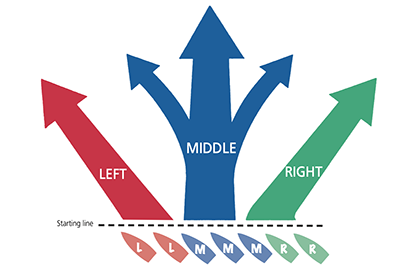
Speed & Smarts: Starting Strategy & Tactics Part 2 (of several)
As a general rule of thumb, if you like the left side of the first beat you should start on the left side of the line. If you like the right side of the course, start on the right of the line. This may seem like a no-brainer, but it’s amazing how many boats do not follow this basic principle.
December 12, 2022
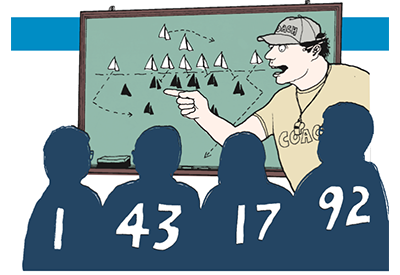
Speed & Smarts: Starting Strategy & Tactics
The start of any sailboat race is a critical moment that will have a big effect on your potential success in that event. If you get off the line cleanly with clear air and good speed, heading toward the favored side, you’ve made a great first step.
November 29, 2022
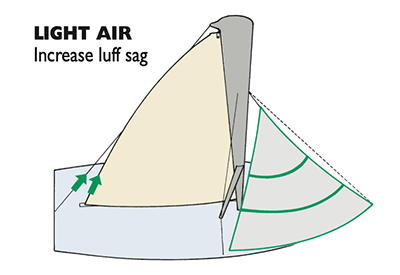
Speed & Smarts: Headstay Sag – Control Power with Luff Sag
One of the most critical factors for any jib or genoa trimmer is the amount of sag in the headstay. Your forestay almost never forms a straight line between the bow and the mast – due to wind pressure it always sags aft and to leeward at least a little bit.
November 14, 2022
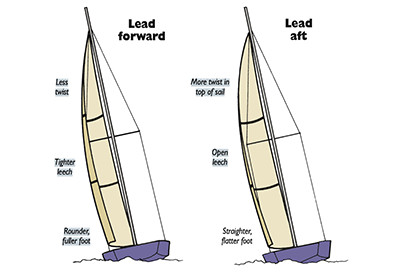
Speed & Smarts: Searching for the Best Lead Position
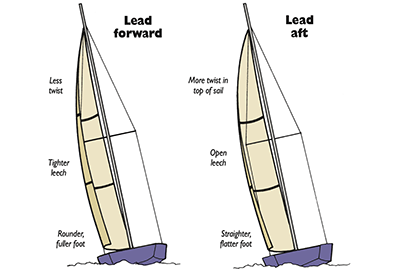
Jib lead position works like the main outhaul. Moving the jib/genoa lead fore and aft affects foot depth, much like the outhaul controls foot depth on a mainsail.
October 31, 2022
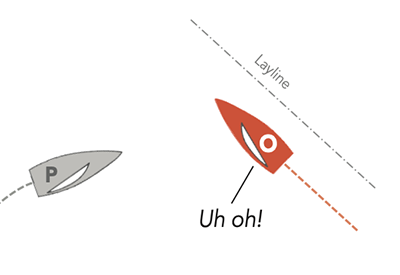
Speed & Smarts: Tips for the Windward Mark
Except for the starting line, the windward mark is usually the most congested part of the course. It’s the first point in the race where all the boats come together again, and for this reason it presents many potential pitfalls.
October 16, 2022
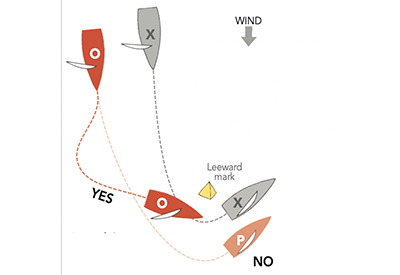
Speed & Smarts: Mark-Rounding Principles Part 3 – Slow Down to Round the Mark Faster
In most situations, faster is better because the goal of racing is to get to the finish line as quickly as possible and beat the other boats. But once in a while you need to slow down.
October 2, 2022
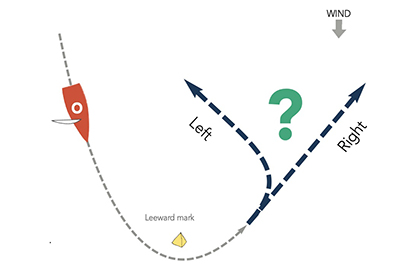
Speed & Smarts: Mark-Rounding Principles Part 2 – Before Rounding Each Mark, Have a Plan for the Next Leg
Almost every sailor realizes the importance of making a strategic plan for the first leg before they start the race. But how many of those sailors also develop a strategy for every other leg in the race?
September 12, 2022
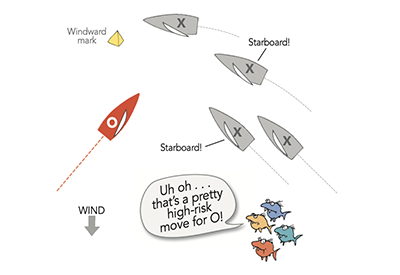
Speed & Smarts: Mark-Rounding Principles Part 1 – Avoid Mark Rounding Madness!
The marks of the course are often critical in determining how boats cross the finish line. That’s because mark roundings bring the entire fleet together into one small, congested spot.
August 27, 2022
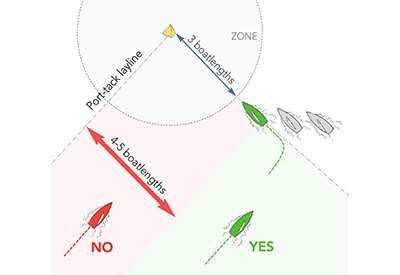
Speed & Smarts: Approaching the Windward Mark
The windward mark is the first point where all the boats come back together after the start. It’s usually crowded and contentious and can have a significant impact on the outcome of the race.
August 14, 2022
Speed & Smarts: Light and Heavy Air Differences – Part 3: Boathandling Maneuvers in Light Air vs. Heavy Air
One of the big differences between racing in light air versus heavy air is that it’s usually a lot more difficult to execute good boathandling maneuvers when it’s breezy. This is not surprising. More wind means boats go faster and bounce around a lot more (because there are usually bigger waves).