



Sirius Signal demonstrates a new Daytime Visual Distress Signal at the Annapolis Sailboat Boat Show
Dec 21, 2017
Sirius Signal held a product information session for interested parties prior to demonstrating their latest product innovation, the Sirius Aero Foil Model AF-1 Daytime Visual Distress Signal (DVDS) for recreational boaters in October at the Annapolis show. The non-pyrotechnic Aero Foil AF-1 revolutionizes DVDS by providing a safer, more effective option for boaters.
Besides recreational boaters, the audience of 20 included a large group from the US Coast Guard. After the initial Sirius presentation covering the AF-1 concept, there was good discussion with the audience. Issues such as a potential hazard to a CG rescue helicopter were raised.
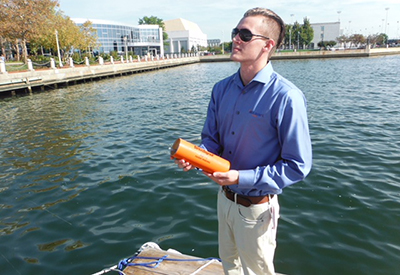
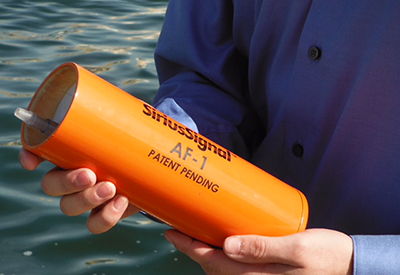
The Aero Foil AF-1 is constructed of helium-filled Mylar parafoil that inflates when deployed. In case of an emergency, boaters will hold the canister that houses the device, open the top cover to remove the AF-1 and activate. The device will then automatically inflate and rise to a minimum of100 feet, where it can stay aloft for up to several days. The design includes a tail on the balloon that alters its shape in higher winds to limit the balloon from being blown sideways at the expense of altitude.
The stated intent is to have a re-arming kit that includes a line spool, helium cartridge and balloon to reload the AF-1 housing.
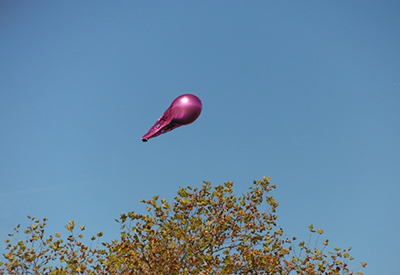
Consistent with the company’s environmentally sound and safe non-pyrotechnic approach to distress signals, the Aero Foil AF-1 has been developed for possible U.S. Coast Guard compliance and will be superior to current pyrotechnics. Sirius is investigating the best colour options for the balloon. In the demonstration silver and pink Mylar balloons were launched.
 In order to meet daytime distress signal requirements, boaters can currently choose between the U.S. Coast Guard-approved pyrotechnics or the daytime distress flag.
“We wanted to create a product for boaters that is highly visible and long-lasting in daytime emergencies and that first responders can reliably identify from the air or water. The USCG claims that almost all rescues begin with a call for help via cell phone, VHF radio or Epirb. The challenge is to be seen by first responders who can often take two hours to locate boaters in distress once the call for help has been received. A distinct colored signal shape that can stay aloft over the boat for days is the fastest way to be located,” said Anthony Covelli, CEO of Sirius Signal.
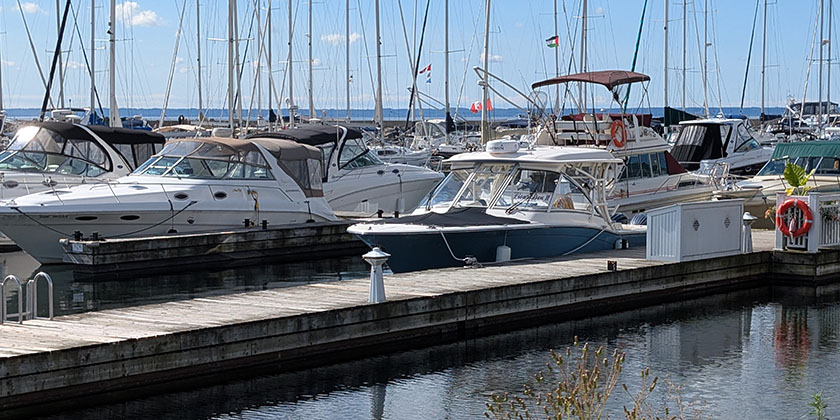
As Murphy would have it, while early in the morning the winds were light, at he time of the demonstration they had increased and were blowing on shore toward many of the masts of the boats in the show. This resulted in the balloons being flown on shorter tethers under Sirius’s staff’s watchful eyes.
– CYOB tech reporter, Mike Wheatstone