


Race to Alaska Explained
May 9, 2017
Race start: 0500 June 8th, Port Townsend, Washington
The inside passage to Alaska has been paddled by native canoes since time immemorial, sailing craft for centuries, and after someone found gold in the Klondike the route was jammed with steamboats full of prospectors elbowing each other out of the way for the promise of fortune.
{videobox}Hg5Uug5sbX8{/videobox}
It’s in the spirit of tradition, exploration, and the lawless self-reliance of the gold rush that Race to Alaska was born. R2AK is the first of its kind and North America’s longest human and wind powered race, and currently the largest cash prize for a race of its kind.
This isn’t for everyone
It’s like the Iditarod, on a boat, with a chance of drowning, being run down by a freighter, or eaten by a grizzly bear. There are squalls, killer whales, tidal currents that run upwards of 20 miles an hour, and some of the most beautiful scenery on earth.
R2AK is based on the hardest kind of simplicity
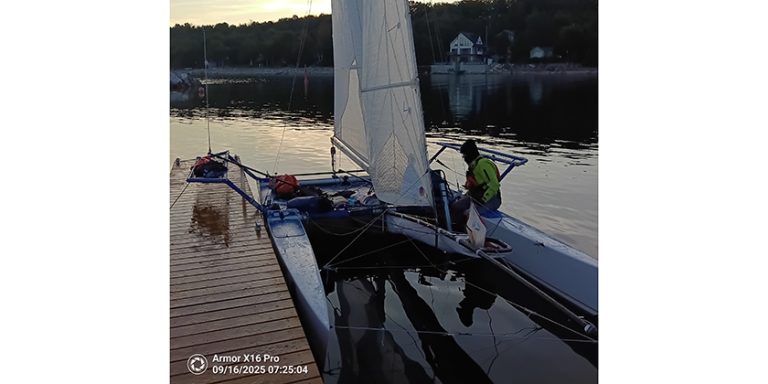
You, a boat, a starting gun. $10,000 if you finish first, a set of steak knives if you’re second. Cathartic elation if you can simply complete the course. R2AK is a self-supported race with no supply drops and no safety net. Any boat without an engine can enter.
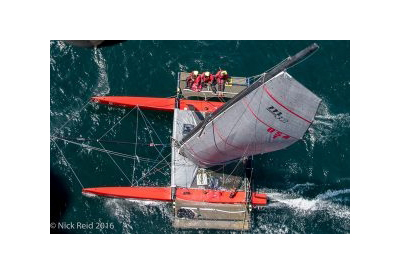
Last year 44 teams were accepted and 26 finished. The 2016 winners of the Race to Alaska, went to team Mad Dog Racing a 32 foot cat (Markstrom 32) with three crew members aboard team captain Randy Miller, Colin Dunphy and Ian Andrews made the trip from Victoria to Ketchikan, Alaska in 3 days, 20 hours, 13 minutes. An unbelievable record time.