


The Third ‘Gussies’ International Electric Boat Awards
Dec 8, 2022
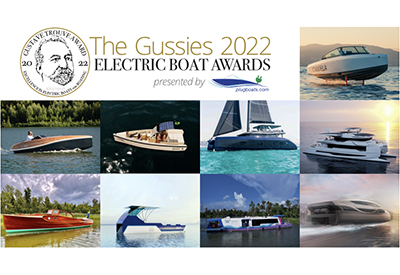
The third ‘Gussies’ international electric boat awards have announced the winning boats the ‘best represent excellence in electric boats and boating.
This year’s awards were presented in nine categories of boats that include both boats in production as well as concept electric boats or those in development. There were over 120 boats nominated from companies headquartered in 26 different countries, with the eventual winners representing 6 of those countries: Austria, Brazil, India, Portugal, Sweden and Switzerland.
The awards are chosen by a combination of votes from the public and an International Judging Panel of 19 electric boats experts that includes the award winners 2020 and 2021. The Judges select the finalists for the public voting, and also weigh in with weighted votes to help select the winners.
There were three Canadian electric boats entered, all selected as Finalists, but none taking home the trophy:
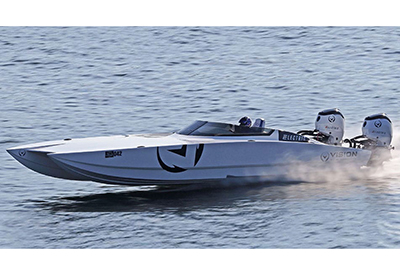
Vision Marine Technologies entered a Hellkat 32 Customized/DIY/Refitted category of the Awards. The speedboat catamaran sports twin Vision Marine E-Motion 180E outboards and smashed the world speed record for electric boats in August with a 167 km/h run at the Lake of The Ozarks Shoot Out. The E-Motion 180E motor and battery system will be available next year in production boat models by Four Winns and Limestone/Aquasport, with some other manufacturers to be announced in the next few months.
Vision Marine Hellkat
Also in the Customized category, but at the other end of the spectrum, is Harvest, a 35 foot catamaran refitted by Mike Ondrejicka of Ontario. He installed twin 15kW (≈25 HP) electric motors and that run on the electricity provided by new solar panels on the boat’s roof. Her longest nonstop journey is 370 km in 47 hours and Ondrejicka accomplished a 2,000 km loop on the Great Lakes and Trent Severn Waterway in 25 days.
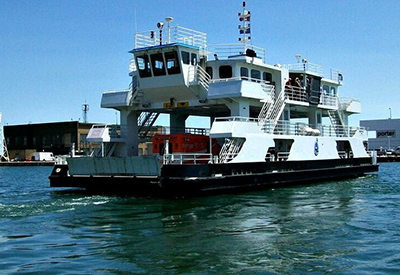
The third Canadian entry was in the ‘Commercial Passenger Boats: In Operation category. It is the Marilyn Bell II electric ferry that runs in Toronto harbour taking passengers back and forth to and from Billy Bishop airport. The ferry is powered entirely by electricity from clean wind and solar sources sourced by Bullfrog Power.
Marilyn Bell
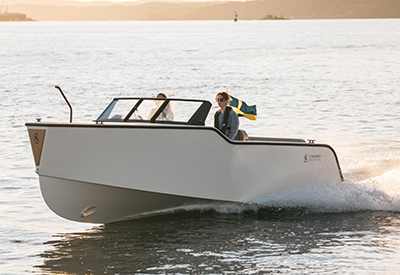
Two finalists that are not manufactured in Canada but are available here are Sweden’s X Shore 1, distributed by BCI Marine, and the Magonis Wave e-550 from Spain which is being distributed by Segway Powersports.
In the Under 8m/26 foot category the winning entries were the Faro5 from Portugal in the Production category and Brazil’s Aurora Sport for electric boats In Development.
X-Shore 1
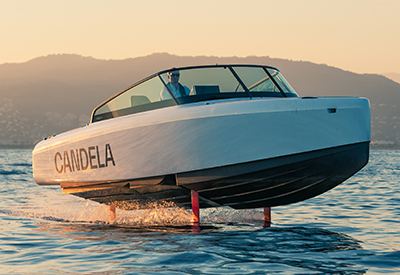
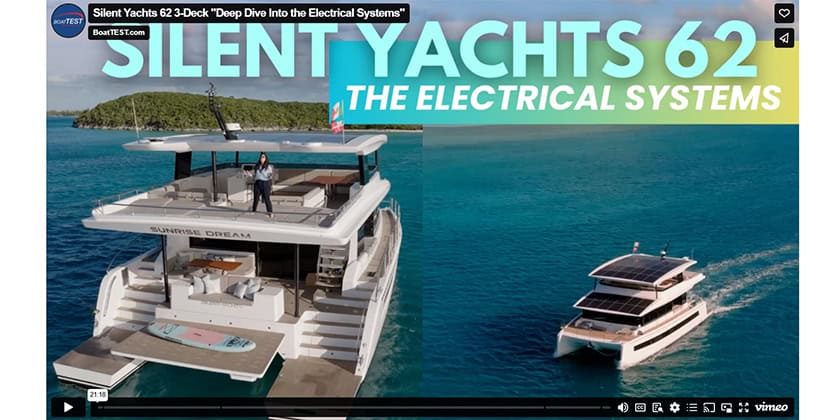
The Candela 8 hydrofoiling speedboat, which may be the electric boat that has most captured the public imagination and is now one of the best selling premium speedboats of any kind in Europe, won for production models Over 8m/26 ft. The SILENT 120 Explorer, a triple decked oceangoing solar electric catamaran, took the In Development honours.
The Electric Sailboats category featured nine finalists, with the Sunreef Eco 80 being the winner. The Polish builder has been making power and sail catamarans since the 1990s, and launched their Eco low emission/electric/hybrid models in 2019. The Eco 80 features their ‘solar skin’ which has solar cells embedded throughout the boat’s composite hull material.
Candela 8
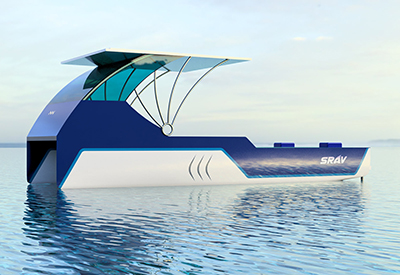
India showed why it is a leader in small solar electric vessels with the win of the SRAV commercial fishing boat in the Workboats category and the solar electric ferries of transport commission of the city of Kochi for commercial passenger vessels in operation.
The In Development category of passenger vessels was striking in that almost all entries were hydrofoiling ships, carrying anywhere from 12 to 300 passengers. The winner was MobyFly of Switzerland, which was co-founded by 5 time world windsurfing champion Anders Bringdal and will be incorporating hydrogen fuel cells in its energy supply mix.
Srav – Electric Workboat
The Gussies are named to honour Gustave Trouvé, a prolific French inventor with over 75 patents to his name who was awarded the Légion d’Honneur in 1882. Among his innovations was the world’s first outboard boat motor, which he devised so that he could detach the motor from his prototype electric boat ‘Le Teléphone’ and take it home to work on in his Paris apartment.
Jeff Butler, the Editor and Publisher of Plugboats.com, started the awards in 2020. “I think what is most exciting thing about the awards is that they show the huge breadth of electric boats. Hydrofoiling speedboats, 100 passenger ferries, afternoon cruisers, commercial fishing rigs, an oceangoing sailboat with embedded solar cells…and the number of options for people looking for non-fossil-fuel boats is just going to keep growing.”
You can see all of the winners and Finalists on Plugboats.com: https://plugboats.com/gussies-electric-boats-awards-winners-2022/