


Ontario keels chosen for Saildrone
September 12, 2019
Burlington, Ontario’s MarsKeel Technology, a world leading company on whose lead keels many Canadian sailors sail, has been chosen to supply the lead ballast system for the breakthrough Saildrone project. MarsKeel has produced approximately 100 ballast parts for Saildrone over the last year.
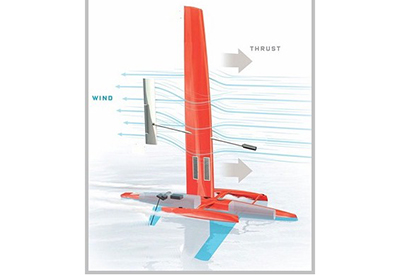
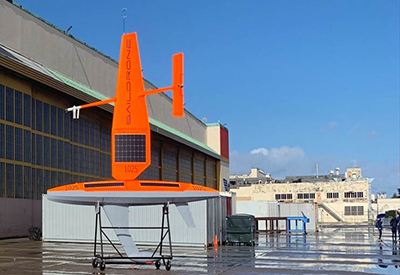
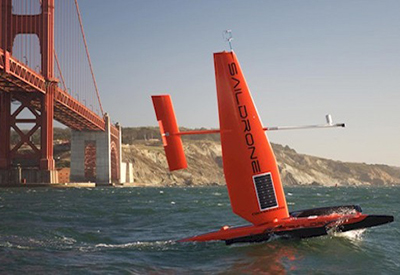
The Saildrone is an autonomous unmanned sailboat using wing technology pioneered over a ten-year period by founder Richard Jenkins as he battled to break the wind-powered land speed record in 2009 with a top speed of 126.2 mph.
Richard’s quest for speed and control led to the innovation of a precise but low-power wing system that allows the Saildrone to efficiently harness wind-power to maximize range and endurance. The new design of the Saildrone includes a short foil with a bulb in place of a blade on the bottom of the sailboat to increase the vertical center of gravity with less weight. The newly designed lead keels weigh approximately 750 lbs each.
The tooling used to manufacture and cast the new keel design is made of cast iron, which is also designed and manufactured by MarsKeel. This type of tooling is necessary to allow for a quick casting and cooling cycle (9 parts per day). An unlimited number of castings can be made from this tooling.
 Once released from the tooling, the lead keels are then encapsulated in a split FRP shell and are ready to install. The finished outside of the keel looks just like a moulded FRP part, smooth and fair.
The cast keel incorporates attachment studs to the bottom of the casting for the instrument package, as well as a cast in stainless steel tubes for wires and instrument cables to pass through and connect to the data center inside the vessel. In addition, many integrate ports are cast in to incorporate individual sensors and monitor cells.
Richard’s Saildrone company now provides a fleet of these autonomous drones to collect high-resolution ocean data based on their client’s specific mission requirements. Launched and retrieved from a dock, the Saildrone fleet navigates to its destination using wind power alone, transiting at 3-5 kts. Each drone can then hold station or perform survey patterns best suited for the specific research mission. Each drone is armed with an array of custom sensors, and data is transmitted back to shore in real-time via satellite for analysis with the researcher in constant control of the mission. Missions have included oceanography and climate studies, fish stock analysis, and environmental monitoring.