


New Search and Rescue Station in Cobourg. ON
November 6, 2025
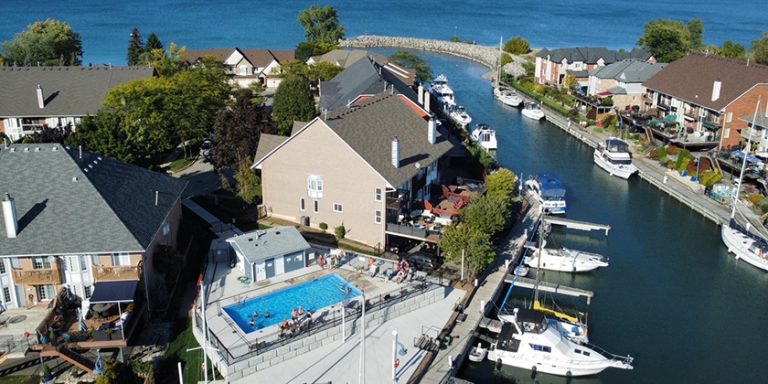
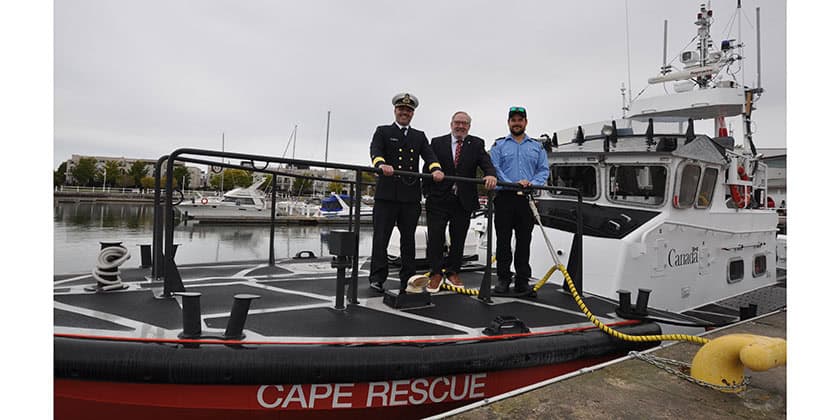
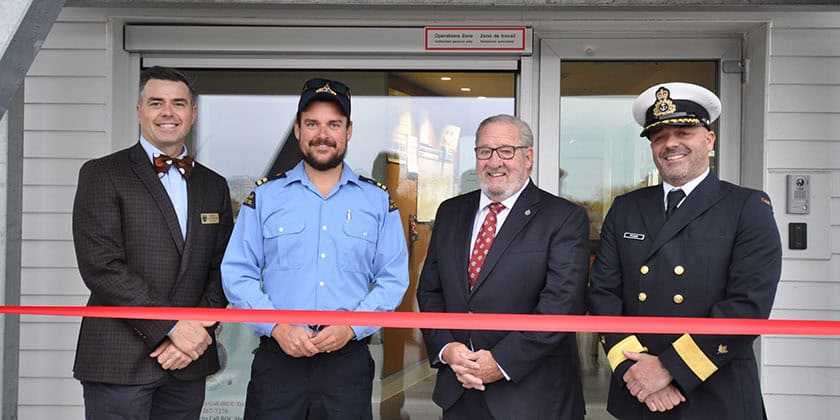
Officially opened on October 17, the new search and rescue station in Cobourg replaces an older building that was at the end of its service life. It is at the same site as the previous building, located in Cobourg Harbour, on the north shore of Lake Ontario.
About the new station:
- The station features a large workshop for equipment storage, and to carry out vessel repair and maintenance.
- The station has new accommodations; including five bedrooms, a kitchen, large common areas, laundry room, and exercise area for SAR crew who live on-site while on duty.
- The facility features a new space, known as the “Ready Room”, where crew members have easy access to, and can prepare their equipment for SAR taskings.
- The new station features heavily insulated walls, high performance windows, and solar panels throughout. These features keep the station cool in the summer and warm during the colder months, relying on solar gain.
- It is a zero-emissions building, with minimal reliance on electricity for energy
- The new station was ready for occupancy in 2024, and the old building has been demolished.
- The total project cost is $6.8 million.
Great Lakes Search and Rescue:
- The Canadian Coast Guard operates nine Search and rescue stations across the Great Lakes (Amherstburg, Cobourg, Goderich, Kingston, Meaford, Port Dover, Port Weller, Thunder Bay, and Tobermory).
- Crews are ready to respond at a moment’s notice to a maritime emergency in the area, including search and rescue, environmental response, and other activities.
- The Cobourg station covers a large section of Lake Ontario, extending from Oshawa to Point Petrie, at the southern tip of Prince Edward County.
- These stations are open annually from April-December
- Each station has a crew of four; Commanding Officer, Engineer, and two deckhands (at least one crew member is a certified rescue specialist)
- Each station is equipped with:
- Cape class rescue vessel (47 ft. long, maximum speed of 25 knots)
- Zodiac rigid hull inflatable boat (26 ft. long, maximum speed of 40 knots)
- The Canadian Coast Guard often works closely with response partners during search and rescue operations, including local fire, police, and emergency medical services, provincial police, the Canadian Armed Forces, and Canadian Coast Guard Auxiliary.