



Ask Andrew: Choosing a battery charger
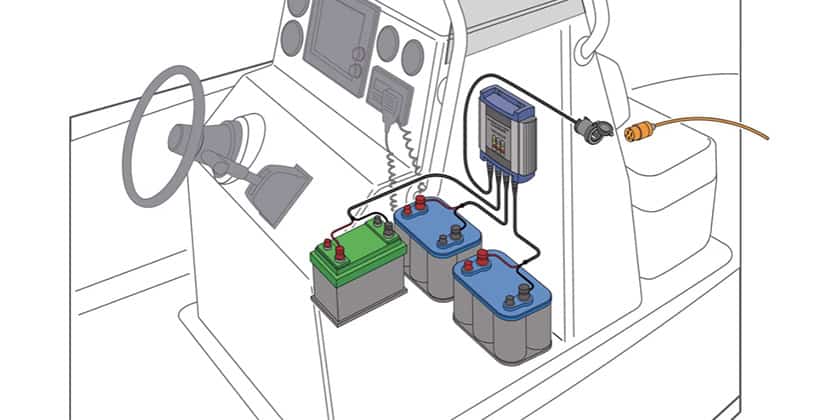
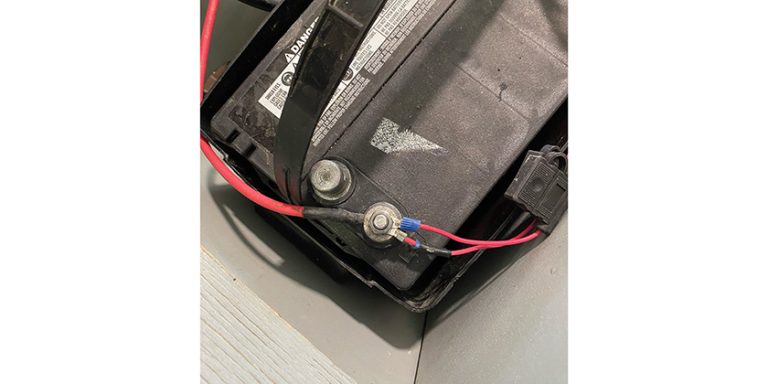
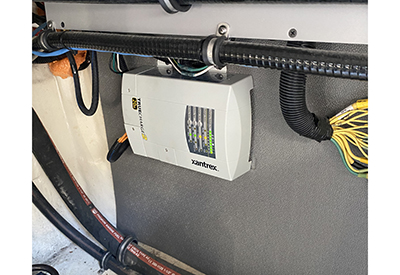
a typical installation in a fishing boat. This charger is set-up to charge one starting battery, and two trolling motor batteries (connected in series), and powered by an extension cord
December 4, 2025
It can easily be argued that an engine is the heart of the boat: it is the single most important piece of equipment aboard to get you where you’re going (and to keep you safe on the way). That might mean the boat’s batteries are only secondary in importance – providing the electricity needed to start the engine, and to run the boat’s electrical components: lights, stereo, nav equipment, pumps, etc.
BUT, without the batteries, nothing else works. A day on the water can be ruined (before it begins, or partway through!) if the batteries fail. Doubt creeps in, every turn of the key is accompanied by prayers, and a weekend aboard becomes stressful.
This makes the battery charger a close third on the list of important equipment aboard. A high quality battery charger has a number of qualities that makes it ideal for use on a boat:
a) It is ‘smart’ – it can sense the current level of charge, will charge at the ideal amount over time, and will stop charging when the batteries are full
b) It can select the type and size of battery being used. A deep cycle battery has different charging needs than a cranking battery. An AGM battery differs from a lead acid battery.
c) It is ‘ignition protected’ – meaning that the charger’s components won’t create a spark that could ignite gasoline fumes (especially important when chargers are installed in or near engine spaces)
d) It is suited for the marine environment – meaning that the components will resist corrosion and can withstand vibration.
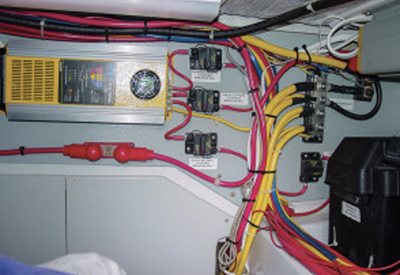
A simple internet search shows pages of results. There are so many options – how do you narrow them down to make the right choice:
1) Size – measured in two ways:
a. The physical size of the unit, based on the real estate available
b. The number of batteries that the unit is meant to charge. Ie. If you have three batteries aboard, you’ll need a three bank charger
2) Number of banks. This can be tricky and needs some clarification. A charger is measured in banks, rather than in batteries. There are a few scenarios:
a. A single battery, requiring a single bank charger
b. A single starter battery and a single house battery, requiring a dual bank charger
c. Batteries set up in parallel may require only one bank to charge
d. Batteries set up in series will require each battery to be charged independently
3) The battery charger capacity – the number of output amps. The rule of thumb, here, is that the charger should be a 10% minimum of the battery’s Amp-hour rating. This means that a 100Ah battery will need a 10 Amp charger. Larger batteries will require a higher charge output
4) The electrical set-up. A cruiser or sailboat with an AC shore-power system will need a hard-wired charger, whereas a smaller fishing boat (with no AC shore-power system) will use a battery charger with a standard 110V plug. These shouldn’t be mixed.
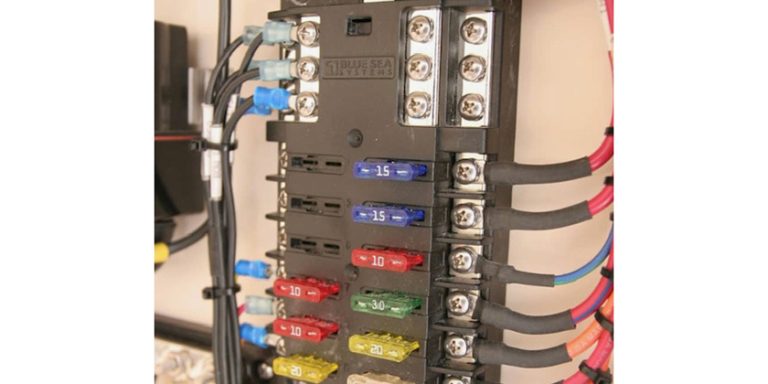
5) Appropriate circuit protection: If you’re replacing a battery charger, be sure that the fuse or breaker on the AC panel matches the needs of the new charger. Also, ensure that the fuses in each lead going to the positive and negative leads of the batteries are appropriately sized and installed correctly.
6) Ensure that it is capable of charging the battery type that you have aboard. Some applications may not match others – lithium-ion batteries come to mind. Double check to make sure that your matches your batteries.
7) Decide on your installation comfort level. A battery charger requires AC input and DC output, and if installed incorrectly can cause shocks, electrocution, stray current, and the potential for fire. If you don’t have the skill and comfort level to take this on, be sure to speak with a qualified marine technician.
Andrew McDonald is the owner of Lakeside Marine Services – a boat repair/maintenance firm based in Toronto. Andrew has worked in the marine industry for 12 years and is a graduate of the Georgian College ‘Mechanical Techniques – Marine Engine Mechanic’ program.