

Understanding New Changes in PFD Regulations
July 24, 2025
By Mustang Survival
In an effort to improve water safety and reduce preventable drownings, regulators have introduced updates to PFD regulations aimed at making flotation devices more accessible and appealing to wear. By focusing on comfort, clarity, and ease of use, these new personal flotation device requirements are designed to encourage more people to consistently wear them. The goal is to create safer experiences on the water by aligning PFD regulations with user-friendly designs and clear guidelines.
So, what do these changes actually mean for users? Let’s dive in.
The History of PFD Classification in the US and Canada
For years, the United States and Canada have used different systems to classify personal flotation devices (PFDs), guided by varying PFD regulations. In the U.S., the Coast Guard categorized PFDs by “Type” (such as Type II or Type III), while in Canada, there was a distinction between PFDs and life jackets.
These classifications aimed to address personal flotation device requirements by outlining their suitability for specific activities and, most importantly, their in-water performance. For example, life jackets are designed to turn an unconscious person face-up, while PFDs will keep an unconscious person afloat but won’t necessarily turn them face-up.
The Move Toward PFD Standardization
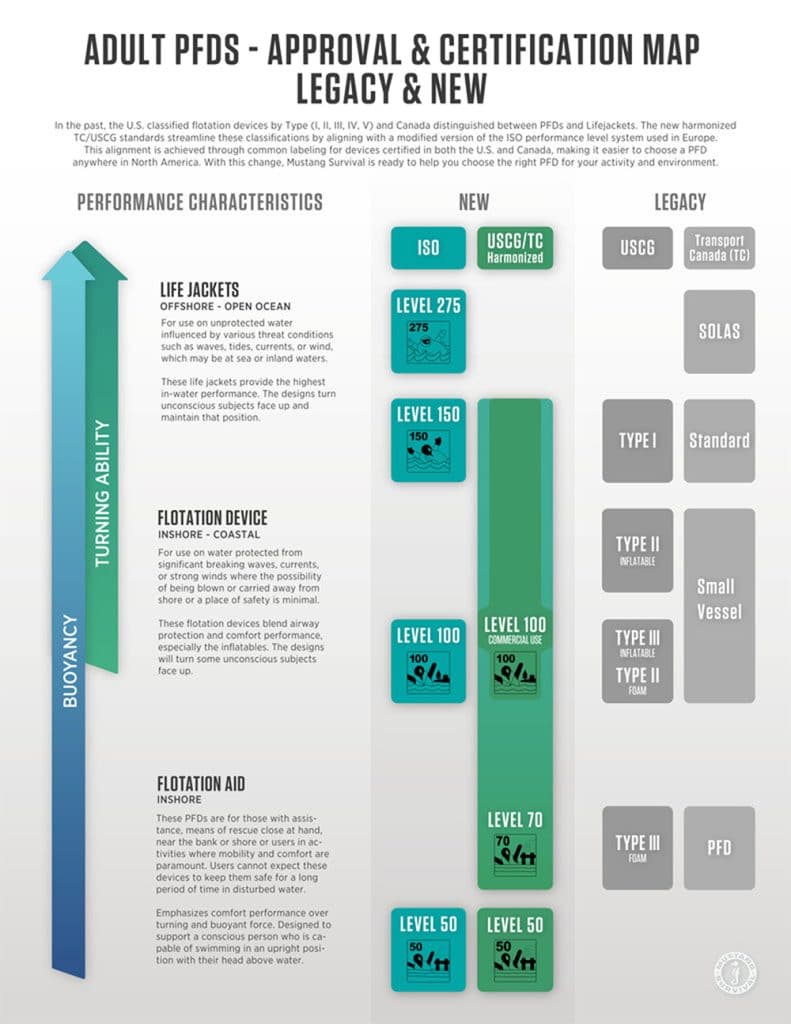
Recognizing the need for a harmonized approach to PFD regulations, industry leaders, the U.S. Coast Guard, and Transport Canada began working in the mid-2000s to develop common standards for designing, building, and certifying PFDs across North America.
By 2018, both regulatory bodies had removed outdated classifications and introduced Level 70 as a harmonized standard, aligning personal flotation device requirements and allowing a single approval label for use in both countries. While additional levels (50, 70, 100, and 150) were proposed, only Level 70 was implemented at the time.
Key 2025 PFD Regulation Changes
Now, in 2025, the U.S. Coast Guard is introducing another major rule change. Here are the key takeaways:
- No New “Type” Approvals: While existing approvals that may refer to “Type” remain valid for legal carriage requirements (i.e., what must be carried on a boat to meet regulations), no new Type classifications will be issued to PFDs entering the market. This is a significant shift in personal flotation device requirements for manufacturers and boaters alike.
- Level 50 Accepted: The U.S. Coast Guard will now approve Level 50 devices alongside Level 70. These lower-buoyancy PFDs must be worn to meet legal carriage requirements on a boat.
- Level 100 Defined for Commercial Use: Devices in this category will be approved specifically for commercial applications and are designed to establish an airway-protected position in the water.
(Note: Levels 50 and 100 are under consideration by Transport Canada but not yet implemented.)
These updates mark an important evolution in personal flotation device requirements for both recreational and commercial boating.
What Do the New PFD/ Life Jacket Regulations Mean for Boaters?
Approval does not necessarily mean a device is the best choice for every user. The role of the U.S. Coast Guard and Transport Canada is to ensure devices meet legal requirements, but they do not specify which PFD is best suited for particular activities (i.e. kayaking, sailing, fishing, etc.) or environments (i.e. coastal, offshore, inshore, etc.).
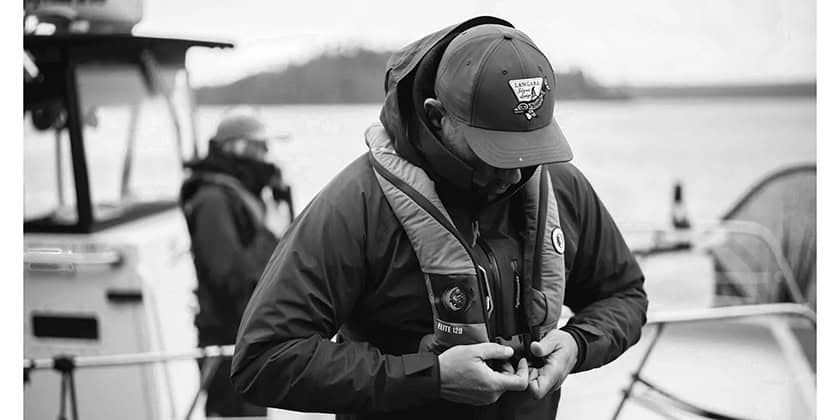
Under the new performance classification system, buoyancy levels in PFDs are no longer tied to a user’s size but reflect skill level, environment, and expected rescue time. While Level 50 (L50) devices focus on mobility and comfort for swimmers, Level 70 (L70) offers a range of buoyancy and in-water support for tougher conditions. However, approval levels only set a minimum performance standard. The actual buoyancy, measured in Newtons, can vary significantly within each level. For example, Mustang’s Elite 190 PFD is approved as L70 but provides 190N of buoyancy, surpassing the minimum requirement.
That responsibility to choose the right device falls on manufacturers, retailers, and ultimately, the end user. Boaters should consider their specific needs—such as activity type, water conditions, and personal comfort—when choosing a PFD. While regulations ensure baseline safety, selecting the right device for the right environment is key to staying safe on the water.
How to Choose the Right PFD for Your Needs
When selecting the best PFD, it’s essential to consider personal flotation device requirements to ensure safety and compliance. Keep the following factors in mind:
- Activity Type: Are you kayaking, paddleboarding, fishing, or sailing? Different PFDs provide varying levels of mobility and comfort.
- Buoyancy Level: Choose between Level 50 or Level 70 based on how much flotation assistance you need and refer to icons that indicates suitable uses such as a towrope handle, PWC, towed tube, or whitewater canoe. A slashed circle over an icon means the life jacket is not suitable for that activity.
- Fit and Comfort: Ensure your PFD or life jacket fits snugly and allows for proper movement.
- Safety Features: Some PFDs provide additional support for airway protection, which is crucial in situations where there is a risk of unconsciousness, rough or open waters, or potentially long rescue times.
Stay Informed and Stay Safe
With these new PFD regulations, staying informed about the latest water safety standards is more important than ever. Whether you’re a recreational boater or a professional mariner, understanding the personal flotation device requirements and choosing the right PFD can make all the difference.