


Ask Andrew: Below the waterline off-season checks – Part 2
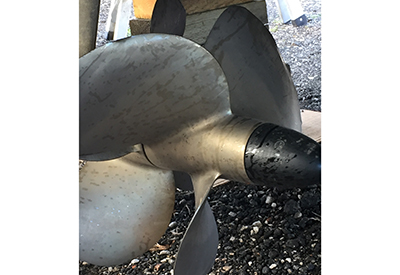
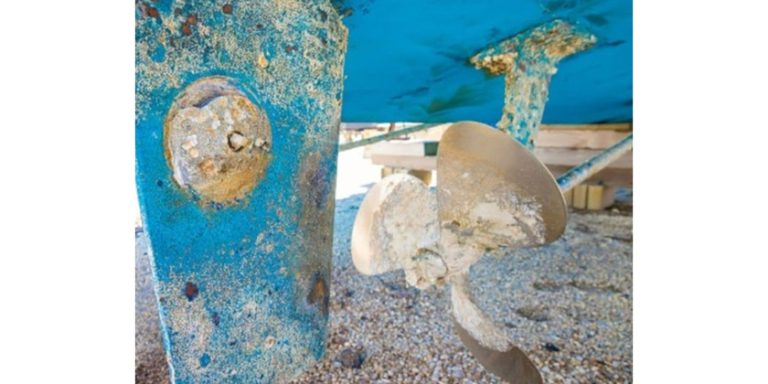
Check props for dings, bends, damage and corrosion
January 8, 2026
Last issue, in part 1 , we looked at the underwater portions of the hull, the boat’s trailer, cradle and stands.
In this part, we’ll delve deeper into the other parts of the boat found below the water line: the underwater mechanical components, including: props, shafts, outdrives, and cathodic protection devices (anodes).
Here’s a checklist of some of the areas that you should consider while they’re exposed this off-season.
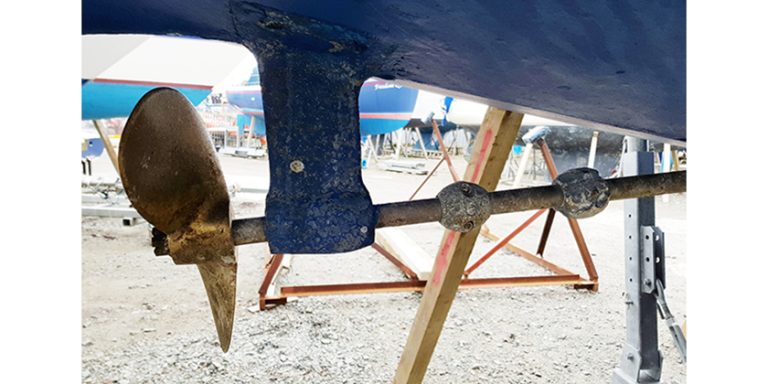
1) Check the props for any damage – look for dings, bends or cracks on the prop blades. Be sure to include the skeg and prop hub in your inspection
2) Check the prop shaft for any visible damage or corrosion. With the engine in neutral, turn the prop and check to see if it turns ‘true’. Check the condition of the cutlass bearing (the bearing itself, as well as where it is bedded to the hull). Confirm that the prop freely turns when the transmission is in neutral (and that it locks when the transmission is in gear)
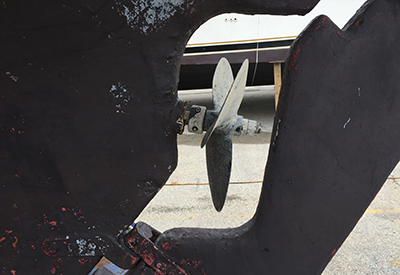
3) Check the condition of underwater anodes. If there is excessive wear, what is the cause? If the wear is within range, take photos to compare to the wear next year. If anodes require replacement, start the search now to acquire new anodes
4) What is the quality or the lower unit gear oil (for sterndrives, saildrives and outboards)? Should the gear lube be drained and replaced? Especially in cases where there is evidence of water in the gear lube, the lubricant should be drained and replaced before the water inside has a chance to freeze. Similarly, for inboards, now is a great time to check the quality and level of the transmission fluid
5) Underwater lights and transducers – are all bedded appropriately, and functional? Check the electrical connections, the quality of the caulking or sealant around the underwater devices, and confirm that the clamping nuts are tightened appropriately
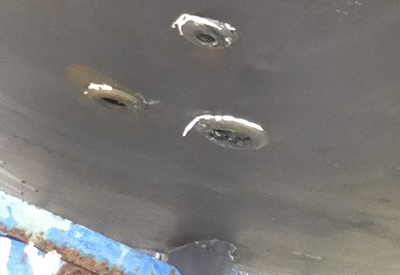
6) Speedo tubes and cabling – if the speedometer is temperamental and it relies on an air-pressure speedo tube, now is the time to check it’s function using compressed air, and replace parts as necessary. Often, air-pressure speedo pick-ups are mounted on the transom, and paddle-wheel style is mounted as a through-hull. Check that both function correctly.
7) Seacocks – are all through-hulls bedded appropriately, and do seacocks open and close with ease? It’s a great time to take stock, lubricate, and make necessary repairs. While checking seacocks, it’s a great time to check the hoses and clamps that are attached to them, inside the boat.
8) Sterndrive bellows, gimbal bearing and u-joints – it’s a great time to arrange service on these items, as needed.
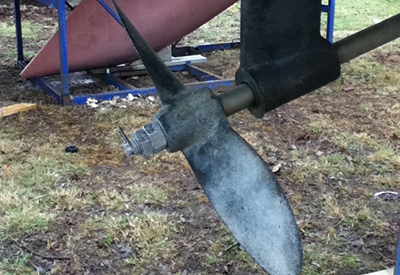
9) Trim Tabs and hydraulics. A quick up-down test (now) of all hydraulics can save plenty of time and expense if problems are discovered when the boat is in the water.
In the event that repairs aren’t practical immediately, it’s always a good idea to take stock of current condition and to start planning projects, securing budgets and parts, and to begin dreaming of upgrades (Boat Show season is around the corner!).
Enjoy the off-season!

Andrew McDonald is the owner of Lakeside Marine Services – a boat repair/maintenance firm based in Toronto. Andrew has worked in the marine industry for 12 years and is a graduate of the Georgian College ‘Mechanical Techniques – Marine Engine Mechanic’ program.