


How-To: Looming
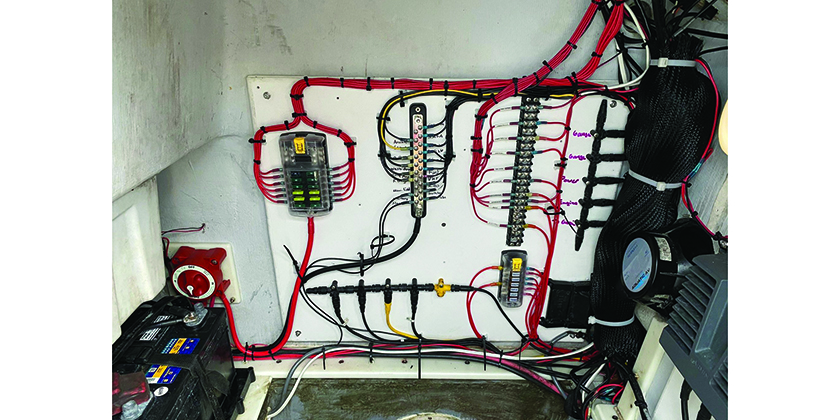
Whether running new cables or cleaning up a previously installed wire run, make sure to follow these practices
By Lyle Pahl
In the most generalized sense, a wire “loom” is an assembly of wires and cables, and potentially circuitry control elements, which are arranged and bundled together to form an electrical and/or data pathway. The term “wiring harness” is a more common term in modern vernacular with the distinction that a harness is usually pre-made and then installed and has less complexity than a wire loom; whereas a wiring loom may be constructed in situ and then groomed, secured, and could potentially be partially or completely covered, as necessary.
It is the covering that has become synonymous with wire loom, but there is a history of wire looms that predates the proliferation of plastic loom coverings.
Historically, looms were tied with “lacing”. Lacing is a technique that uses hitches and running hitches tied with small cord. The technique is quite effective, and depending on the cord material, lacing will keep the wires and cables in place for a long time. I saw this method utilized on a boat more than 50 years old after it was initially done by the installer and surprisingly it was still intact with the wires still firmly held. The technique has practically disappeared as it would be quite time consuming but does appear in the NASA 2016 revision of their technical standard.