



TDC Turks head update
May 24, 2017
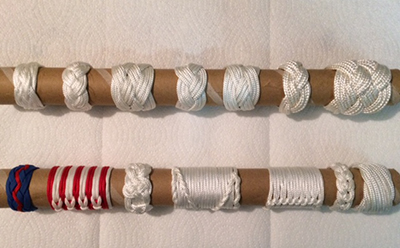
Shown here are some examples of various Turks Heads and Coxcombing from a recent decorative ropework workshop at the Dartmouth Yacht Club, N.S.
Bob Stewart, MY Christina Sofia at the Dartmouth Yacht Club, N.S. writes us commenting on Brenda and Doug Dawson’s article, Top Dead Centre – Positioning the Wheel in the May issue of Canadian Yachting magazine.
“Regarding the very good article on marking the TDC of a boat’s steering wheel, rather than electrical tape, a more nautically traditional and decorative method of identifying the king spoke is the old-fashioned ‘Turks Head’ knot. There are many variations of the knot and many more are possible with different sizes, colours and types of cord with which to tie it. Paracord is one option that comes in two weights or thicknesses and many different colours that can be used to match the trim or canvas colours on a boat.
One sailboat wheel I decorated recently had two turks heads of different sizes, the larger one for steering ahead under sail and the smaller one indicating rudder offset when reversing into a slip under power. Both were done in a medium blue paracord 550 to match the boat’s paint scheme and dodger canvass.
The knot is tied with varying numbers of ‘Bights’, ‘Leads’ (or ‘Strands’) and ‘Passes’. Instead of trying to describe the variations here, I recommend Youtube – you’ll find dozens of options and how to tie them there. You’ll also find several types of ‘Coxcombing’ which you can use to wrap an entire steering wheel if you have a mind to – and lots and lots of patience.
If you’re going to try tying a turks head on a wheel, I suggest doing it loosely over the tape you have in place marking the spot where you want it. Leave an end of the tape sticking out to one side, tie the knot and snug it up a bit when it’s done. You might have to snug it up a couple of times to the point where it will stay in place, but then pull the tape out from under the knot before tightening it a final time. Another suggestion is to use coloured cord as white will look dirty and worn before very long with many different hands and weather on it.
Try it; you can always cut it off if you don’t like the result (and try it again). It can be as simple or elaborate as you want and have the patience to tie, but it will probably look more nautical than electrical tape.
Shown here are some examples of various Turks Heads and Coxcombing from a recent decorative ropework workshop at the Dartmouth Yacht Club, N.S.